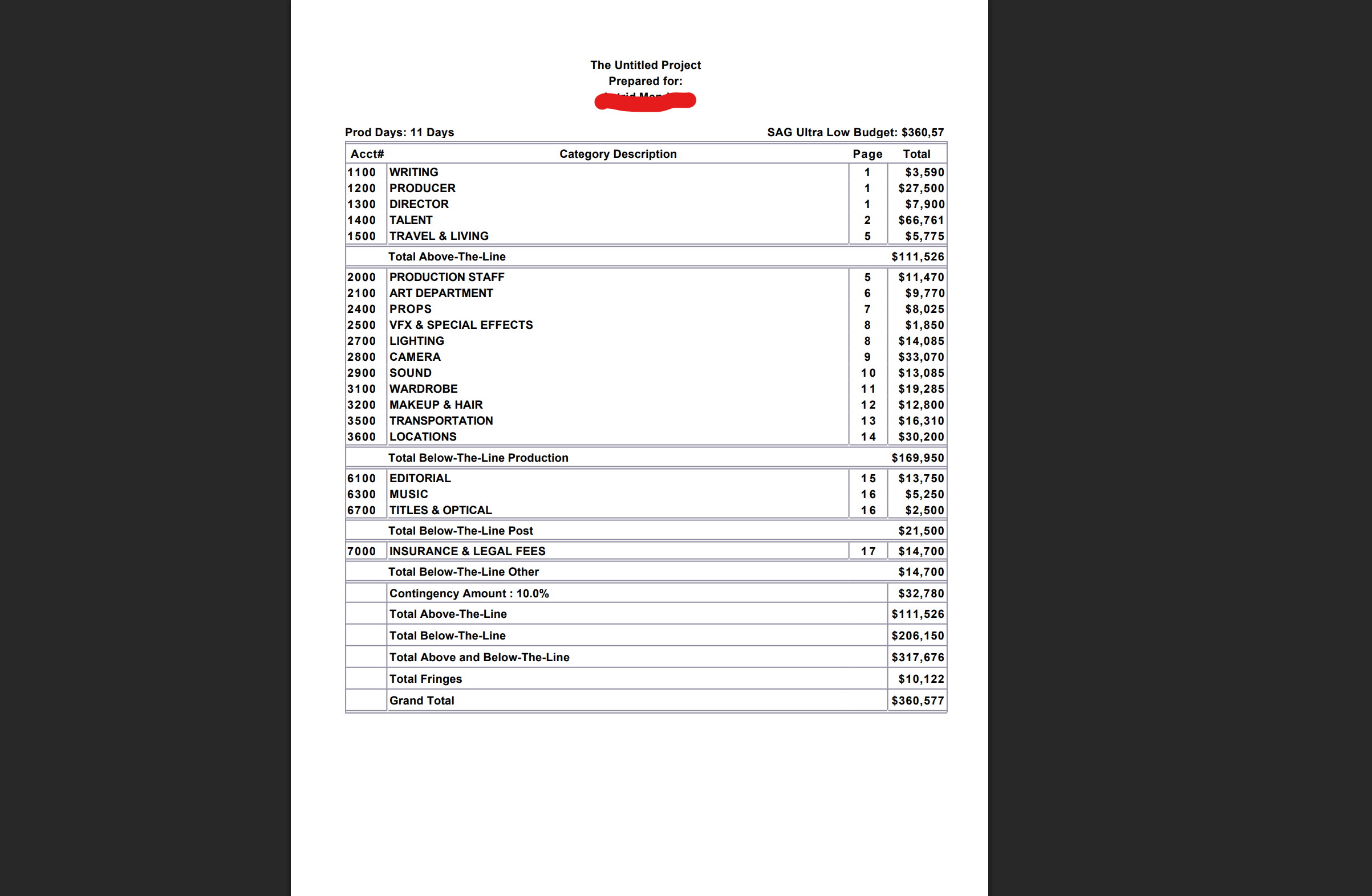
A TV pilot budget template should connect the episode's creative requirements to the cost of preparing, filming, finishing and delivering it. The useful starting point is a breakdown of the pilot script, followed by a feasible schedule and researched cost assumptions. A fixed pre-production percentage cannot replace that work.
This guide explains how to organize a pilot budget for development and producer review. All sample amounts are hypothetical planning figures. They are not US market rates or a recommended allocation for every television project.
Clarify What Kind of Pilot You Are Budgeting
A presentation pilot, a proof of concept and a full broadcast-length episode can have very different requirements. Define the intended running time, script version, production location, delivery specification and purpose of the budget. State whether the document is an early estimate or a detailed script-based production plan.
The term preliminary or pilot budget is also sometimes used for an early film estimate. That is different from budgeting an actual television pilot. Label the document clearly so a producer or investor understands both the project format and the level of detail behind the numbers.
Organize the Template by Production Phase
- Development and rights: relevant writing, options, clearances and development work within the agreed scope.
- Pre-production: producing and department preparation, casting, scouting, scheduling, rehearsals, testing and production-office setup.
- Principal photography: cast, crew, locations, equipment, art department, transport, catering and production operations.
- Post-production: editing, sound, music, visual effects, color and finishing.
- Delivery and other costs: required masters, quality control, insurance, accounting, professional fees and a separately explained contingency.
Use quantity, unit, rate, fringe basis, total and assumptions columns for each account. Mark whether the input comes from a vendor quote, a negotiated term or a provisional estimate. The budget top sheet should summarize these accounts rather than introduce a second set of totals.
Calculate Pre-Production From the Work Required
List the preparation tasks department by department. Identify who needs to work, for how long, and what materials or services they need. A contained dialogue pilot may require a different preparation plan from a period drama with builds, fittings and multiple locations.
For an illustrative preparation worksheet, assume production management costs of $4,000, department preparation of $6,000, casting and rehearsals of $3,000, location preparation of $2,000 and tests and administration of $1,000. These direct items total $16,000 before any additional applicable payroll burdens or exclusions. The percentage of the total budget is an output of those assumptions, not the instruction used to generate them.
Check for double counting. If a crew member's quoted engagement already covers preparation and shooting, do not add the same preparation days again. If a location deposit is part of its total fee, treat it as payment timing rather than an extra production cost.
Separate Pilot-Only Costs From Reusable Assets
A pilot may pay for initial sets, wardrobe, design or development that could support later episodes. Show those costs clearly, but do not assume an uncommissioned season will fund them. The pilot's own financing plan must cover the cash it needs.
If the producer also wants a season estimate, present the pilot and recurring episode assumptions separately. Identify what could be reused, the conditions required, and any storage, maintenance or rebuilding costs. Our six-episode production planning case study illustrates why episode and season costs need a coordinated approach.
Link Cast, Crew and Rentals to the Schedule
A script breakdown and production schedule establishes scene requirements, cast workdays and the proposed shooting order. Use those outputs to price the production. Include preparation, travel, fitting, rehearsal, returns and wrap where they form part of an engagement.
Television and theatrical projects can use different labor agreements. Confirm the applicable agreement, performer category, work period and contribution basis with the relevant representatives and payroll provider. Do not copy a theatrical low-budget rate table into a television pilot merely because both projects have a similar total budget.
Keep the Cash Plan Separate From the Cost Total
Determine when financing arrives and when deposits, payroll, rentals and post-production invoices must be paid. A pilot may be fully financed on paper while still needing bridge cash because committed funding arrives after a major payment date.
Use a production cash flow template to track opening cash, receipts, payments and closing cash by period. Keep expected incentives separate from funds already available, and state the timing assumptions behind any financing that depends on them.
Prepare a Budget Review Package
Before sharing the estimate, reconcile the top sheet to the detail, label the currency, document the script and schedule versions, and list inclusions and exclusions. Explain the major unquoted items and the process for updating them. A reviewer should be able to identify what would change if the episode length or shooting plan changed.
Pair the numbers with a concise project overview when approaching partners. If a film or television investor package is commissioned, use the same budget basis in the presentation and supporting documents. A polished pitch should not quietly use a lower total than the working production plan.
Frequently Asked Questions
What percentage of a TV pilot budget belongs in pre-production?
There is no universal percentage. Price the required preparation work, then review its share of the total as a reasonableness check.
Can I adapt a feature film budget template?
Yes, as a starting structure. Adapt the accounts, labor assumptions, episode format, delivery requirements and pilot-only costs to the actual television project.
Can FilmDrafts budget a pilot or series?
Yes. Television work is scoped separately from the listed single-feature packages. Request a pilot or series budgeting quote with your script, format, proposed location and target production dates.
Related FilmDrafts Guides
Need Production Finance Support for Your Film?
FilmDrafts prepares professional budgets, schedules, business plans, financial models, recoupment waterfalls, and investor-ready production documents tailored to the requirements of each project.
Discuss Your Project →