
Independent movies can cost anywhere from a few thousand dollars to tens of millions—but most projects sit somewhere in the middle, and the real answer depends on production level. A no-name cast, contained-location thriller shot in one city has a very different cost profile from an independently financed period drama with travel, music clearances and a union crew. That is why producers usually start by asking not just “How much does an independent movie cost?” but also “What kind of independent movie are we actually making?”
The useful way to answer this question is through budget ranges and production-level examples. Instead of searching for a single average that rarely helps in practice, you want to know what micro-budget, low-budget, lower-mid, established and premium indie features often look like—and what cost drivers push a project from one tier to the next. If you are planning your own feature, that framing is far more actionable than a vague headline number.
Independent Movie Cost at a Glance
These ranges are not universal rules or financing quotes. They are practical planning bands that help producers understand scale.
| Production level | Typical budget range | What it usually looks like |
|---|---|---|
| Micro-budget feature | $10,000 – $100,000 | Contained script, tiny crew, minimal company moves, favors/owned gear, limited art and post scope. |
| Ultra-low / emerging indie | $100,000 – $500,000 | Lean but more formal production with paid key crew, some rentals, tighter schedule logic and real post finishing. |
| Low-budget indie feature | $500,000 – $2 million | Better staffing, more locations, stronger cast options, more realistic prep, insurance, payroll and contingency. |
| Lower-mid independent feature | $2 million – $5 million | Experienced department heads, broader location footprint, meaningful cast spend, fuller post and delivery package. |
| Established / premium indie | $5 million – $15 million+ | Name cast or director, union workflows, extensive prep, more travel, heavier art/VFX/music/post and higher overhead. |
Important The same screenplay can land in more than one band. A contained drama might work at $350K, $1.2M or $4M depending on location strategy, cast ambitions, union assumptions, production value targets and how much time you want to buy in the schedule.
What Do Producers Mean by “Independent Movie”?
An independent movie is not defined by one budget threshold alone. In practice, the term usually means the project is financed and controlled outside the major-studio system, even if it later partners with distributors, platforms or sales agents. Some independent features are truly micro-budget self-financed projects. Others are professionally packaged films with private equity, tax incentives, soft money and presales that still count as “independent.”
That is why the phrase independent film budget is broad. It covers a shoestring debut feature, a carefully planned festival drama, and a sophisticated indie feature with bankable cast. When someone asks for the “average independent film budget,” the better response is usually a budget range plus the logic behind it.
Budget Examples by Production Level
Below are realistic planning snapshots to show how cost scales with ambition.
1) Micro-budget feature: $10K – $100K
This level is often possible only when the script is highly contained and the team is prepared to trade money for time, flexibility and personal labor. Micro-budget filmmaking works best with a limited cast, few locations, minimal wardrobe changes, simple production design and an efficient schedule. A one-location thriller, chamber drama or DIY horror film can sometimes live here.
- Small crew where people wear multiple hats.
- Short shooting schedule, often weekend-heavy or highly compressed.
- Owned/borrowed gear or discounted rentals.
- Limited art department build-out and modest wardrobe.
- Very lean post-production, often editor-driven.
- Little room for contingency, reshoots or expensive deliverables.
The risk at this level is under-budgeting invisible costs: insurance, hard drives, payroll burdens, permits, meals, sound cleanup, color, music and final delivery. A project may think it is a $30K film and discover it behaves like a $60K film once real-world logistics are included.
2) Ultra-low / emerging indie: $100K – $500K
This is where many first “serious” independent features live. The movie is still lean, but the production usually starts paying key crew, renting appropriate gear, carrying insurance and planning post more responsibly. You may still keep locations limited, but you are less dependent on pure volunteerism.
- Dedicated producing structure and clearer department coverage.
- More realistic prep and wrap time.
- Paid rentals, payroll and location-related expenses.
- Better sound workflow and more reliable post path.
- A real contingency instead of pure optimism.
If the screenplay has crowd scenes, stunts, child actors, night exteriors, multiple company moves or heavy travel, this tier becomes tight quickly.
3) Low-budget indie feature: $500K – $2M
This band often supports a more professional physical-production plan. The producer can hire stronger department heads, schedule prep properly and avoid some of the false savings that hurt cheaper productions. You may still be controlling scope carefully, but the budget can usually tolerate more locations, a stronger cast package and higher-quality finishing.
- More robust above-the-line strategy.
- Structured staffing across camera, grip/electric, art, AD and production office.
- Better accommodation for vehicles, travel, location fees and company moves.
- Room for post sound, color and deliverables without cutting corners everywhere.
This is also the level where a professional detailed film budget service becomes very useful, because schedule logic and category detail start materially changing the total.
4) Lower-mid independent feature: $2M – $5M
At this level, the film may still be operationally lean compared with studio work, but it usually behaves like a full professional production. Payroll, union exposure, location complexity, art spend, vehicles, travel and post all gain weight. Cast deals and schedule design become major budget drivers.
Many films in this range are trying to balance indie sensibility with market-facing production value. The budget must therefore do more than count costs; it must support a coherent finance and production strategy.
5) Established / premium indie: $5M – $15M+
Some independent features sit far above the “low-budget” conversation while still remaining independent. If the package includes recognizable cast, significant travel, period detail, specialty production design, music, stunt coordination, union complexity, VFX or a lengthy post schedule, the total can rise fast. At this point, the label “independent” tells you more about financing structure than cost level.
For projects in this zone, the budget has to be deeply connected to the schedule, financing assumptions, contingency logic and delivery requirements. A rough spreadsheet is usually not enough.
Where Does the Money Go in an Independent Film Budget?
Most producers know that “cast and crew cost money,” but a professional budget works by breaking the project into structured categories. Whether you use Movie Magic Budgeting or a well-built spreadsheet, the logic is similar: every cost should tie back to assumptions about people, time, quantity or scope.
| Budget area | What it covers | Typical cost pressure points |
|---|---|---|
| Development & packaging | Rights, early producer costs, rewrites, deck/business-plan support, packaging materials. | Optional but often ignored in “headline” numbers. |
| Above the line | Producer, writer, director, principal cast. | Name cast, deal structure, travel, rehearsal and hold days. |
| Production staff & crew | UPM/line producer, AD team, camera, grip, electric, sound, wardrobe, makeup, art and more. | Shoot days, prep weeks, overtime, union conditions and staffing depth. |
| Locations & company moves | Permit fees, location fees, parking, security, location support, moves between sets. | Too many moves can quietly destroy efficiency. |
| Production equipment | Camera, lenses, lighting, grip, sound, DIT/data, expendables. | Package level, specialty gear and length of rental period. |
| Production design | Sets, props, dressing, construction, graphics, wardrobe, makeup and special effects materials. | Period detail, stylization and build requirements. |
| Travel, transport & accommodation | Flights, hotels, vans, trucks, mileage, catering and per diems. | Out-of-town shoots and widely spread locations. |
| Post-production | Editing, sound design, ADR, mix, color, online, VFX, music, titles, captions. | Under-budgeted more often than producers admit. |
| Insurance, legal, accounting & payroll | General liability, workers comp, E&O, deal memos, payroll service, bookkeeping and legal support. | Frequently omitted in amateur budgets. |
| Delivery & release prep | QC, masters, subtitles/captions, DCP or platform files, poster/key art support, festival submissions. | Common end-of-project surprise costs. |
| Contingency | Reserve for the things that go wrong. | Too small = budget fragility. |
What Increases an Independent Movie Budget the Most?
Producers often underestimate how quickly a script’s practical demands affect cost. These are some of the biggest variables:
The budget also changes based on how the script breakdown affects the schedule. Two films with similar page counts may cost very different amounts once you map out company moves, day/night splits, cast availability and specialty requirements.
How Much Should You Budget for a Film?
If you are still deciding what budget level is realistic, work backwards from the screenplay and production strategy rather than forwards from a wish number.
A useful budget is not just a number you hope to spend. It is a model that explains why the movie costs what it costs. If you need help, our guides on how to make a detailed film budget, film budget top sheets and independent film budget breakdowns go deeper into the mechanics.
When a Rough Number Is Not Enough
A quick estimate is useful in development. But once you are sending materials to investors, locking the production strategy, comparing locations or planning a real pre-production calendar, a rough headline figure stops being enough. At that point you usually need a detailed budget tied to the script and schedule.
Need a Detailed Film Budget Service & Movie Magic Budgeting Support?
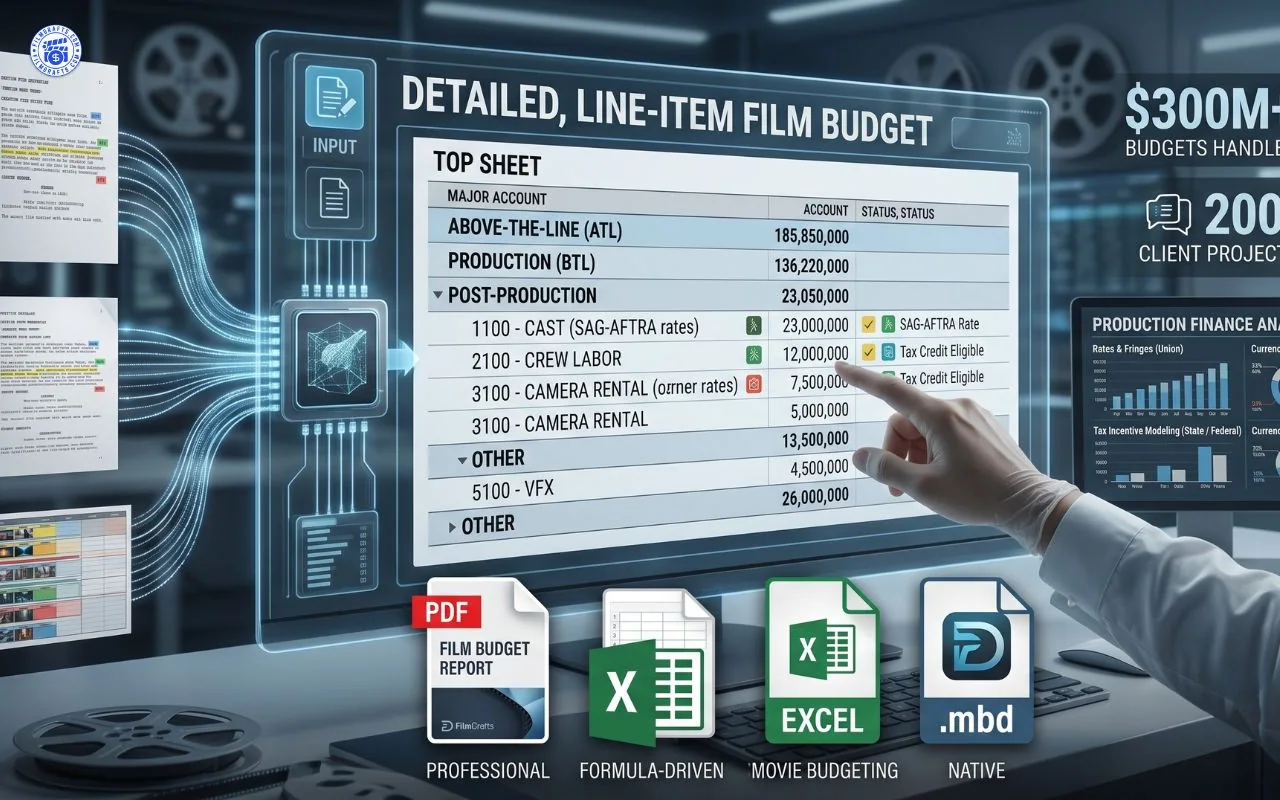
If you want a producer-grade budget instead of a rough guess, FilmDrafts can build the screenplay breakdown, schedule and detailed budget for you. This is the right fit when you need investor-ready planning, realistic cost logic or a more defendable production model.
Get Detailed Film Budget Service & Movie Magic Budgeting by us →
You can also review our related guides on who makes a film budget, low-budget film budget templates and cost-control strategies.
Short Film vs Independent Feature: Should They Be Budgeted the Same Way?
No. Short-film budgets and independent-feature budgets use many of the same categories, but the strategy differs. A short can often justify more compromise because distribution and recoupment are not the same as for a feature. A feature has to think more seriously about sustainable crew structure, post quality, deliverables, accounting, insurance and market expectations.
If you are specifically pricing a short, read our companion topic ideas around how much a short film costs to make. For features, the larger question is not just what you can spend, but what budget level the script can support without the production plan collapsing.
Frequently Asked Questions
How much does an independent movie cost to make?
Independent movies can cost anywhere from under $50,000 to several million dollars. A realistic working answer depends on production level, script scope, cast, schedule, locations, post-production needs and delivery expectations.
What is the average budget for an independent film?
There is no single average that is very useful, because “independent film” covers a huge range. In practice, most producers work with budget bands such as micro-budget, low-budget, lower-mid and premium indie rather than one average figure.
How much does a low-budget movie cost?
Many low-budget independent features fall somewhere between roughly $500,000 and $2 million, though some producers use the term “low-budget” more broadly. The exact number depends on the script and how professionally staffed the production is.
How much does a micro-budget film cost?
A micro-budget film may cost anywhere from about $10,000 to $100,000, and sometimes slightly above that depending on who is using the term. These projects usually rely on contained scripts and a very lean production model.
How much does a feature film cost to make?
Feature-film costs range enormously. A studio feature may cost tens or hundreds of millions, while an independent feature could be made for under $100,000 or for more than $10 million. The word “feature” only describes length, not scale.
What is included in an independent film budget?
A solid indie-film budget may include development, above-the-line, crew, equipment, locations, travel, art, wardrobe, post-production, insurance, legal, accounting, delivery and contingency.
What is the most expensive part of making a movie?
For many films, labor and time are the biggest cost drivers. Above-the-line spend, crew payroll, extra shoot days, travel and post-production are common heavy hitters.
Can the same script be made at different budget levels?
Yes. Many scripts can be mounted at more than one level. The key is deciding what must be preserved creatively and what can be scaled in locations, cast, schedule, gear, art direction and post scope.
When should I get a professional film budget made?
A professional budget becomes especially valuable once you are raising money, speaking to partners, comparing production strategies, or preparing for real pre-production decisions.
Do I need Movie Magic Budgeting?
Not always, but it remains a common professional standard for structured film budgets. What matters most is that the budget is detailed, transparent and tied to real production assumptions.
Need Help Pricing Your Independent Film Realistically?
If you already have a screenplay and want a more defendable production plan, FilmDrafts can help with script breakdown, scheduling and a detailed film budget built around your real assumptions.
View Film Budget Service →