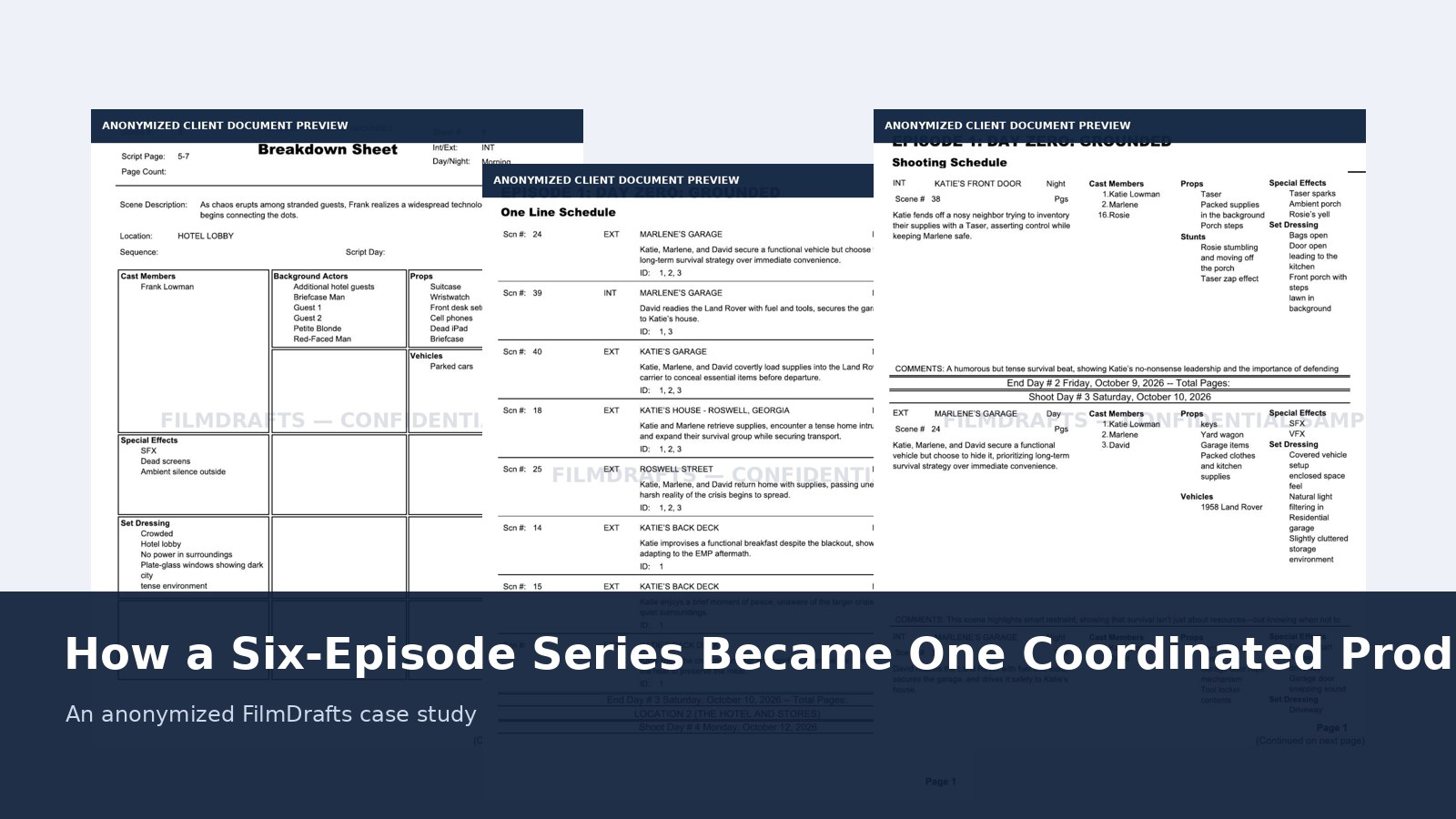
A six-episode survival thriller needed a season-wide production plan. FilmDrafts connected episode breakdowns, a 34-day shooting schedule, individual budgets and the master season model so the producer could review shared resources and episode-specific costs together.
The Problem Was Not Six Scripts. It Was One Season.
The producer already had a clear dramatic world, but a limited series cannot be planned as six unrelated short films. Cast continuity, recurring locations, episode-specific requirements and the overall production calendar all had to work together. The assignment therefore began with a broader question: how could six episodes become one production plan that a producer, financier and department head could understand?
Breaking Down the Season Before Scheduling It
Each episode was reviewed scene by scene. Cast, background performers, locations, vehicles, props, wardrobe, special requirements and recurring production elements were identified before any shooting order was proposed. This script breakdown and scheduling process created a common production language across the season instead of allowing each episode to develop its own disconnected assumptions.
Turning Episode Requirements into a Practical Schedule
The schedule grouped work by location, cast availability, day or night requirements and production efficiency. A stripboard, one-line schedule and detailed shooting schedule made the season visible at both a high level and a day-by-day level. The resulting 34-day plan was not simply a calendar; it was the operating structure that informed cast days, rentals, company moves and departmental costs.
From Episode Budgets to a Master Season Model
Each episode was considered individually and then consolidated into a master season budget. This allowed the producer to see both episode-level differences and the total capital requirement. The film budgeting work connected the creative plan to labour, equipment, locations, travel, post-production and contingency assumptions.
Building the Investor Story Around the Production Facts
Once the breakdown, schedule and budget were aligned, the project could be presented more clearly to potential investors. The investor package did not replace the production documents; it translated their implications into a concise explanation of the series, financing need, production approach and return assumptions.
The Outcome
The project ended with a connected chain of documents rather than a folder of isolated reports: episode breakdowns informed the schedule, the schedule informed the season budget, and the financial plan drew from the same production assumptions. That consistency made the package easier to revise and more credible to evaluate.
Selected Document Preview
The viewer below contains selected, anonymized pages from this project. Scroll vertically to examine the structure of the work. Full editable files, formulas and confidential pages are not published.
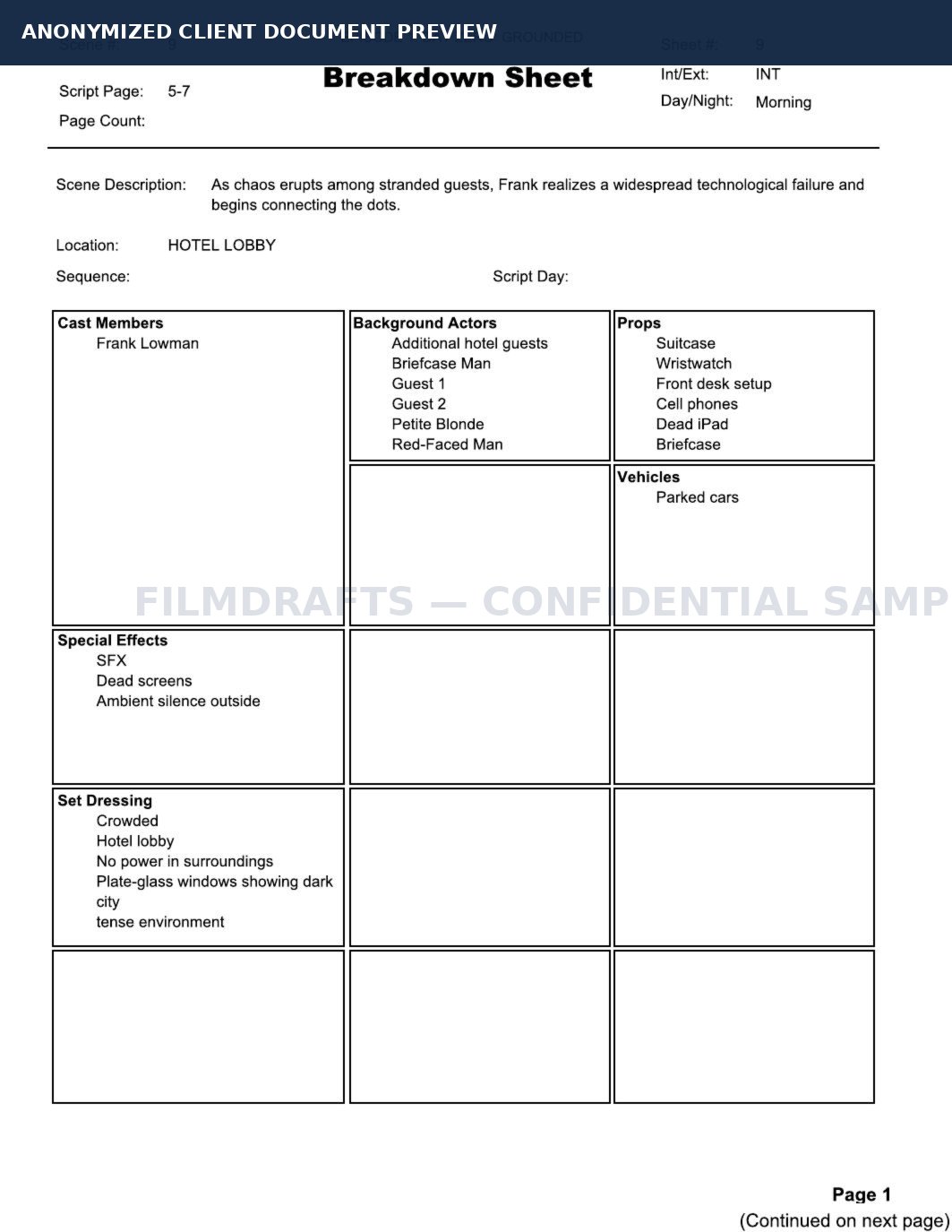
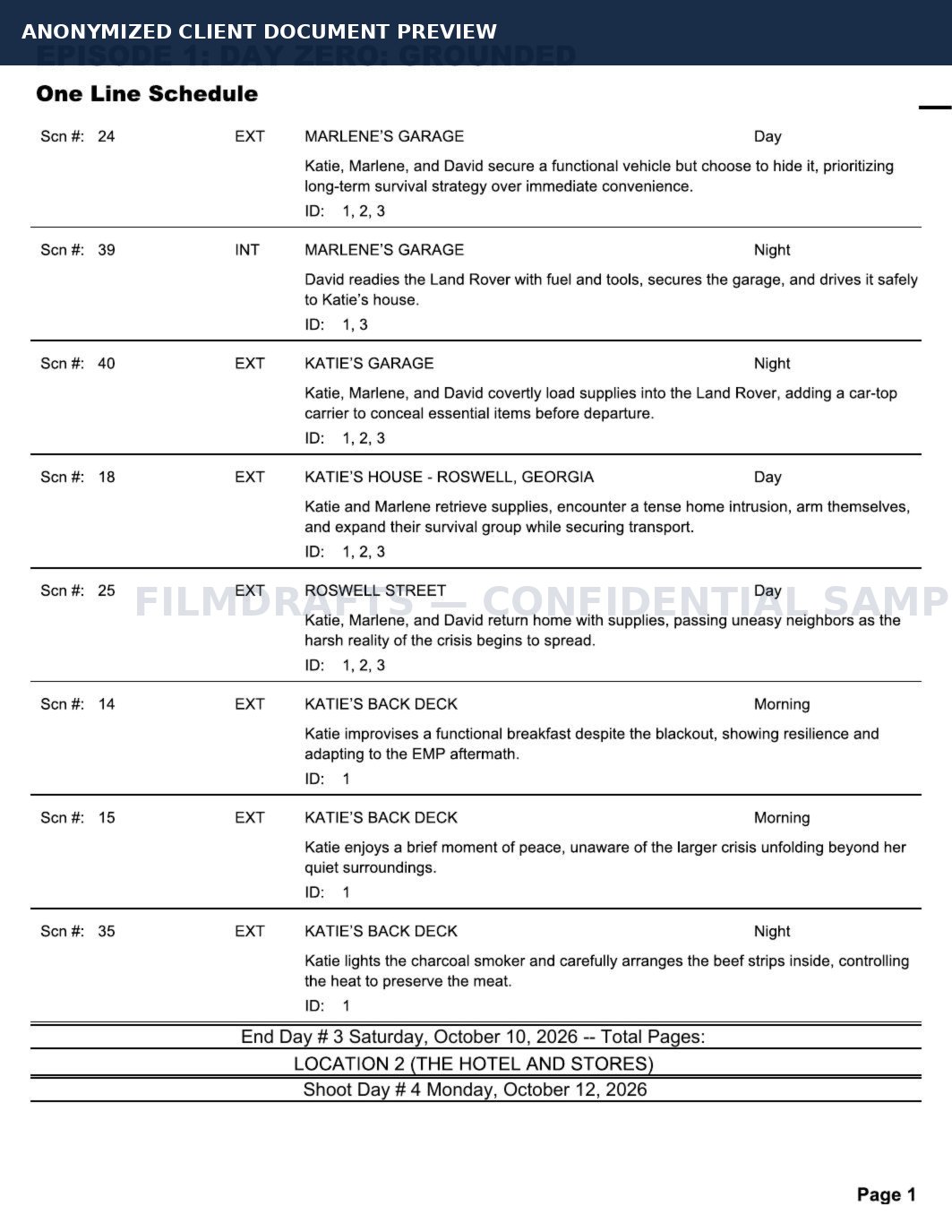
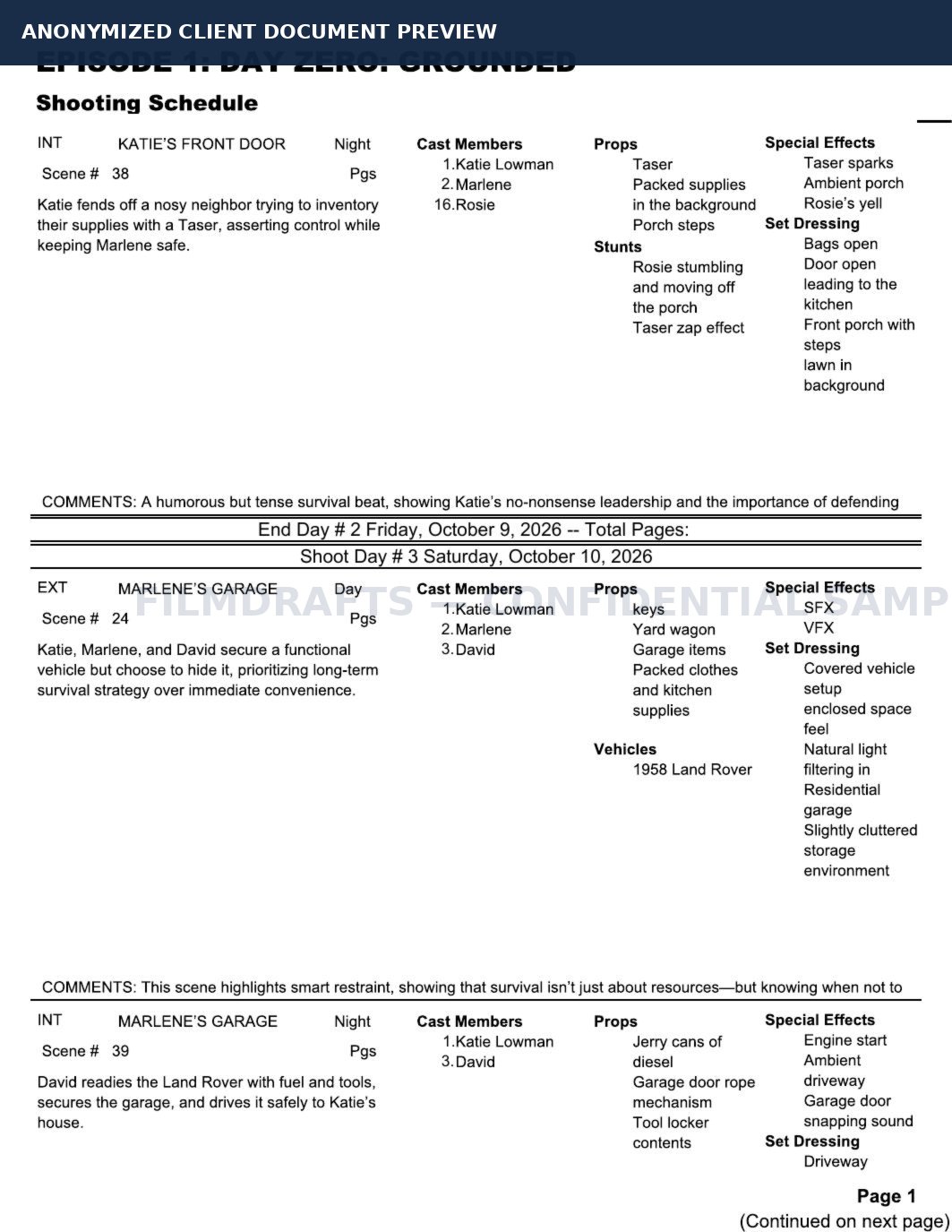
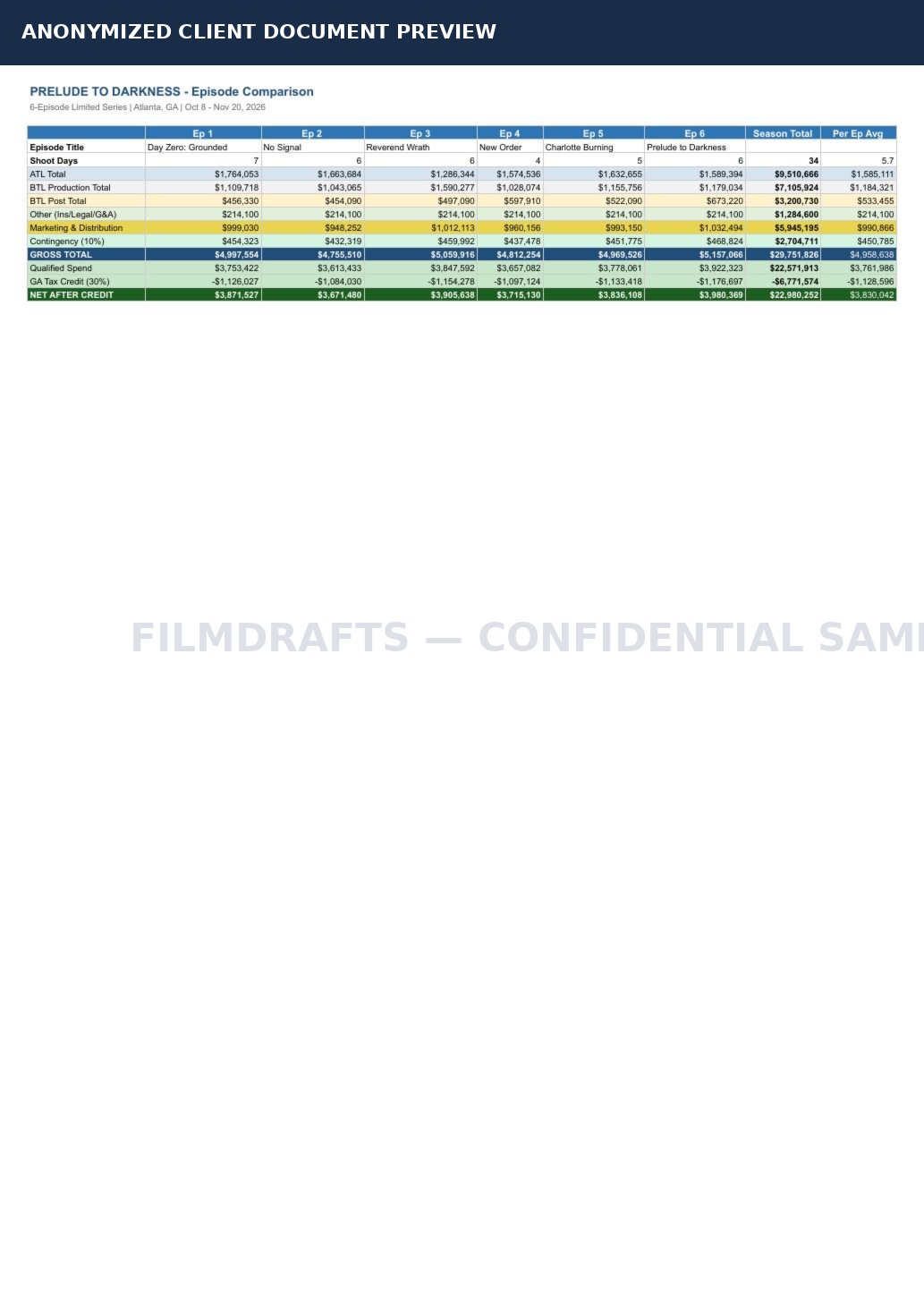
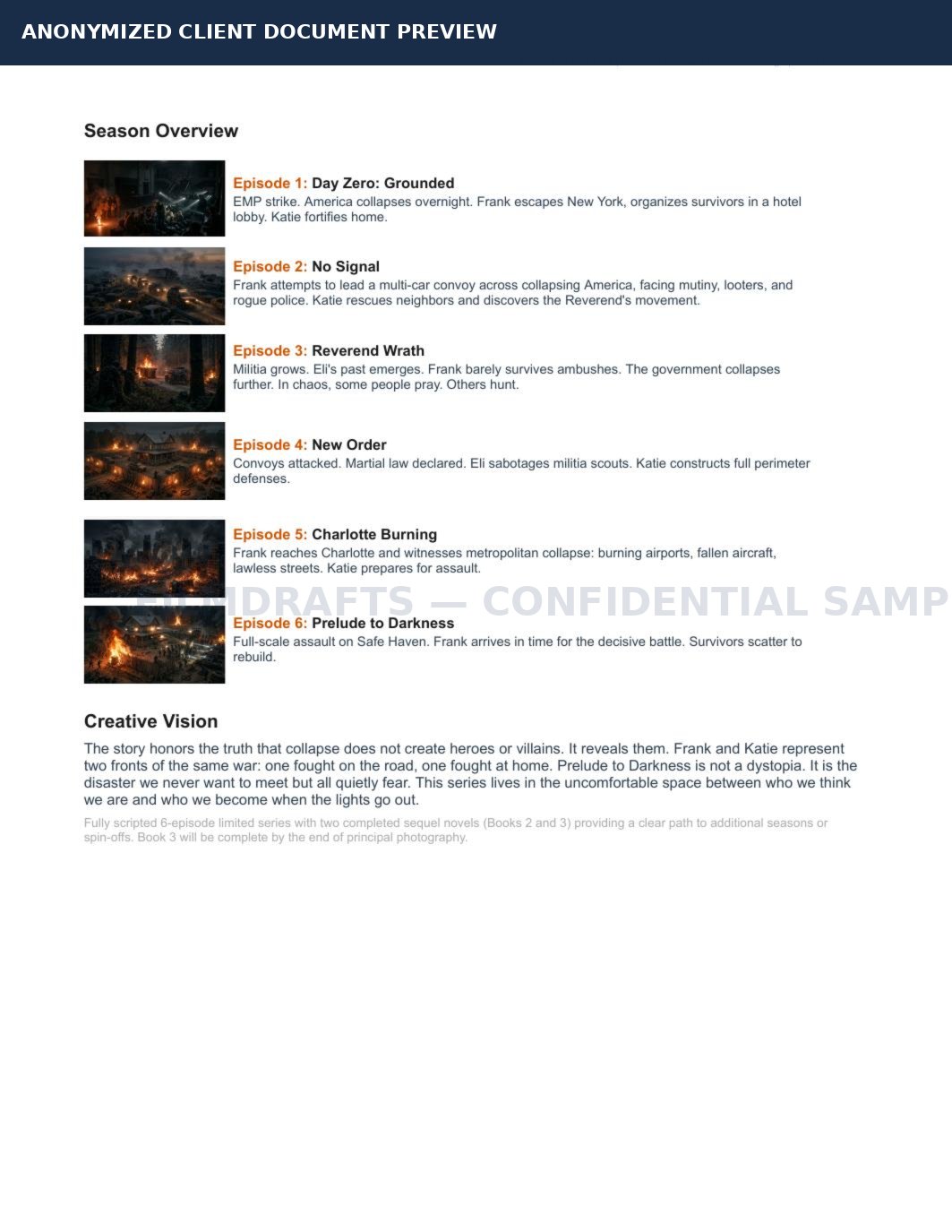
These images are reduced, watermarked previews. Project names, client identities and sensitive details have been generalized or obscured.
What Producers Can Learn from This Engagement
For a limited series, track shared cast, locations and equipment across the season before finalizing individual episode budgets. A coordinated schedule makes those commitments visible and gives the investor presentation a consistent production basis.
Planning a Limited Series?
FilmDrafts can organize episode breakdowns, production schedules, master season budgets and investor materials into one coordinated package. Explore our script breakdown services, film budgeting services or full investor package service.
Discuss Your Project →Confidentiality Notice
This case study is based on real FilmDrafts work. Client names, project titles and identifying details have been fictionalized or generalized. Screenshots are cropped, reduced, blurred, watermarked or redacted. Full documents and editable source files are not publicly available.