
Searching for film financing companies can make the market look simpler than it really is. A producer may see a list of lenders, banks and specialty finance firms and assume the next step is to send a screenplay and ask how much they can invest.
That is usually not how professional film finance works.
Most established film finance companies are not speculative screenplay investors. They underwrite a structure. They want to know what repays them, when that repayment is expected, what contracts or receivables support it, whether the production can actually finish, and whether the budget, schedule and cashflow all reconcile.
This guide compares ten active film finance companies in the United States and United Kingdom that are relevant to independent producers in 2026. The companies are not identical and this is not a universal ranking. Some focus on senior debt, some on tax-credit or rebate lending, some cashflow pre-sales and minimum guarantees, some provide gap or bridge finance, and some are entertainment banks serving established production companies.
Important: Financing criteria, loan sizes, interest, fees and availability can change. This article is informational only and is not an offer of financing, investment advice, legal advice or a substitute for direct due diligence with each company.
What Is a Film Finance Company?
A film finance company provides or arranges capital for film and television projects through structures that can include production loans, tax-credit loans, pre-sale facilities, minimum-guarantee financing, bridge loans, gap financing, receivables purchases, corporate credit facilities and other forms of structured entertainment finance.
A film financier is therefore not automatically an equity investor. A lender may be willing to advance money only because the project already has an approved incentive, a signed distribution receivable, a minimum guarantee, a pre-sale, a broadcaster commitment or another identifiable repayment source.
This distinction matters because independent filmmakers often ask, how are films financed? The answer is usually with a capital stack rather than one source of money. Equity, soft money, tax incentives, pre-sales, grants, debt and producer financing can sit together in one finance plan.
How Film Financing Works in Practice
Consider a hypothetical $5 million independent feature. The finance plan could include $1.5 million of equity, a $1 million expected tax-credit receivable, $1.5 million of contracted pre-sales or minimum guarantees, $750,000 of senior or gap financing and $250,000 of producer or other soft money. The exact structure will depend on the project, jurisdiction, sales package and lender.
The key point is that a lender may not be lending against the hope that the film becomes successful. It may be lending against the expected collection of a defined asset. A tax-credit lender evaluates the incentive. A pre-sale lender evaluates the contract and buyer. A bank evaluates the borrower, collateral and broader credit structure. A gap financier evaluates the portion of the finance plan that remains unclosed and the strength of the repayment case.

10 Top Film Financing Companies for Independent Producers
| Company | Core financing focus | Published scale or threshold | Best fit |
|---|---|---|---|
| BondIt Media Capital | Senior secured debt, receivables, tax credits, MGs, selective gap | Typically $1M to $25M+ | Projects with identifiable collateral and a developed finance plan |
| TPC | Tax incentives, pre-sales, MGs, licensing receivables, asset purchase | Project-specific | Film and TV producers with contracted or incentive-backed sources |
| Head Gear Films | Government incentives, pre-sales, gap, packaging | Less likely below $500K loan | International independent productions with a developed package |
| FilmHedge | Senior production debt against distribution, pre-sales and incentives | Up to $50M subject to underwriting; published minimum production budget over $3M | Larger independent film and TV productions with repayment collateral |
| Blue Rider Pictures | Bridge, mezzanine, tax-credit monetization and finance services | Project-specific | Producers needing interim or structured independent-film finance |
| City National Bank | Project finance, working capital, lines of credit, banking | Institutional underwriting | Established production companies and entertainment businesses |
| East West Bank | Film and TV finance, corporate facilities, FX and banking | Institutional underwriting | Production companies with US and international needs |
| Jala Pictures | Receivables-backed finance, tax credits, VAT, pre-sales and MGs | Case-by-case | UK, US and international producers with identifiable receivables |
| PULPSCREEN | Loans against MGs, tax credits, rebates, grants and brand deals | Currently up to $100K | Smaller independent productions with contracted collateral |
| OverCrank Partners | Tax-credit-collateralized and structured production debt | Focused on $2M to $5M independent features | Independent features with incentives, pre-sales and completion structure |
1. BondIt Media Capital
BondIt Media Capital is a specialty media lender focused primarily on structured and senior secured credit. Its current public FAQ says the company has deployed more than $600 million across more than 500 transactions and typically focuses on financings of $1 million to $25 million or more, with larger facilities considered selectively.
BondIt is particularly useful as an example of what professional underwriting actually means. Its published criteria include the producing and creative team, financial breakdown, script, chain of title, line-item budget, distribution contracts or license agreements, sales estimates, collateral, cashflow schedule, talent agreements, production and E&O insurance, executed financing agreements and completion-bond information where applicable.
BondIt also states that it is fundamentally a debt investor rather than a pure equity source. It can consider pre-sales, receivables, tax credits, minimum guarantees and selective gap or mezzanine structures. For independent producers, the lesson is direct: the quality of the finance package matters as much as the story.
2. TPC
TPC, formerly known as Three Point Capital, operates across lending, brokerage, asset purchases and production services. Its current lending page says it finances film and television against tax incentives, pre-sales and minimum guarantees, while its asset-purchase business can turn future licensing receivables into current liquidity.
TPC says it has financed more than 700 film, television, sports and digital-media projects and has teams across the US, UK, Canada and Australia. That geographic reach makes it relevant to producers working with cross-border incentives, co-productions and licensing receivables.
For filmmakers, TPC illustrates an important distinction between raising new equity and monetizing money that is already expected. A tax credit, licensing payment or MG may exist on paper but still need to be cashflowed before the production can use it.
3. Head Gear Films
Head Gear Films is a London-based independent-film financier with more than two decades of activity. Its current site says it has financed more than 550 titles and works across government incentives, pre-sales, gap finance and executive-producing or packaging support.
Head Gear's public FAQ is especially useful for independent producers because it says the company is less likely to lend below $500,000 and prefers a project to have a general package in place, including director and cast, with a sales agent attached when financing is being sought. Materials requested can include a deck, finance plan, budget, script, production schedule, sales-agent information, estimates and completion-guarantor details where applicable.
Head Gear is therefore a strong fit for a project that is beyond the concept stage and entering serious packaging and closing discussions.
4. FilmHedge
FilmHedge provides senior production financing for film and television and publishes unusually detailed underwriting criteria. Its current criteria page states that capital of up to $50 million per production may be available subject to underwriting, diligence, approval, structure and definitive documentation.
FilmHedge emphasizes identifiable repayment sources such as distribution receivables, domestic or international pre-sales, and tax incentives or rebates. Its current published materials also state that the minimum total production budget must be over $3 million to be considered.
The useful lesson here is that film debt financing needs a repayment path. An unsigned sales projection or the screenplay itself is not the same thing as lender-grade collateral.
5. Blue Rider Pictures
Blue Rider Pictures has worked in independent production and finance since 1991. The company describes itself as an early bridge-financing specialist and now focuses on structures that can include bridge financing, mezzanine financing and tax-credit monetization.
Blue Rider's history is useful for understanding gap financing in film. A production may have most of its finance plan identified but still face a timing or collateral shortfall that prevents principal photography from starting. Bridge or mezzanine structures can sometimes cover that problem, but the economics and security position need careful review.
This is not a casual form of financing. Subordinate debt, senior debt and equity sit at different places in the risk and repayment structure, and the producer needs to understand those relationships before closing.
6. City National Bank
City National Bank represents the institutional end of film production financing. Its film-production banking operation says it has more than 70 years of experience serving the entertainment industry and offers project financing, lines of credit, equipment financing and treasury-management solutions.
A bank is not the same as a boutique indie-film lender or equity investor. Institutional production finance usually depends on established counterparties, collateral, company history, contracts and professional financial controls.
For producers searching specifically for film financing companies in Los Angeles, City National is part of the broader Southern California entertainment-finance ecosystem that also includes specialty lenders, banks, sales companies, bond companies and production-finance advisors.
7. East West Bank
East West Bank offers film and television financing, working-capital and corporate credit facilities, foreign exchange and entertainment banking. Its entertainment practice is based in Southern California and also highlights connections with China and cross-border business.
This type of platform can be relevant for production companies that need more than a single-project loan, especially when foreign exchange, international counterparties or company-level facilities are part of the picture.
Again, the key distinction is readiness. A bank generally evaluates a business and a credit structure, not only a creative proposition.
8. Jala Pictures
Jala Pictures is a London-based film finance company focused on receivables-backed structures for independent producers across the UK, US, Canada, Europe and selected international markets.
Its current materials describe financing around VAT receivables, tax credits, rebates, pre-sales, minimum guarantees, distribution agreements and other identifiable production receivables. Jala also publishes a detailed documents checklist covering finance plans, budgets, cashflows, schedules, tax-credit documentation, sales agreements and legal or corporate materials.
For producers searching for film financing companies in the UK, Jala is a particularly relevant example of a finance company built around the timing mismatch between contracted or expected receivables and the cash production needs now.
9. PULPSCREEN
PULPSCREEN is a newer independent-film finance platform with a smaller published check size than many companies above. Its site currently says it lends against minimum guarantees, tax credits, rebates, grants, soft money already awarded, brand deals and similar contracted sources.
The company currently advertises checks up to $100,000, with larger checks planned. That makes it relevant to smaller productions that may have genuine collateral but do not fit a seven-figure lender's minimum economics.
This is a useful reminder that the phrase movie financing companies covers very different capital sizes and risk models.
10. OverCrank Partners
OverCrank Partners focuses on structured debt for independent features and describes a sweet spot in the $2 million to $5 million film market. Its site discusses tax-credit-backed lending, verifiable pre-sales, distribution guarantees, completion security and conservative cash management.
That profile makes OverCrank relevant to producers who already have a material part of the finance plan in place and need a lender to evaluate the remaining structured debt opportunity.
It also illustrates why a production finance package should connect the budget, schedule, incentives, contracts and recoupment logic instead of treating each document as a separate file.
Film Financing Companies in the US vs the UK
The United States and United Kingdom both have sophisticated film-finance ecosystems, but the structures a producer encounters can differ by jurisdiction, incentive program, lender and production profile.
In the US, Los Angeles and Southern California remain major centers for entertainment finance. BondIt is based in Santa Monica, City National has a long-standing production-finance practice, and East West Bank operates an entertainment group in Southern California. Producers also work with specialty lenders and finance firms that underwrite state tax incentives, distribution receivables, pre-sales and other collateral.
In the UK, companies such as Head Gear Films and Jala Pictures operate from London, while TPC also has a UK presence. UK productions may combine equity, the UK incentive regime, pre-sales, distribution commitments, broadcaster money and debt. International co-productions can add further layers of currency, eligibility and timing risk.
The practical rule is not to choose a financier because it appears on a US or UK list. Choose the company whose underwriting model matches the assets and repayment sources in your finance plan.
How to Find Film Financiers Without Wasting the First Approach
If you are asking how to find film financiers, start by classifying the project before searching for names. A producer should know the total production budget, amount already committed, financing still required, timing of that requirement, expected tax incentives, signed or proposed sales arrangements, likely completion-bond position and what specifically repays any debt.
Then filter financiers by fit. A $400,000 short film should not start with a lender whose published minimum economics begin in the millions. A $10 million feature with pre-sales and an approved incentive should not approach a generic crowdfunding platform as if it were a senior production lender.
Finally, research the application criteria on each company's official website. A generic list of film financiers is only useful if the producer understands why a specific company might underwrite the project.
What Should You Send to Film Financing Companies?
Public lender criteria differ, but the documents requested by companies such as BondIt, Head Gear, FilmHedge and Jala overlap in important ways. A serious initial package may include:
- screenplay or production-ready project materials
- project overview or pitch deck
- detailed production budget and top sheet
- production schedule and delivery timetable
- finance plan showing committed, pending and missing sources
- cashflow showing when production actually needs money
- tax-credit, rebate or incentive documentation
- pre-sale, minimum-guarantee or distribution agreements
- sales-agent information and sales estimates where relevant
- cast, director and key-producer attachments
- chain-of-title and rights documentation
- insurance and completion-bond information where applicable
- existing debt, equity or other financing agreements
- clear use of proceeds and requested loan amount
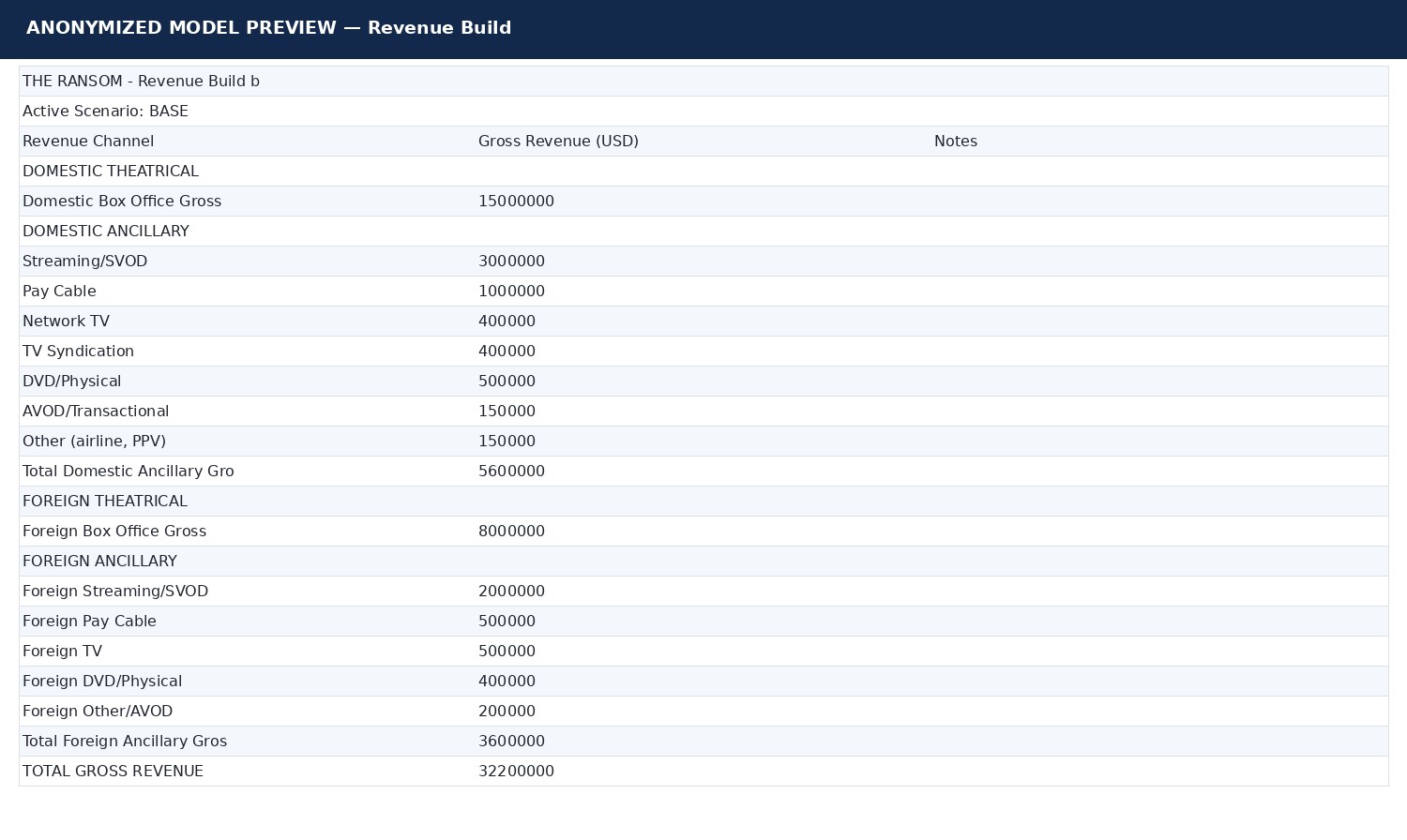
Do not send a folder of disconnected documents and expect the financier to build your finance plan for you. The package should reconcile. Budget totals, finance sources, cashflow timing and repayment assumptions should tell the same story.
Why a Financier May Reject a Good Film
A financier can like the screenplay and still reject the transaction. Common reasons include an unrealistic budget, too much of the finance plan remaining speculative, unclear collateral, weak documentation, unsupported tax-credit assumptions, insufficient contingency, missing delivery planning, no reliable cashflow, an unproven repayment path or a production package that is not mature enough for the requested capital.
This is one reason filmmakers should separate creative quality from financeability. A good film can still be a bad loan.
Likewise, debt should not be used simply because equity is difficult to raise. Debt creates repayment obligations, fees, security interests and potentially guarantees. The structure must fit the project.
Debt Financing, Equity Financing, Gap Financing and Soft Money
What is debt financing in film?
Debt financing is borrowed capital that is expected to be repaid under agreed terms. Senior production debt may be secured by receivables such as tax credits, pre-sales or distribution minimum guarantees. The lender's return is generally driven by interest, fees and negotiated rights rather than by owning the entire project upside.
What is equity financing in film?
Equity financing is risk capital invested in exchange for ownership, profit participation or another economic interest in the project. Equity normally sits behind senior debt in the repayment structure and carries greater exposure to performance risk.
What is gap financing in film?
Gap financing fills part of a finance plan that has not been covered by fully contracted sources. It can be riskier and more expensive than senior collateralized lending because repayment may depend more heavily on unsold territories, sales estimates or other less-certain value.
What is soft money in film financing?
Soft money generally refers to non-recoupable or less traditionally recouped sources such as grants, certain public funds and production incentives. A tax credit or rebate can reduce the effective cost of production, but it may still need to be cashflowed with a loan because the payment often arrives after qualifying expenditure has been incurred.
Film Finance Plan vs Recoupment Waterfall
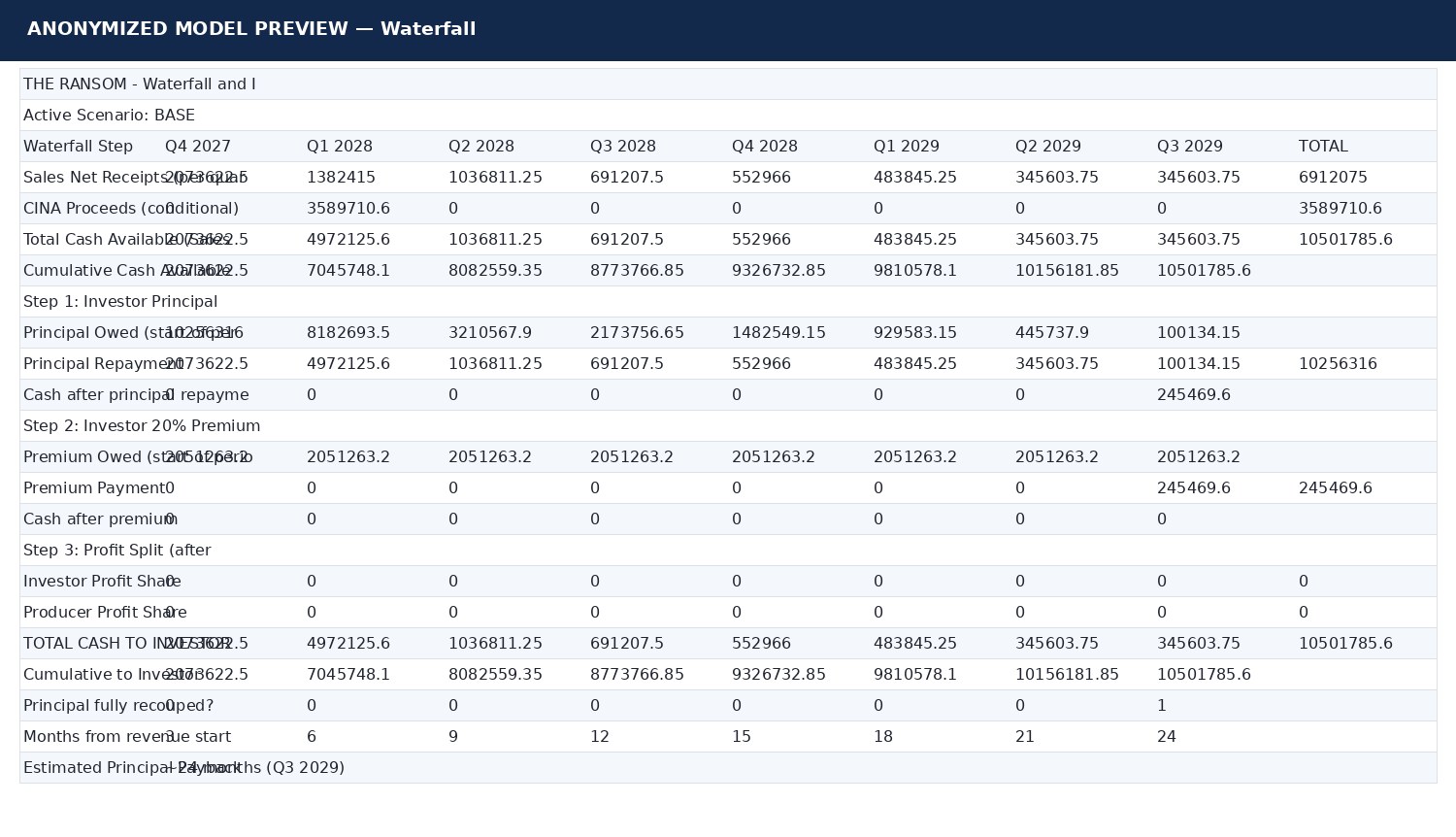
A film finance plan explains where the money required to make the film comes from. A recoupment waterfall explains how revenues are distributed after the film begins earning money. They are connected, but they are not the same document.
The finance plan might show equity, debt, grants, pre-sales and incentives. The waterfall may show sales-agent deductions, distribution fees, lender repayment, investor principal, preferred return and producer or participant profit shares.
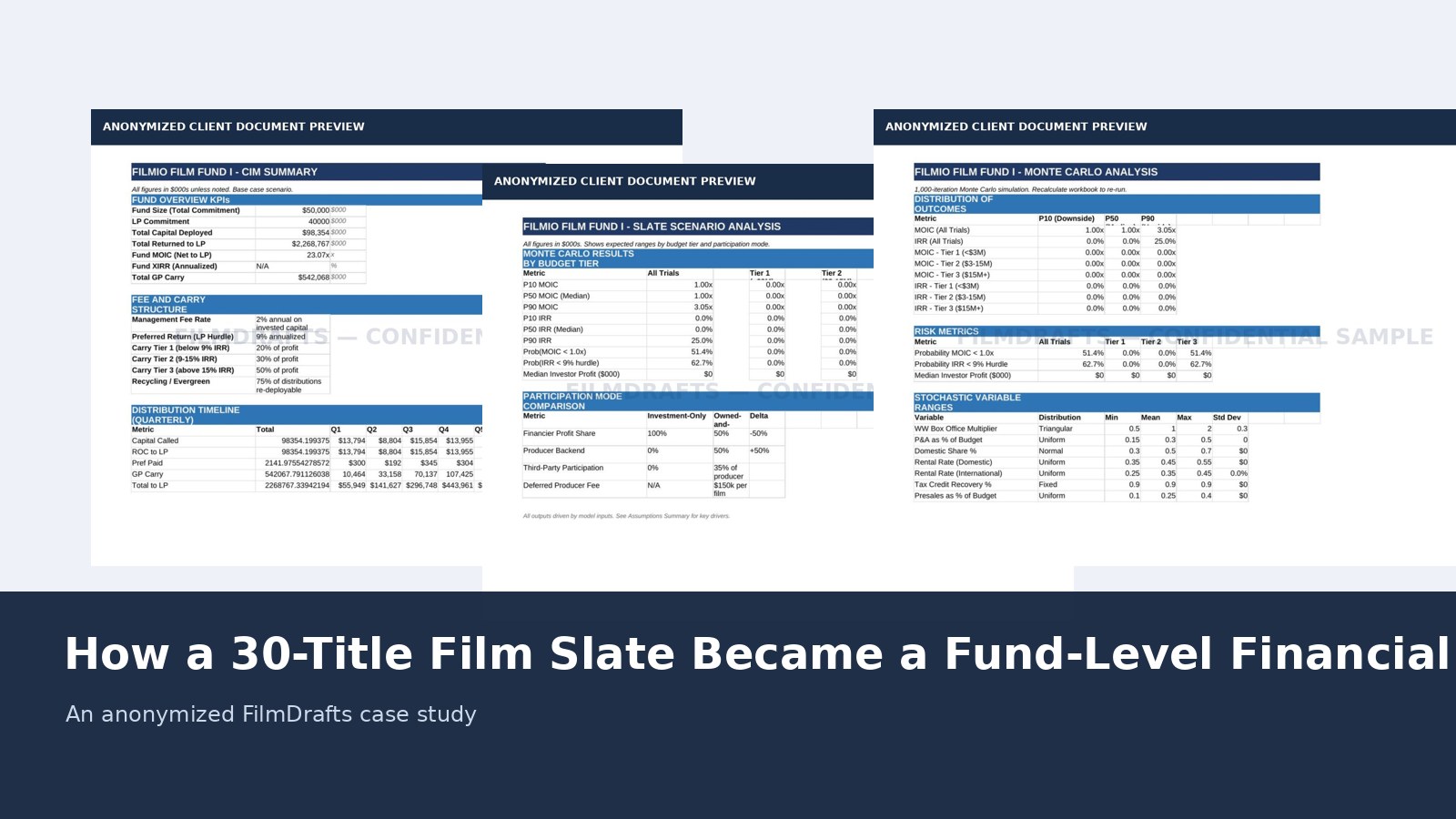
FilmDrafts builds film financial models and recoupment waterfalls that connect these assumptions so producers can examine how financing decisions may affect later cash distributions.
Why Tax Credits and Rebates Matter to Film Financiers
Tax credits and production rebates are important because they can create an identifiable receivable that a lender may be willing to cashflow. But the headline incentive percentage is not the same as guaranteed collateral value.
A financier may examine qualified expenditure, eligible labor, audit requirements, certification stage, timing, jurisdiction risk, transferability, currency, legal assignability and expected collection. A lender may also apply a haircut or advance rate rather than lending the full estimated face value.
This is why the production budget and incentive analysis should be conservative. If the budget assumes a $1 million incentive receivable and the final qualified-spend analysis supports only $700,000, the gap can become a real production-finance problem.
Before You Approach a Film Financing Company, Get Finance-Ready
FilmDrafts is not a lender and does not represent itself as a film financing company. Our role is earlier in the process: helping producers build the production and financial documents that financiers need in order to evaluate a project.
Depending on the engagement, FilmDrafts can support a project with a detailed film budget, script breakdown and production schedule, a production cashflow, a finance plan, a financial model and waterfall, an investor package or a film business plan.
That distinction is important. FilmDrafts does not promise that a lender will approve a project. We help producers make the project easier to understand, test and present before the financing conversation begins.
Do You Need a Film Financing Agreement Template?
Producers sometimes search for a film financing agreement template after finding a potential investor or lender. Be careful here. Financing documents can create security interests, repayment obligations, ownership rights, guarantees, covenants and legal exposure. A generic template is not a substitute for an entertainment lawyer who understands the specific transaction and jurisdiction.
FilmDrafts can help with budgets, financial models, waterfalls and planning materials, but we do not provide legal advice or replace transaction counsel.
Related FilmDrafts Resources
Frequently Asked Questions
What is film financing?
Film financing is the process of assembling the capital required to develop, produce, finish and deliver a film. The finance plan may include equity, debt, tax credits, rebates, grants, pre-sales, minimum guarantees, broadcaster commitments and other sources.
How does film financing work?
Film financing usually works by combining multiple sources into a capital stack. Equity absorbs project risk, while lenders may advance funds against identifiable collateral such as tax credits, pre-sales, MGs or distribution receivables. The exact structure depends on the project's budget, contracts and repayment sources.
How are films financed?
Independent films can be financed with private equity, production loans, public funds, incentives, tax credits, pre-sales, distribution advances, minimum guarantees, grants, producer capital and other sources. Larger projects often use several of these together.
What is a film financier?
A film financier is a person or company that provides, arranges or underwrites capital for film and television projects. Some are equity investors, while others are lenders focused on repayment from contracted receivables or other collateral.
How do I find film financiers?
Start by identifying the financing type your project actually needs, then research companies whose published criteria match your budget size, jurisdiction, collateral and stage of production. Directories are useful for discovery, but official lender criteria should determine who you approach.
How do I get film financing for an independent film?
Build a credible package first: screenplay, budget, schedule, finance plan, cashflow, producer and cast information, incentive analysis, sales or distribution evidence where available, and a clear explanation of the financing request. Then approach financiers whose underwriting model fits those materials.
What is a film finance plan?
A film finance plan shows how the total production budget will be funded. It lists each expected source of capital, the amount, status, timing and often whether the source is equity, debt, incentive, pre-sale, grant or another form of financing.
What is gap financing in film?
Gap financing is capital used to cover part of a film's finance plan that is not yet fully covered by contracted sources. It can be structured against expected unsold-territory value, future receivables or other support, and usually carries more risk than fully collateralized senior debt.
Which film financing companies operate in the UK?
Examples in this guide with a UK presence or UK-focused activity include Head Gear Films, Jala Pictures and TPC. Other global lenders may also review UK projects depending on jurisdiction, collateral and structure.
Are there film financing companies in Los Angeles?
Yes. Los Angeles and Southern California are major centers for entertainment finance. BondIt is based in Santa Monica, while City National and East West Bank maintain entertainment-finance operations in the region. Producers should still evaluate each company's financing criteria rather than choosing by location alone.
Preparing to Approach Film Financiers?
FilmDrafts can help build the budget, schedule, cashflow, finance model and investor-facing documents that make the financing structure easier to evaluate.
Discuss Your Project →