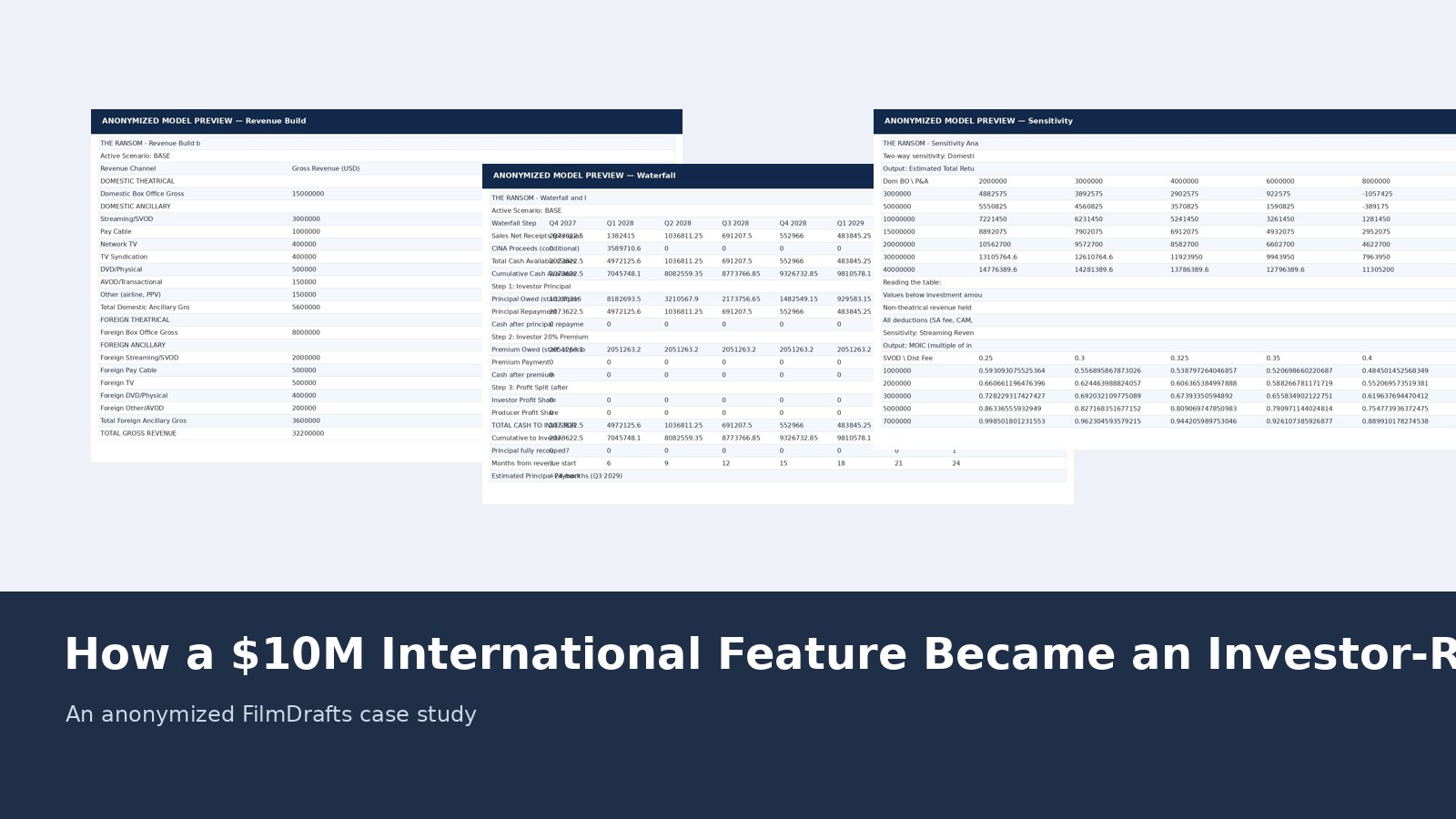
For a feature with a $10M production scope, the next question was how the financing would work. FilmDrafts developed a film business plan, editable financial model and recoupment waterfall so the producer could present revenue assumptions, payment priorities and risks in one connected package.
The Film Had a Budget. Investors Needed a Financial Logic.
An ambitious international feature can have a complete creative package and still be difficult to evaluate as an investment. The producer needed more than a headline budget. A potential investor had to understand where revenue assumptions came from, which deductions occurred before recoupment, how capital returned and how risk changed under different performance scenarios.
Starting with the Business Case
The business plan framed the film as both a cultural project and a commercial proposition. It connected the story, audience, production strategy, marketing approach, distribution pathways and financing requirement. Rather than treating the plan as promotional copy, the narrative was grounded in the same assumptions that would later appear in the film financial model.
Building a Formula-Driven Model Instead of a Static Table
The Excel model linked assumptions, budget summary, revenue build, deductions, net receipts, investor waterfall, scenario outputs, sensitivity analysis and validation checks. When a core assumption changed, the downstream outputs changed with it. This distinction matters: a static revenue projection may look polished, but it cannot show how one change affects the full investment structure.
Making the Recoupment Waterfall Understandable
The waterfall translated legal and commercial terms into a clear order of payments. Net receipts first returned invested capital, then applied the agreed premium, and only after those stages did remaining profits split between investor and producer interests. The model made the sequence visible without presenting it as legal advice.
Turning Research into an Outreach Strategy
The global outreach report separated realistic financing paths from attractive but unsuitable names. It reviewed equity routes, co-production funds, incentives, market attendance and eligibility constraints, then organized the work into a practical action plan. The goal was not to promise financing; it was to help the producer spend time on routes that matched the project.
The Outcome
The producer received one integrated finance package in which the business plan, investor overview, Excel model and outreach strategy supported one another. The result was not a guarantee of investment. It was a clearer, auditable way for an investor or adviser to understand the project’s assumptions, risks and proposed return structure.
Selected Document Preview
The viewer below contains selected, anonymized pages from this project. Scroll vertically to examine the structure of the work. Full editable files, formulas and confidential pages are not published.
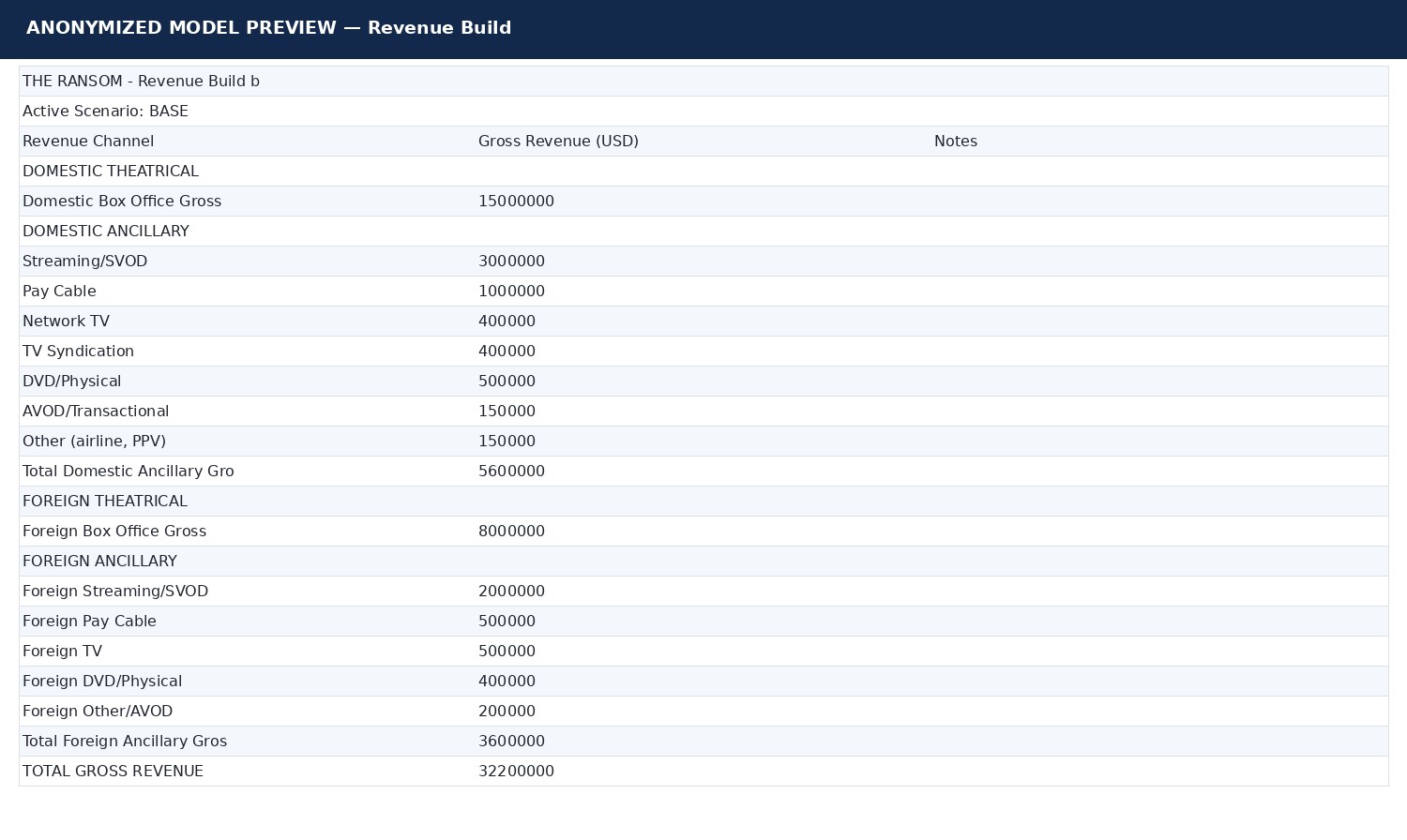
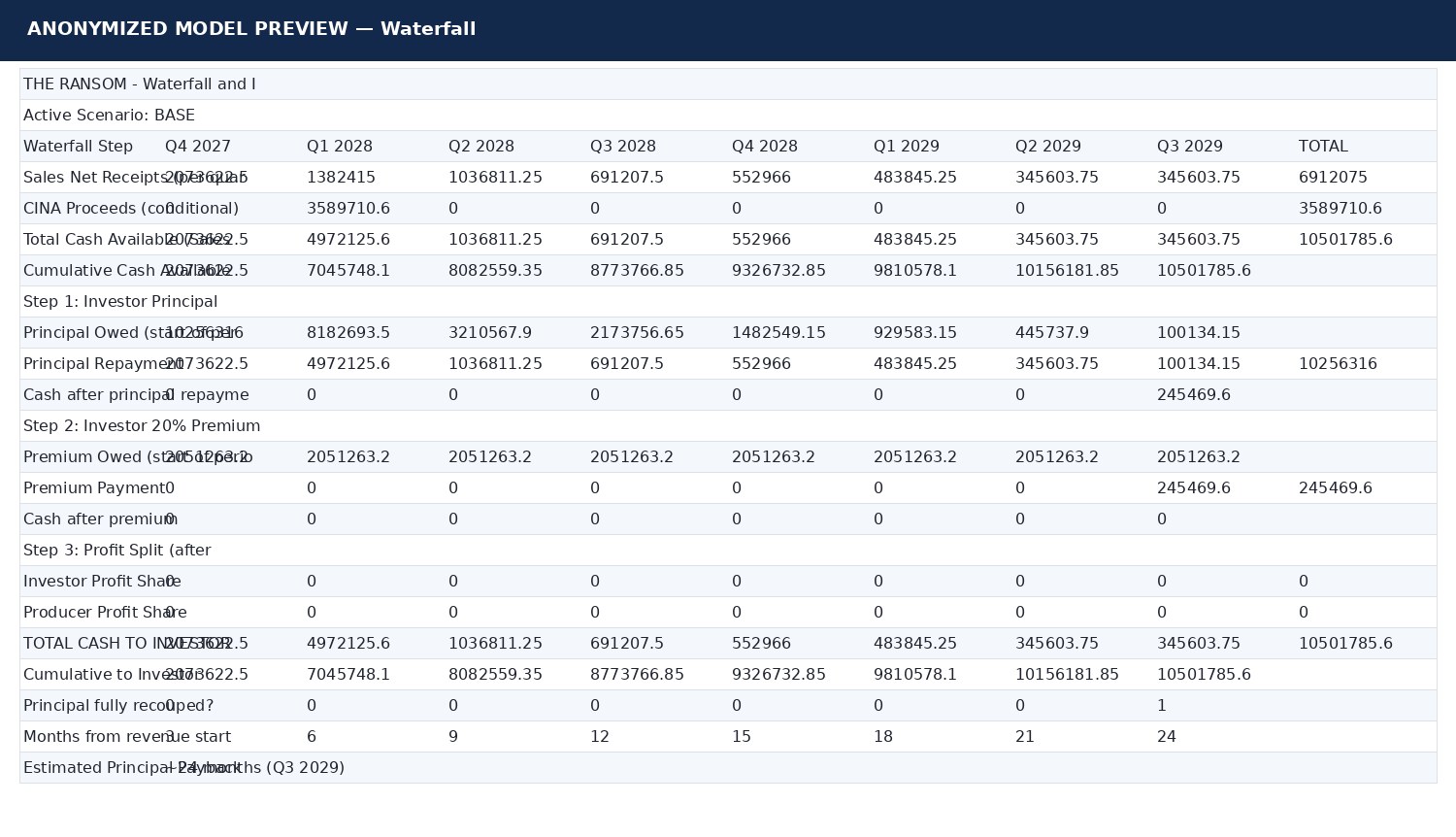
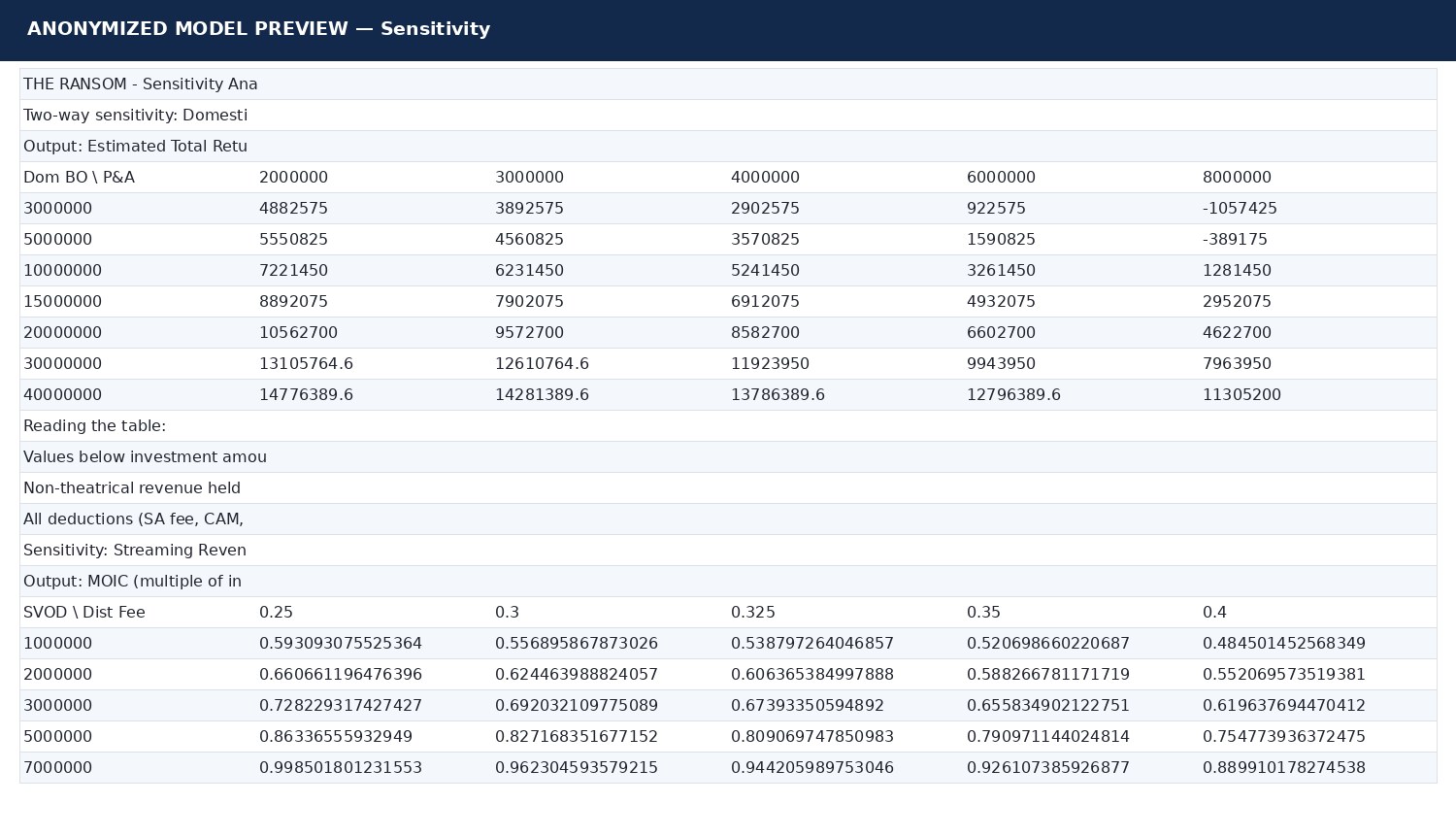
These images are reduced, watermarked previews. Project names, client identities and sensitive details have been generalized or obscured.
What Producers Can Learn from This Engagement
Keep the business plan and film financial model on the same assumptions. Investors should be able to trace the budget requirement through revenue scenarios, distribution deductions and the proposed recoupment waterfall, including cases where capital is not fully returned.
Need an Investor-Ready Film Finance Package?
FilmDrafts creates film financial models and recoupment waterfalls, investor packages and film business plans built around the same underlying assumptions.
Discuss Your Project →Confidentiality Notice
This case study is based on real FilmDrafts work. Client names, project titles and identifying details have been fictionalized or generalized. Screenshots are cropped, reduced, blurred, watermarked or redacted. Full documents and editable source files are not publicly available.