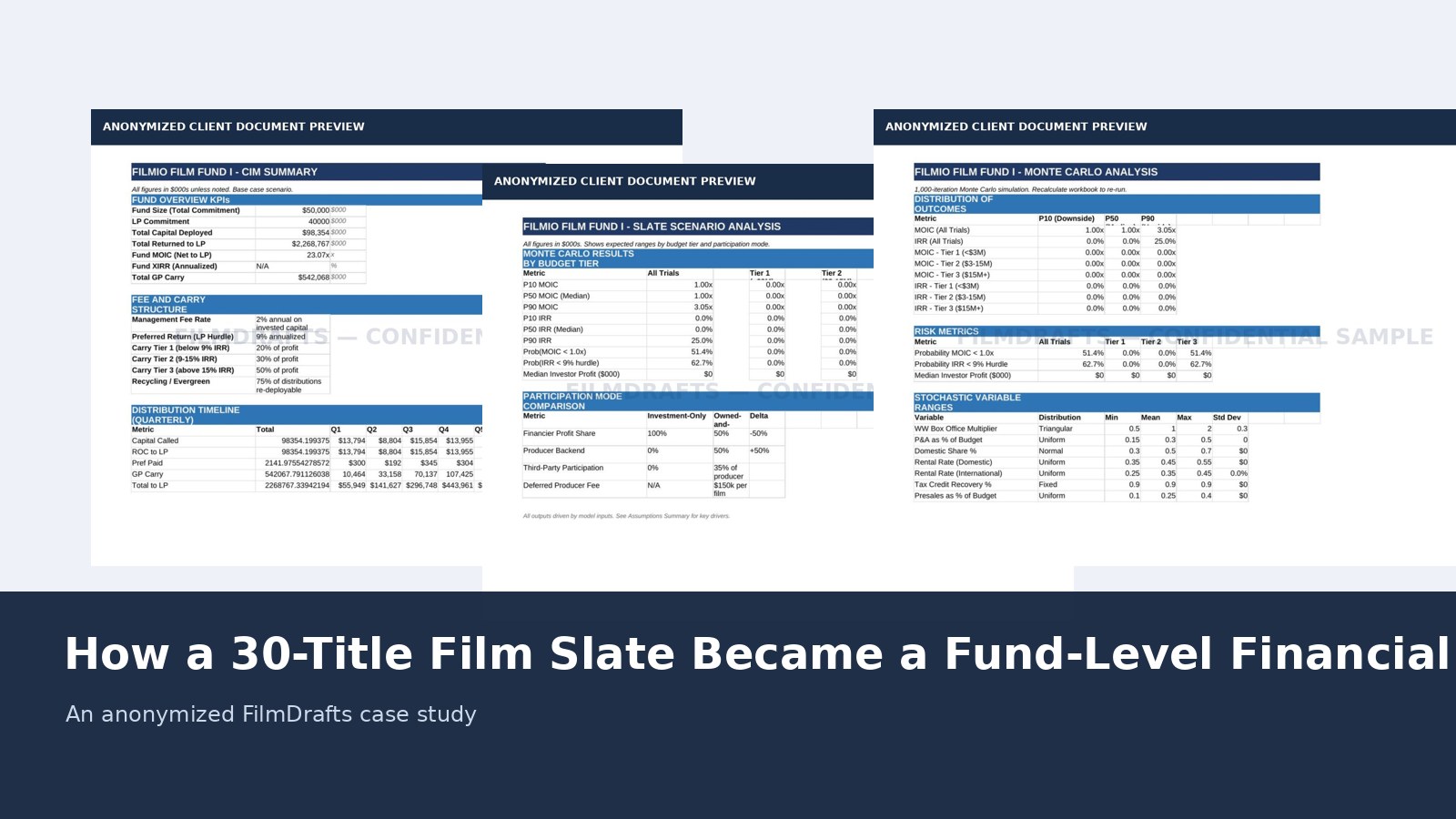
A 30-title slate required a financial model that could connect individual film economics with company and fund commitments. FilmDrafts developed project and slate views, fund waterfall logic and five-year corporate forecasts so the portfolio could be assessed across timing and performance scenarios.
One Film Model Was Not Enough
The assignment was not about estimating the return on a single feature. A studio needed to understand how individual projects, a multi-title slate, a fund structure and the operating company interacted. A profitable title could not be viewed in isolation from capital calls, recycling, management fees, project timing or the cost of running the studio.
Creating a Project Engine That Could Be Reused
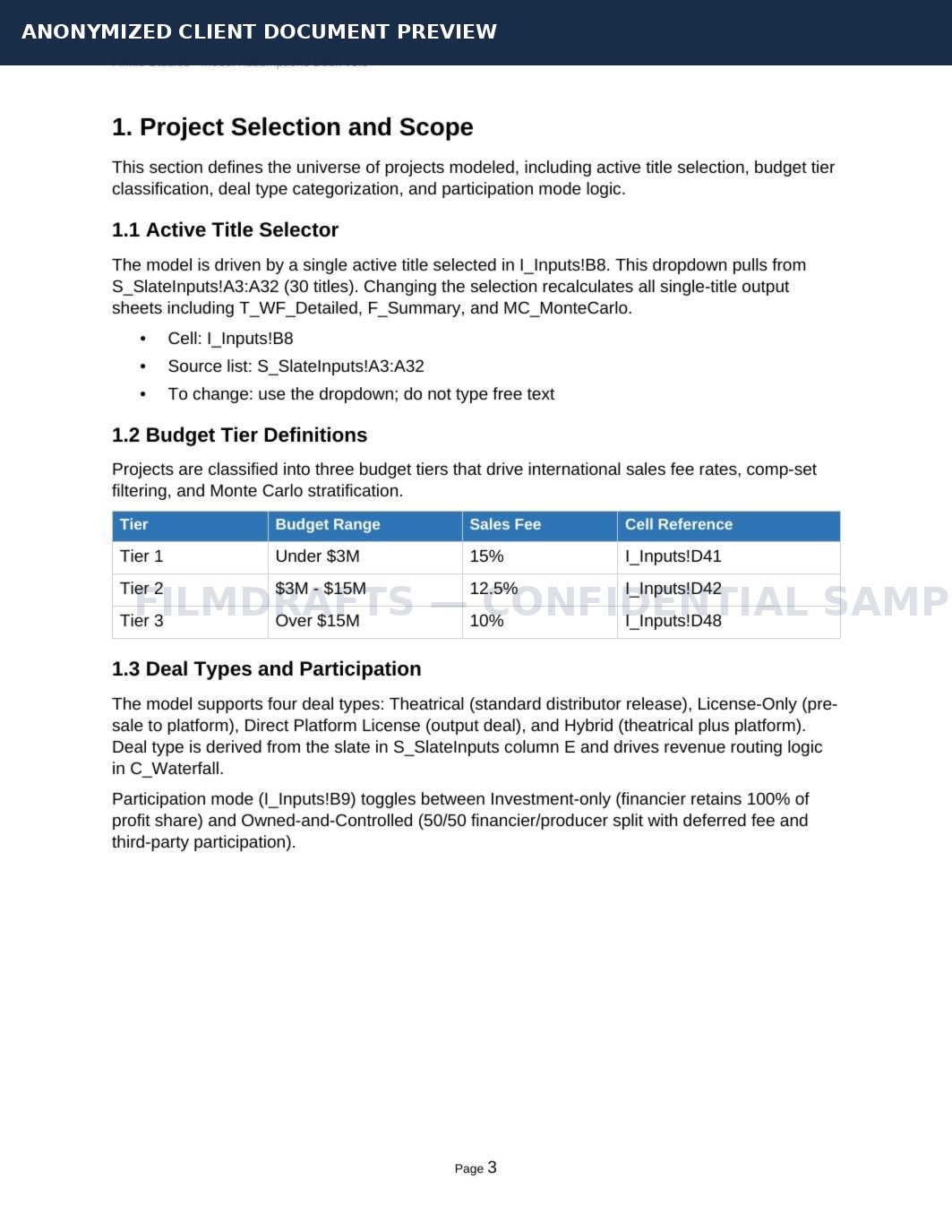
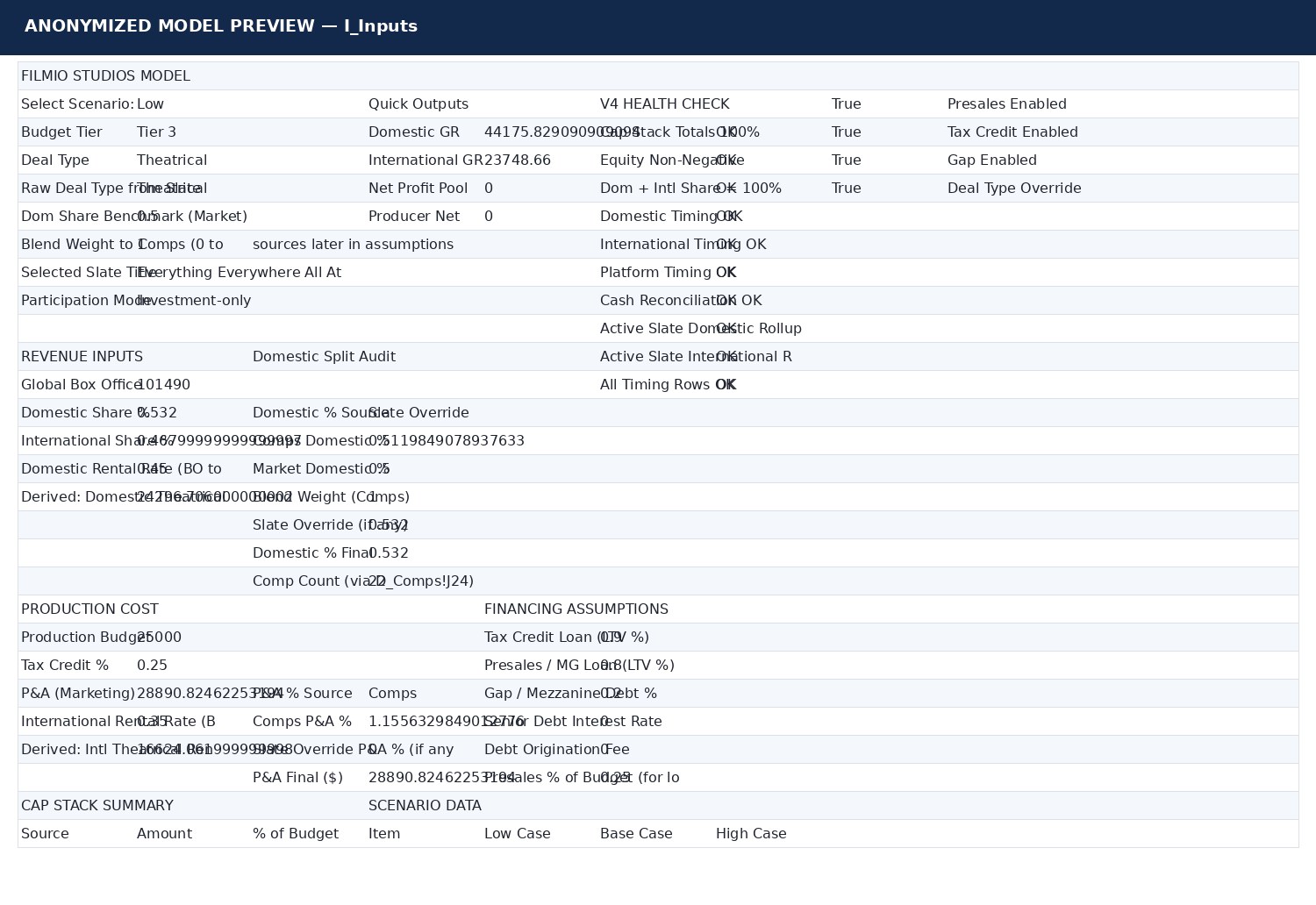
The model began with a project-level engine. A selected title could be evaluated by budget tier, deal type, revenue assumptions, financing stack and participation mode. Project outputs then flowed into detailed waterfalls and summary sheets, allowing individual economics to remain visible inside a larger portfolio.
Rolling Projects into a Slate
A slate view brought multiple titles together to show capital deployment, timing, expected receipts and portfolio exposure. This film slate modeling layer helped answer a different question from a single-film budget: how much capital would the company need across the portfolio, and when would that capital be required?
Modeling the Fund Waterfall
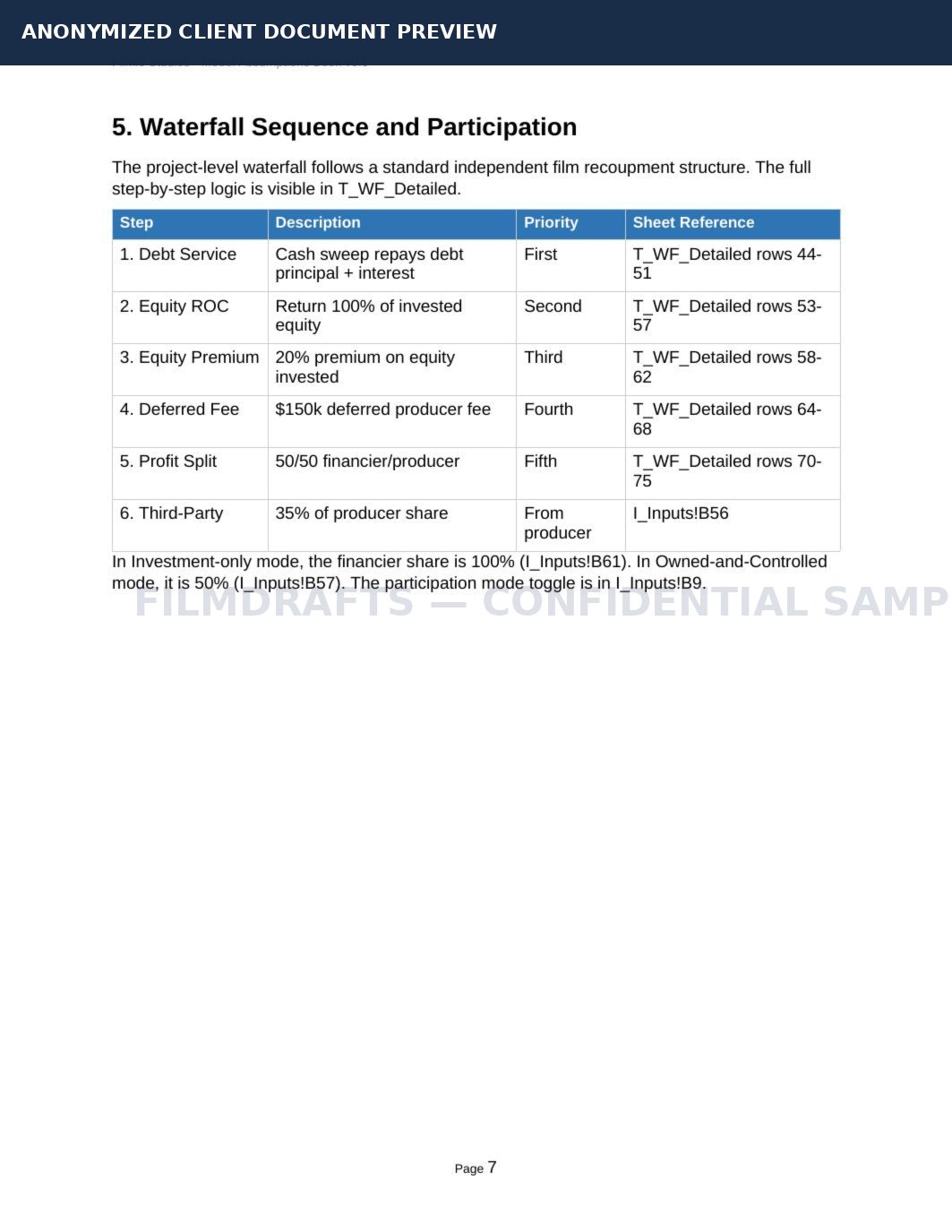
The fund layer incorporated LP commitments, management fees, a preferred-return hurdle, carried-interest tiers and recycling mechanics. Quarterly cash flows fed the fund waterfall so that capital return and carry could be evaluated over time rather than presented as one final percentage.
Testing Risk Instead of Hiding It
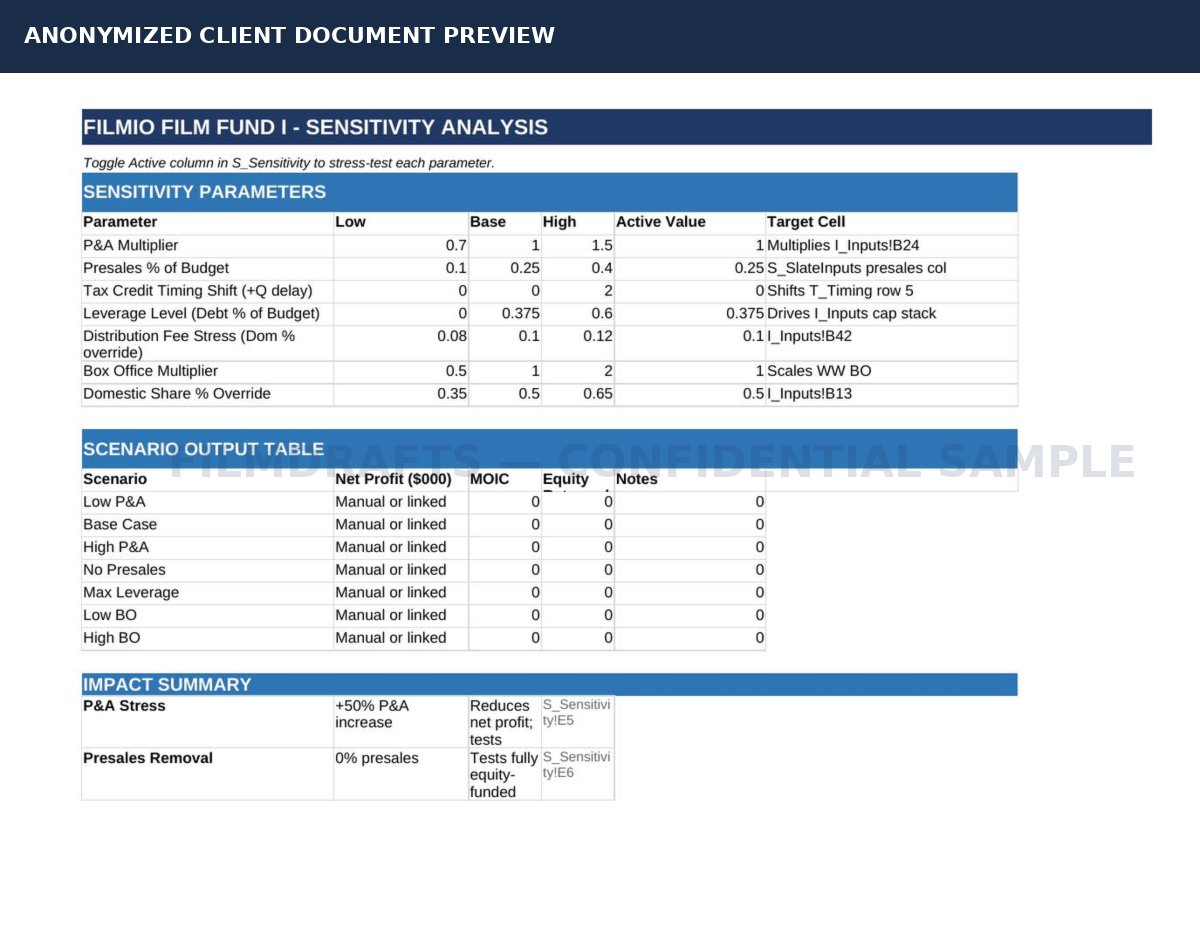
A 1,000-iteration Monte Carlo simulation varied revenue and cost drivers to show a distribution of possible outcomes. Sensitivity analysis separately stressed variables such as P&A, presales, leverage, tax-credit timing and box-office performance. These tools did not make the future predictable; they made uncertainty visible.
The Outcome
The final institutional film finance model connected project economics, slate planning, fund terms and corporate forecasts in one workbook, supported by a CIM output pack and assumptions book. Proprietary formulas and data remain confidential, but the structure demonstrates how complex film investment decisions can be organized and checked.
Selected Document Preview
The viewer below contains selected, anonymized pages from this project. Scroll vertically to examine the structure of the work. Full editable files, formulas and confidential pages are not published.
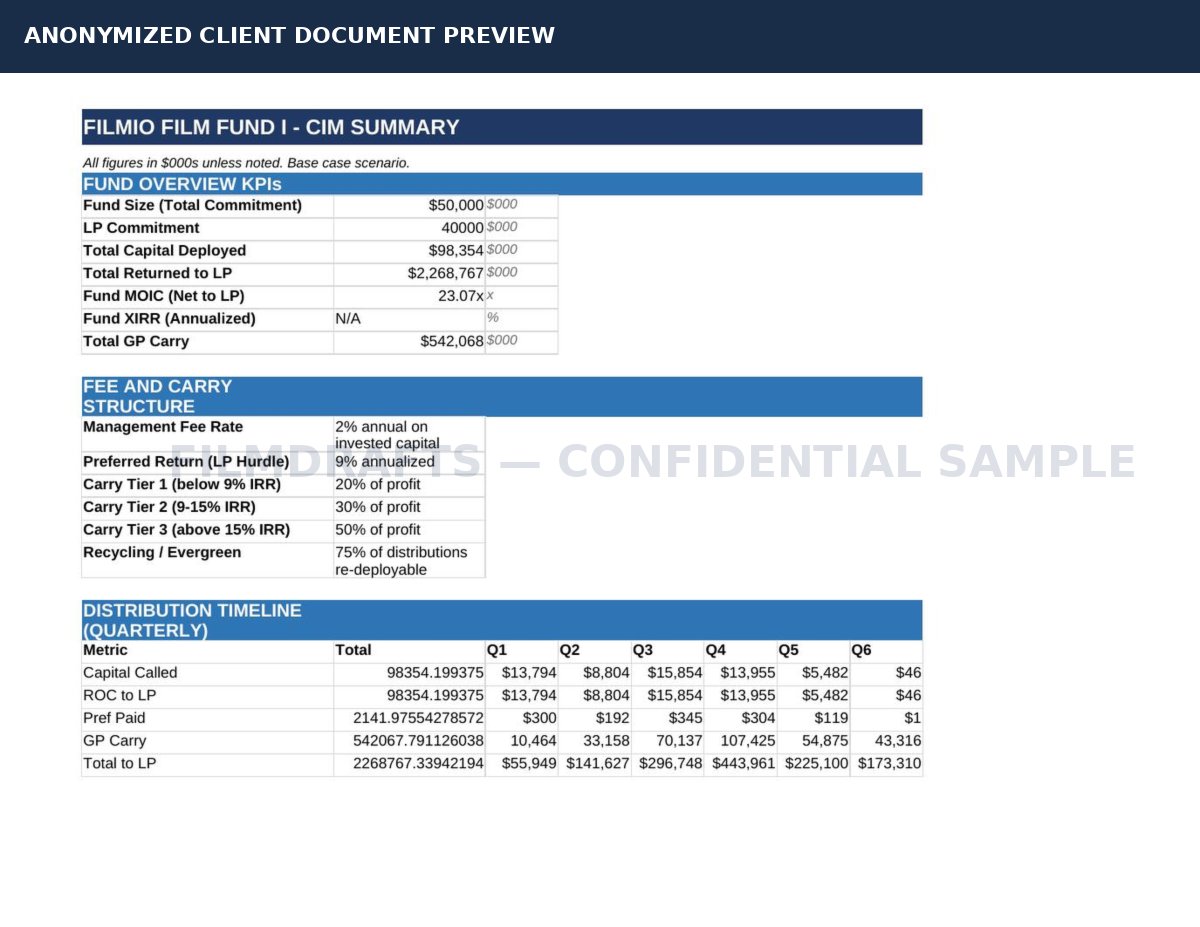
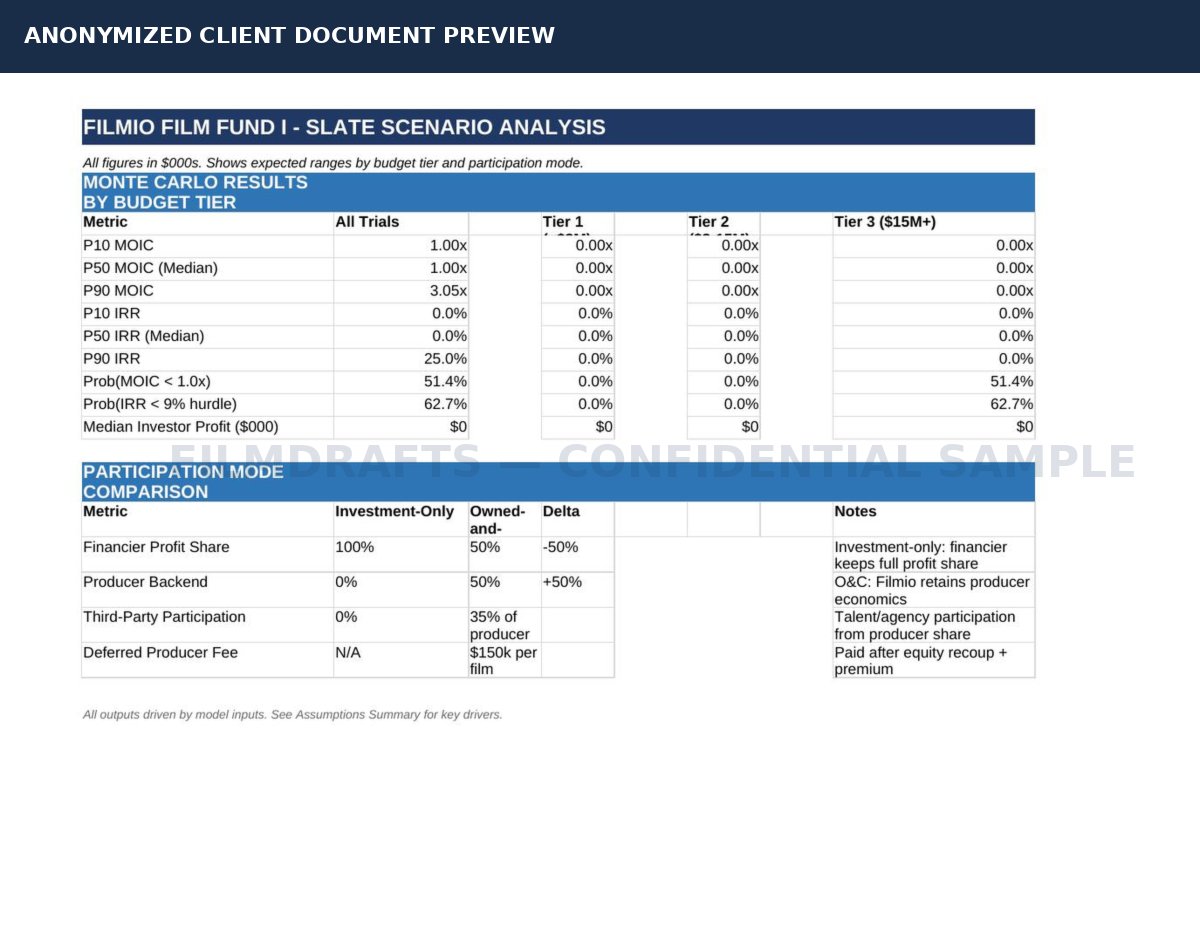
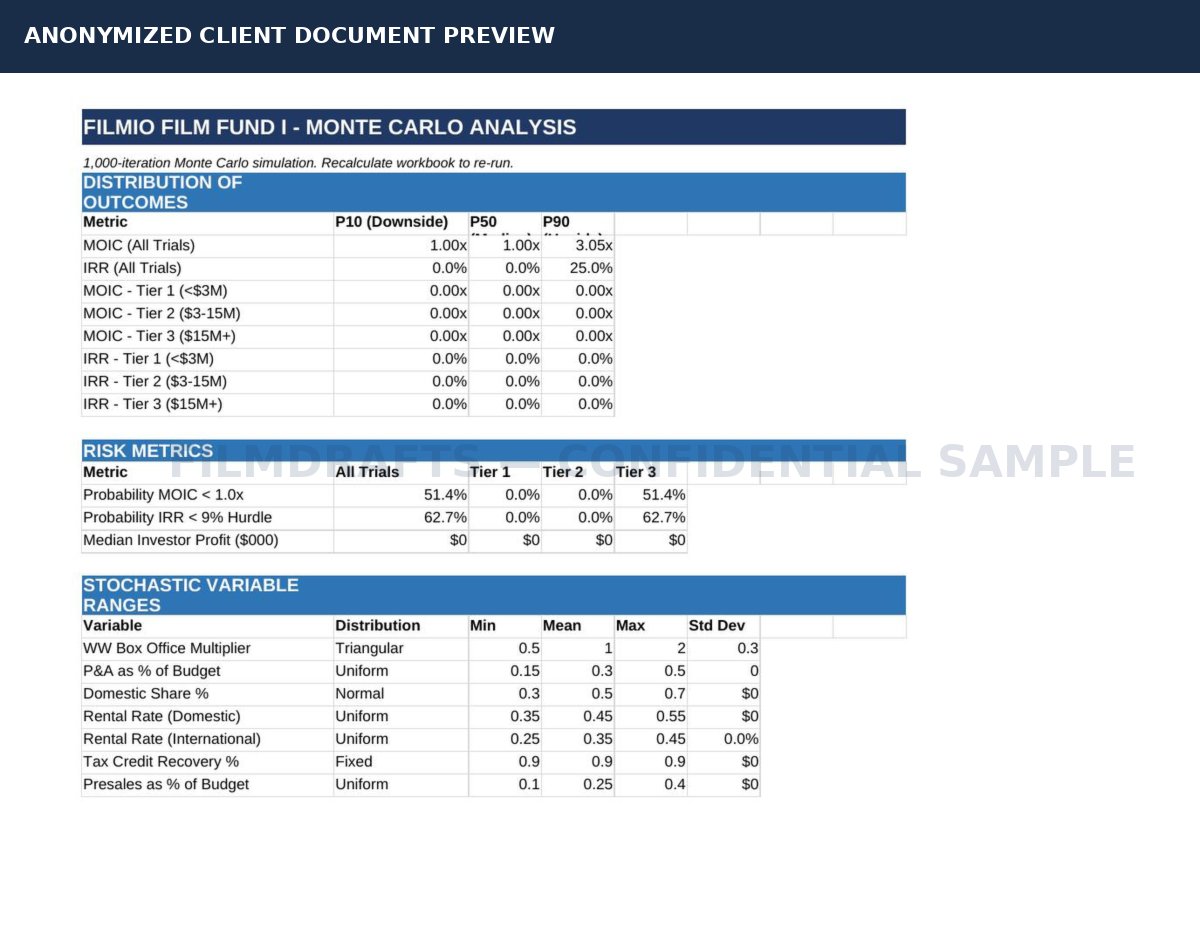
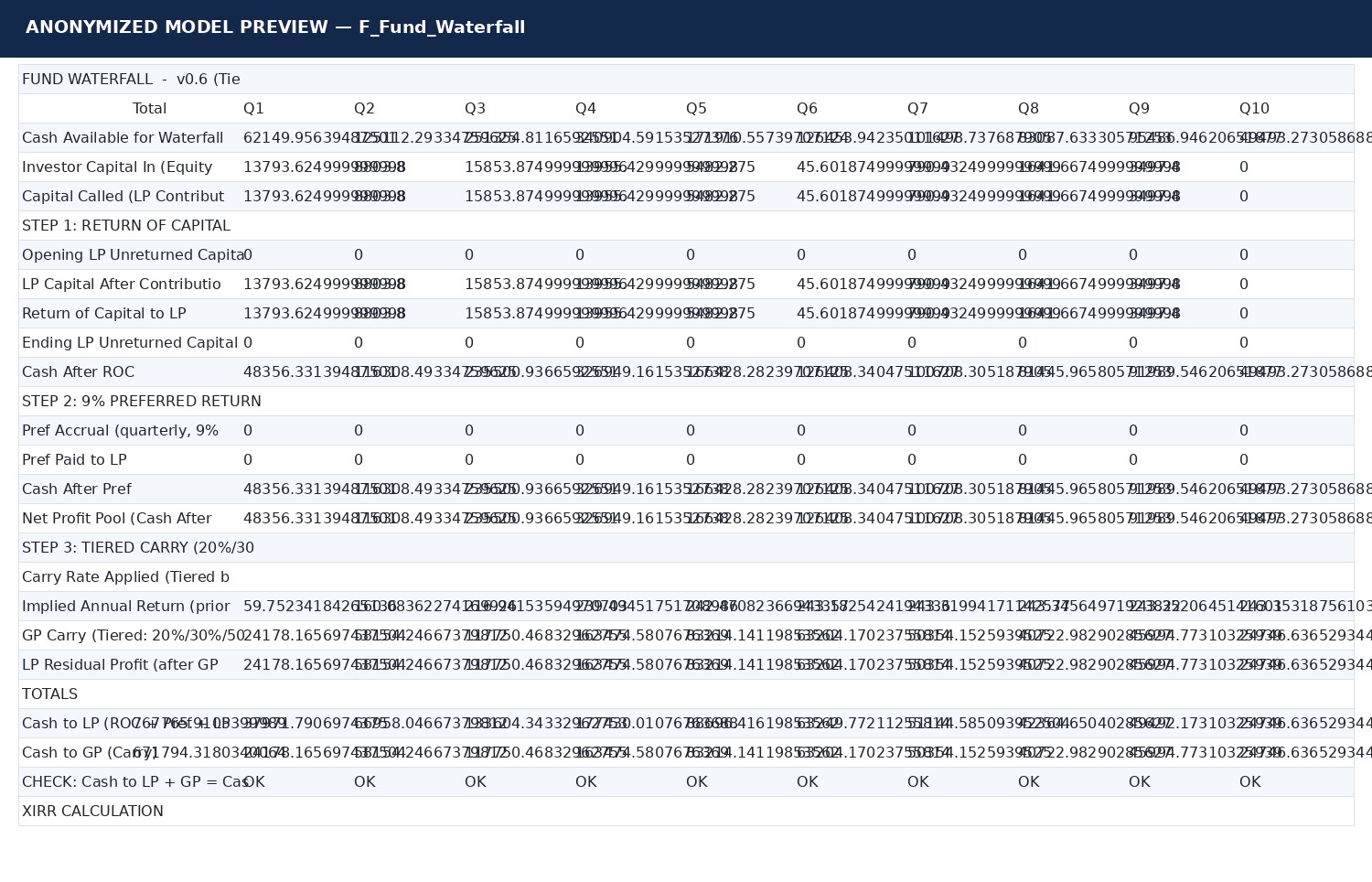
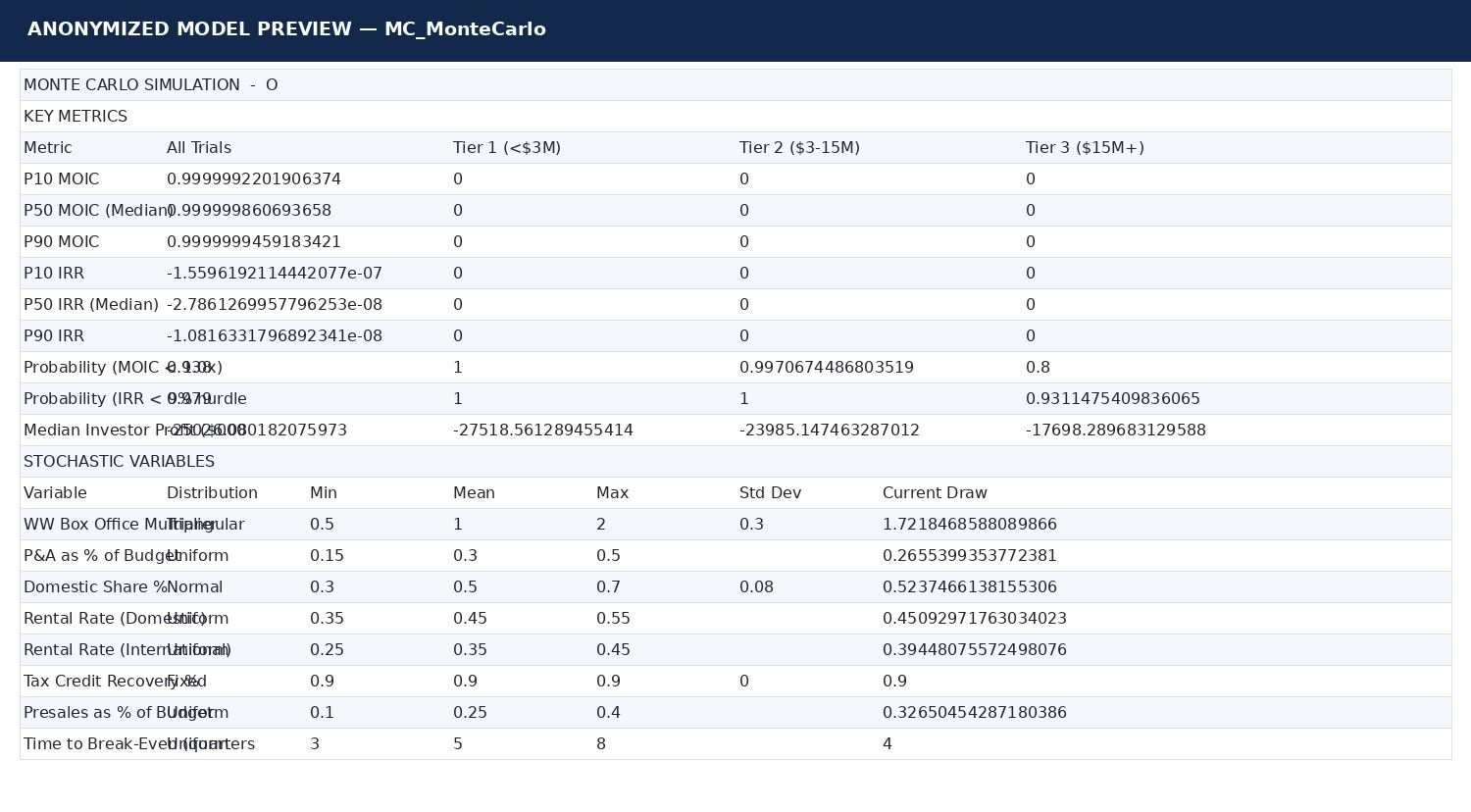
These images are reduced, watermarked previews. Project names, client identities and sensitive details have been generalized or obscured.
What Producers Can Learn from This Engagement
Film slate modeling needs both a project view and a consolidated capital view. Test overlapping funding needs, shared overhead and delayed receipts before relying on portfolio totals. Project-level recoupment and fund-level distributions should remain separately traceable.
Building a Film Fund or Multi-Title Slate?
FilmDrafts develops film fund financial models, project and fund waterfalls, Monte Carlo risk analysis and slate business planning for qualified production companies and investors.
Discuss Your Project →Confidentiality Notice
This case study is based on real FilmDrafts work. Client names, project titles and identifying details have been fictionalized or generalized. Screenshots are cropped, reduced, blurred, watermarked or redacted. Full documents and editable source files are not publicly available.