
A film pitch deck is not just a prettier synopsis. It is the document that helps an investor, producer, sales contact or strategic partner understand what the project is, why it matters, who it is for, how much it costs, and why this team can actually pull it off. A weak deck feels like random slides. A strong one creates confidence.
Most filmmakers search for a film pitch deck template or film pitch deck examples because they want a fast format. That is useful, but the real question is bigger: what do film investors expect when they open the deck? They are usually looking for clarity, discipline and evidence that the project has been packaged thoughtfully enough to move toward financing.
What Is a Film Pitch Deck?
A film pitch deck is a concise visual presentation used to introduce a film project to investors, financiers, producers, agencies, sales contacts, distributors or collaborators. For independent features, it often sits somewhere between a creative lookbook and a business summary.
The best decks do two jobs at once. First, they communicate the creative identity of the project: genre, tone, world, mood and story promise. Second, they communicate the commercial and practical logic: target audience, comparable titles, budget strategy, packaging status, production plan and the investment proposition.
That is why the search intent around this topic leans so heavily toward film pitch deck structure, film pitch deck slides, movie pitch deck examples and film financing pitch deck. People are not only looking for design inspiration. They want to know what information belongs in the deck and in what order.
Film Pitch Deck vs Business Plan vs Full Investor Package
| Document | Primary purpose | What it usually contains |
|---|---|---|
| Film pitch deck | Gets attention and starts the financing conversation. | Hook, story, tone, visuals, audience, comps, team, budget snapshot and investor ask. |
| Film business plan | Explains the project and company logic in greater written depth. | Executive summary, market positioning, financing overview, distribution thinking, revenue context and implementation detail. |
| Full investor package | Supports serious due diligence and decision-making. | Pitch deck, business plan, detailed budget, schedule, financial model, recoupment waterfall and supporting finance assumptions. |
If you are only making first introductions, a deck may be enough. If a financier asks deeper questions about risk, cash flow, upside, waterfall or execution, the deck alone is not enough anymore. That is where a complete package becomes important.
What Investors Expect in a Film Pitch Deck
Investors do not all read decks the same way, but they usually want the same underlying things:
- A clear concept. They should understand the genre, emotional hook and scale immediately.
- A coherent visual promise. The deck should make the project feel real, not vague.
- Audience and market awareness. They want to know who the film is for and how it sits beside comparable titles.
- A believable budget strategy. A budget range should feel aligned with the story’s ambition.
- Credible team positioning. If cast, director or producing team are unconfirmed, the presentation still needs to show why the package is moving toward viability.
- A simple financing conversation. Investors want to know what is being raised, what stage the project is in and how the opportunity is framed.
In other words, a strong deck reduces uncertainty. It makes the opportunity easier to assess, even before anyone opens a spreadsheet.
Film Pitch Deck Example Structure
There is no single mandatory slide count, but for most independent features, a tight 10 to 14 slide structure works well. Below is a practical example that aligns creative flow with investor logic.
| Slide | What to show | Why it matters |
|---|---|---|
| 1. Cover | Title treatment, tonal hero image and short positioning line. | Sets the first impression and tells the reader what kind of film they are opening. |
| 2. Logline | One or two tight sentences capturing the premise and hook. | Gives investors a quick reason to keep reading. |
| 3. Synopsis | Short story overview with stakes, lead character and emotional engine. | Shows that the project has a real narrative arc, not just a concept. |
| 4. Tone & world | Visual references, mood boards and production tone. | Helps the film feel cinematic and specific. |
| 5. Director's vision | A concise point of view on style, themes and execution. | Clarifies creative intent and helps the project feel authored. |
| 6. Audience | Core viewer profile, genre lane and appeal drivers. | Shows market awareness. |
| 7. Comparable titles | Reference films based on tone, audience, scale or performance lane. | Gives commercial context without claiming impossible results. |
| 8. Team / cast / packaging | Producer, director, key attachments or targeted casting lane. | Builds confidence in execution and package maturity. |
| 9. Production plan | Format, location strategy, schedule footprint and production approach. | Connects creative ambition to realistic execution. |
| 10. Budget snapshot | Target budget range, top-sheet summary or high-level allocation. | Shows scale discipline. |
| 11. Financing & investor ask | Amount sought, structure overview, use of funds and next milestone. | Makes the conversation actionable. |
| 12. Contact / next steps | Clear close with contact information and follow-up path. | Prevents the deck from ending without direction. |
This structure can be compressed or expanded, but the order matters. Story and tone must earn attention before financial detail tries to close the deal. If you lead with numbers before the reader understands the project, the deck becomes cold and forgettable.

How many slides should a film pitch deck have?
There is no perfect number, but 10 to 14 slides is usually a comfortable range for an independent feature film pitch deck. Fewer than that can become too thin, while much longer decks often repeat themselves or bury the commercial message.
What Should Be in the Budget and Finance Slides?
Searches like film pitch deck budget slide and film pitch deck financial projections point to a common pain point: filmmakers know they need to show money, but they are unsure how much. The answer is usually enough to create confidence, not so much that the deck turns into an accounting document.
Useful budget and finance slides often include:
- A clear overall budget target or range.
- One high-level allocation view showing how the budget is distributed.
- The production approach behind the budget, such as contained locations, schedule efficiency or scale assumptions.
- The financing status: what is soft-circled, what is being raised and what milestone the raise unlocks.
- A simple note on recoupment logic, revenue thinking or why the opportunity fits the project’s lane.
If the conversation becomes serious, the deck should lead naturally into a detailed budget, cash flow, financial model and recoupment waterfall. That is why many projects ultimately need more than a standalone slide deck.

Common Film Pitch Deck Mistakes
How to Tailor the Deck for an Independent Feature
An independent film pitch deck is often judged differently than a studio-style presentation. Investors know indie projects usually move through packaging stages, soft attachments and evolving finance plans. That means the deck should feel realistic rather than inflated.
For example, instead of pretending every element is locked, a stronger indie deck may clearly show the targeted casting lane, production model, schedule efficiency, location strategy and why the budget level fits the story. Honesty usually converts better than hype.
If your project is moving toward active finance conversations, pair the deck with a more complete package. At FilmDrafts, that usually means connecting the deck to a film business plan, a financial model and waterfall, and a detailed investor-ready package when needed.
Should You Use a Film Pitch Deck Template?
Yes, but only as a starting point. Templates are useful because they stop the blank-page problem and help you remember common sections. But a template should not flatten the personality of the project. A thriller, family drama, contained horror feature and prestige documentary should not all feel identical on the page.
The real value comes from customizing the deck structure around the specific financing story of the project. Sometimes that means emphasizing visual tone and directorial vision. Sometimes it means highlighting cast strategy, comparable titles or a strong controlled-budget plan. The slides stay familiar; the package becomes specific.
Need a Complete Pitch Package for Independent Features?
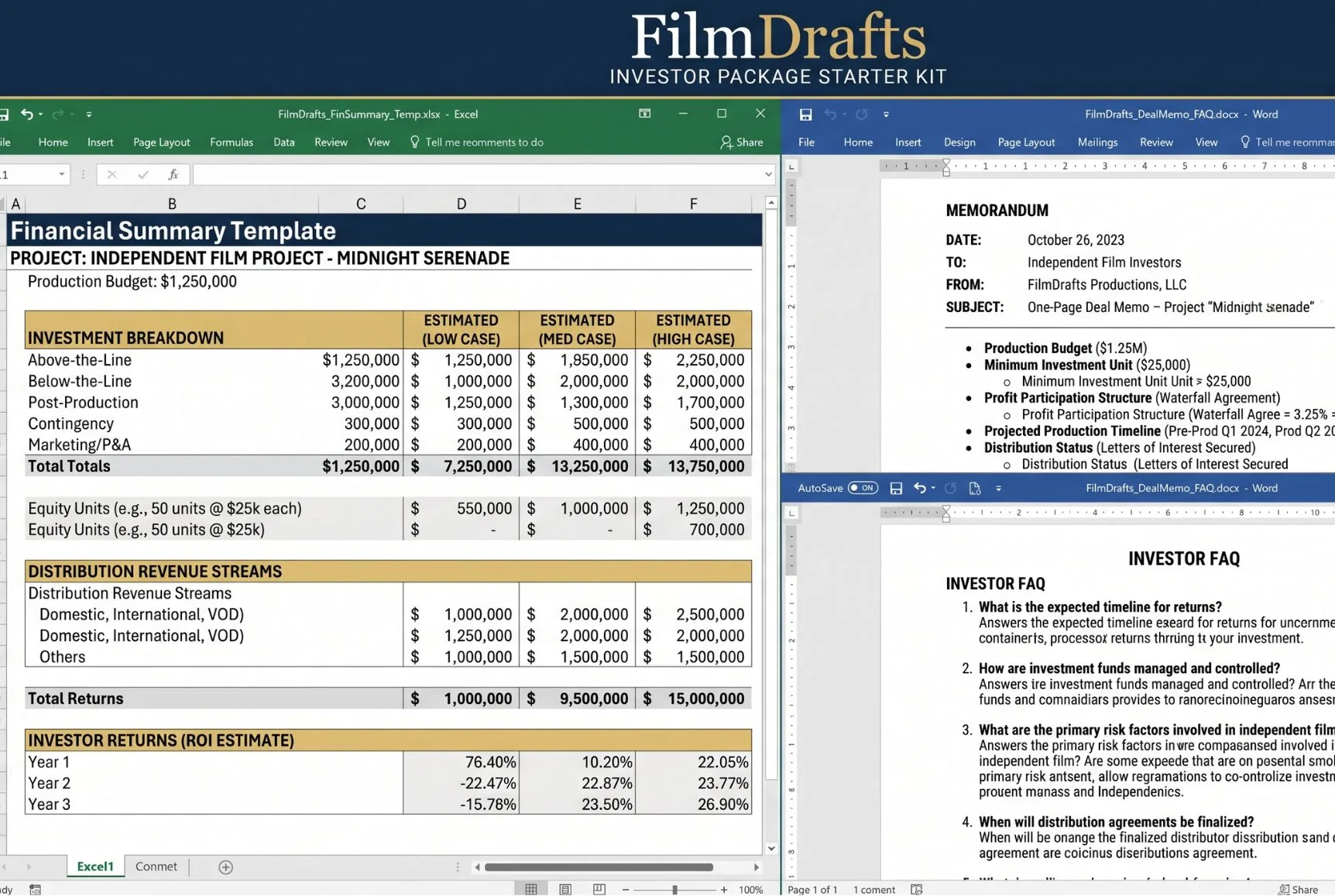
If you need more than slide design, FilmDrafts can help package the project into a real investor-facing document set. That can include the deck, business plan, budget, finance structure and supporting materials tailored to independent features.
Complete Film Pitch Package for Independent Features from us →
If you already have the creative package but need deeper financial support, you can also review our Financial Model & Waterfall service.
Frequently Asked Questions
What should be in a film pitch deck?
A film pitch deck should usually include the title, logline, synopsis, visual tone, director or producer vision, target audience, comparable titles, team or package status, budget snapshot, financing overview and a clear investor ask.
What do film investors look for in a pitch deck?
They generally look for clarity of concept, commercial awareness, a believable budget strategy, confidence in the team and a project package that feels coherent enough to justify further diligence.
How many slides should a movie pitch deck have?
For most independent features, about 10 to 14 slides is a good working range. It is enough space to cover the essentials without exhausting the reader.
What is the difference between a film pitch deck and a film business plan?
The deck is a concise visual introduction. The business plan goes deeper into the business case, market logic and project strategy in written form. Serious financing often benefits from both.
Do film pitch decks need a budget slide?
Usually yes. It does not need to be a full line-item budget, but it should signal the target budget level and show that the production approach is being thought through seriously.
Should I include financial projections in a film pitch deck?
You can include high-level financial thinking, but detailed projections are often better placed in a supporting financial model or investor package rather than overloading the deck itself.
Can a pitch deck raise money by itself?
Sometimes it can open the conversation, but investors rarely rely on the deck alone. Once interest develops, they usually want more detail about budget, schedule, team, rights and financing structure.
What makes an independent film pitch deck stronger?
Specificity. A strong indie deck matches the story to a realistic scale, communicates tone clearly, shows audience awareness and presents the package with discipline rather than hype.
Can FilmDrafts help build the deck and the supporting finance package?
Yes. If you need the creative presentation supported by finance materials, FilmDrafts can help package the deck alongside the business plan, budget and investor-facing documents.
Need a Film Pitch Deck That Is Backed by Real Finance Materials?
If your project is ready to move beyond a generic template, FilmDrafts can help structure the pitch deck and the underlying investor package so the presentation actually supports a real financing conversation.