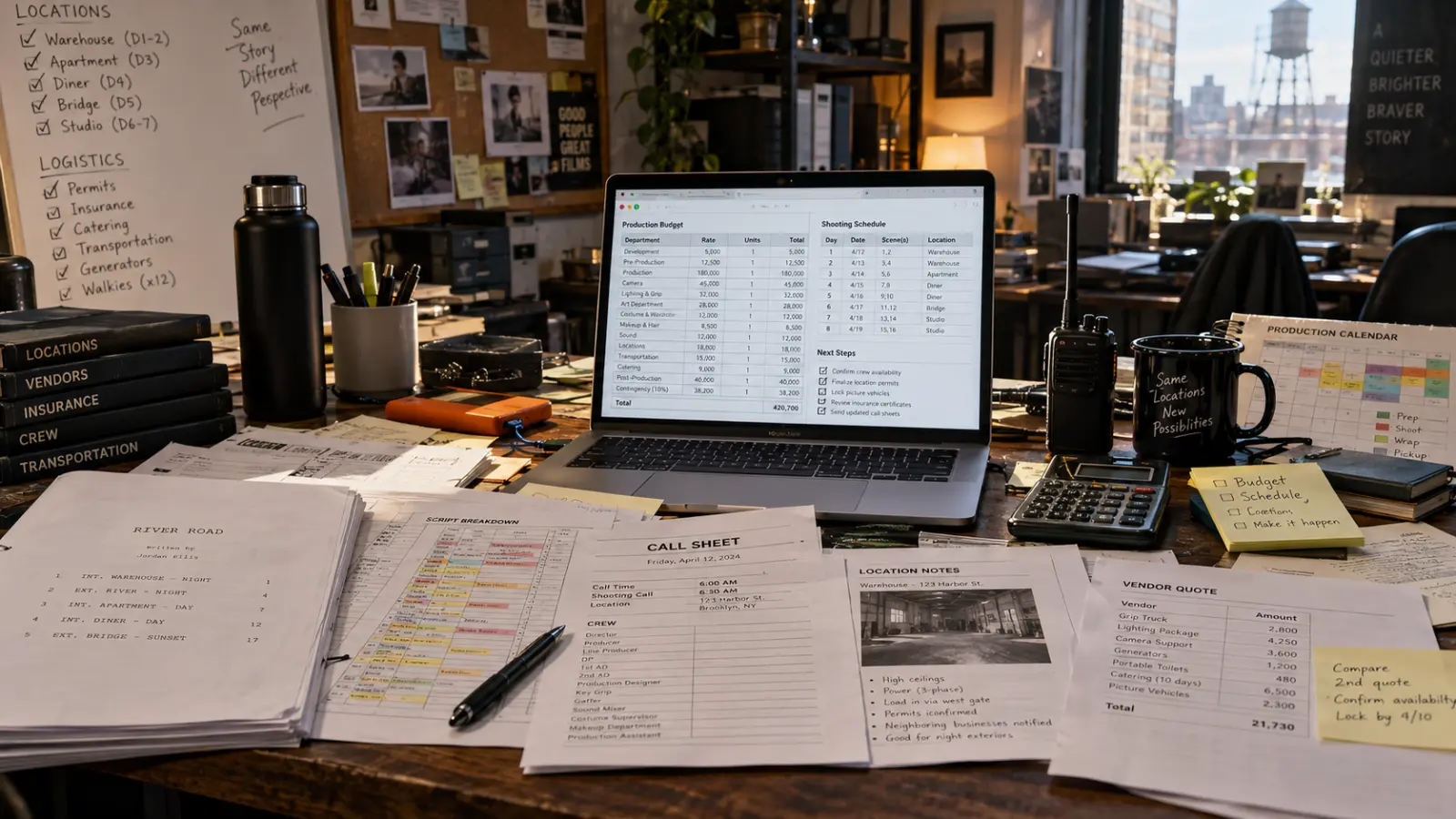
A line producer is the person who turns a creative plan into a production plan. The screenplay describes what the audience should see. The line producer has to work out what it takes to put those pages on screen within the available money, time, people and production resources.
That is why the role sits at the intersection of budgeting, scheduling, crew, locations, contracts, logistics, safety and cost control. On a well-run production, the line producer is constantly translating between creative ambition and physical reality.
If a producer says, “We want to shoot this feature for $2 million,” the line producer cannot simply accept the number and fill a spreadsheet until the total matches. The real job is to ask whether the script, schedule, cast plan, crew structure, locations, equipment, union assumptions, insurance and contingency can actually support that target.
ScreenSkills describes line producers as senior production leaders who allocate money, hire crew and help make sure filming is completed safely, creatively, on budget and on time. The exact duties vary by project size, country, contract structure and whether a separate unit production manager or production manager is also employed. ScreenSkills' line producer profile is a useful industry reference.
What Does a Line Producer Do?
The short answer is that a line producer manages the practical production machine. The longer answer is more useful because the role changes as the project moves from development into prep, shooting and wrap.
On smaller independent productions, one person may cover several of these functions. On larger productions, the line producer can work with a unit production manager, production manager, production accountant, production coordinator, assistant directors and department heads.
Why the Role Is Called a Line Producer
The name reflects the role's close relationship with the production budget. A detailed film budget is made up of accounts and line items. The line producer is concerned with what those lines mean in the physical production, not only whether the formulas add correctly.
A camera-package line may look like a simple rental. In practice it can depend on prep days, testing, pickup, shoot days, dark days, insurance, expendables, specialty lenses, additional bodies, second unit and return dates. A location line may depend on permits, parking, security, holding, company moves, restoration, power and neighborhood restrictions.
This is why a line producer needs both numbers and production knowledge. The spreadsheet records the plan. The line producer has to make the plan believable.
What a Line Producer Does in Pre-Production
For many independent films, the most valuable line-producing work happens before anyone reaches set.
1. Script breakdown
The line producer or production team breaks the screenplay into the elements that have to be scheduled, sourced and paid for. This is where creative writing starts becoming production data.
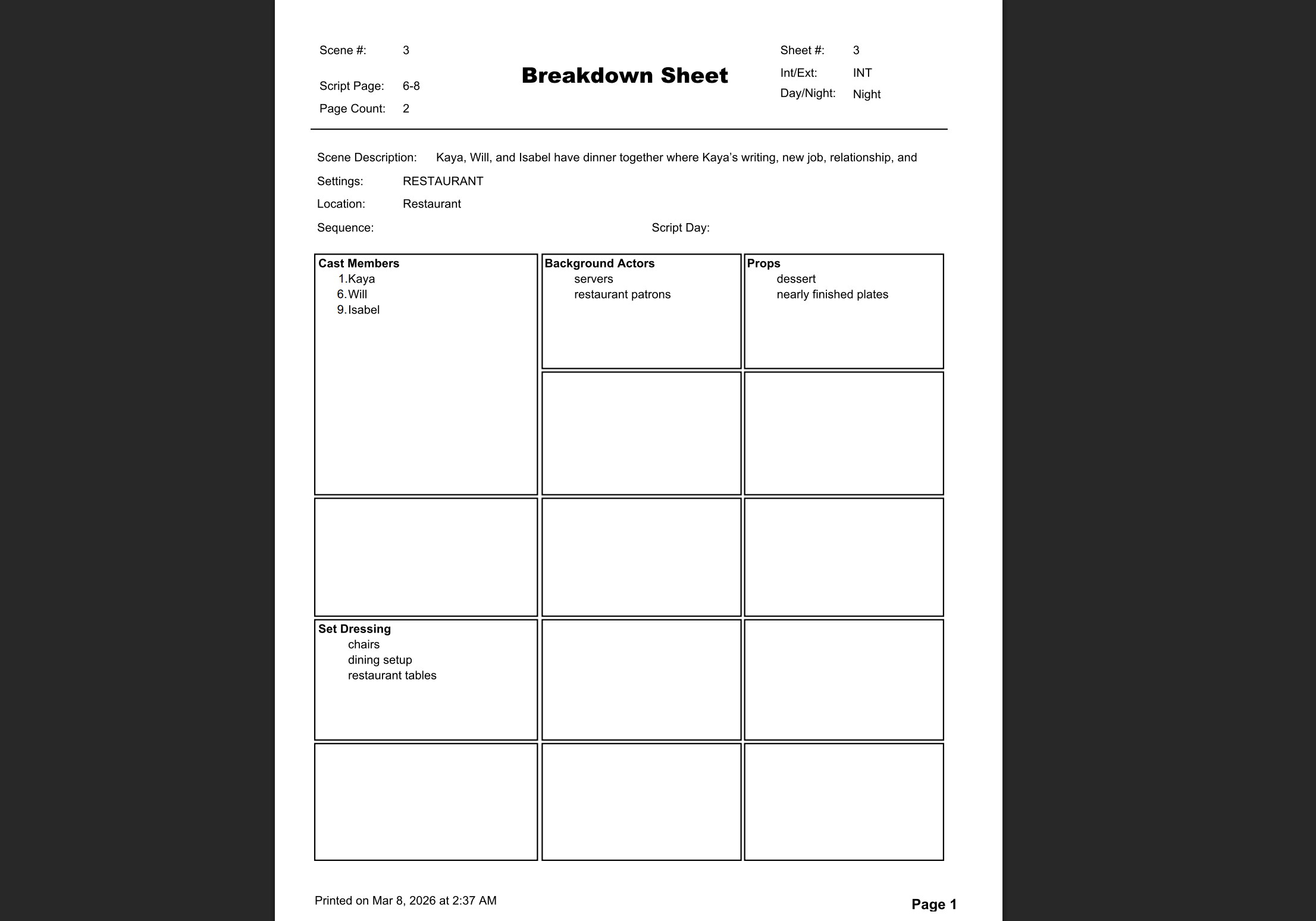
A crowded night exterior with rain, picture vehicles and a stunt is not one budget line. It creates a chain of cost decisions across locations, lighting, grip, transport, background, special effects, wardrobe continuity, safety and potentially overtime.
2. Preliminary and detailed scheduling
Once the script is broken down, scenes have to be arranged into a workable shooting schedule. Schedule length is one of the strongest cost drivers in a film budget because each added day can extend crew, equipment, locations, vehicles, catering, production office, cast and other expenses.
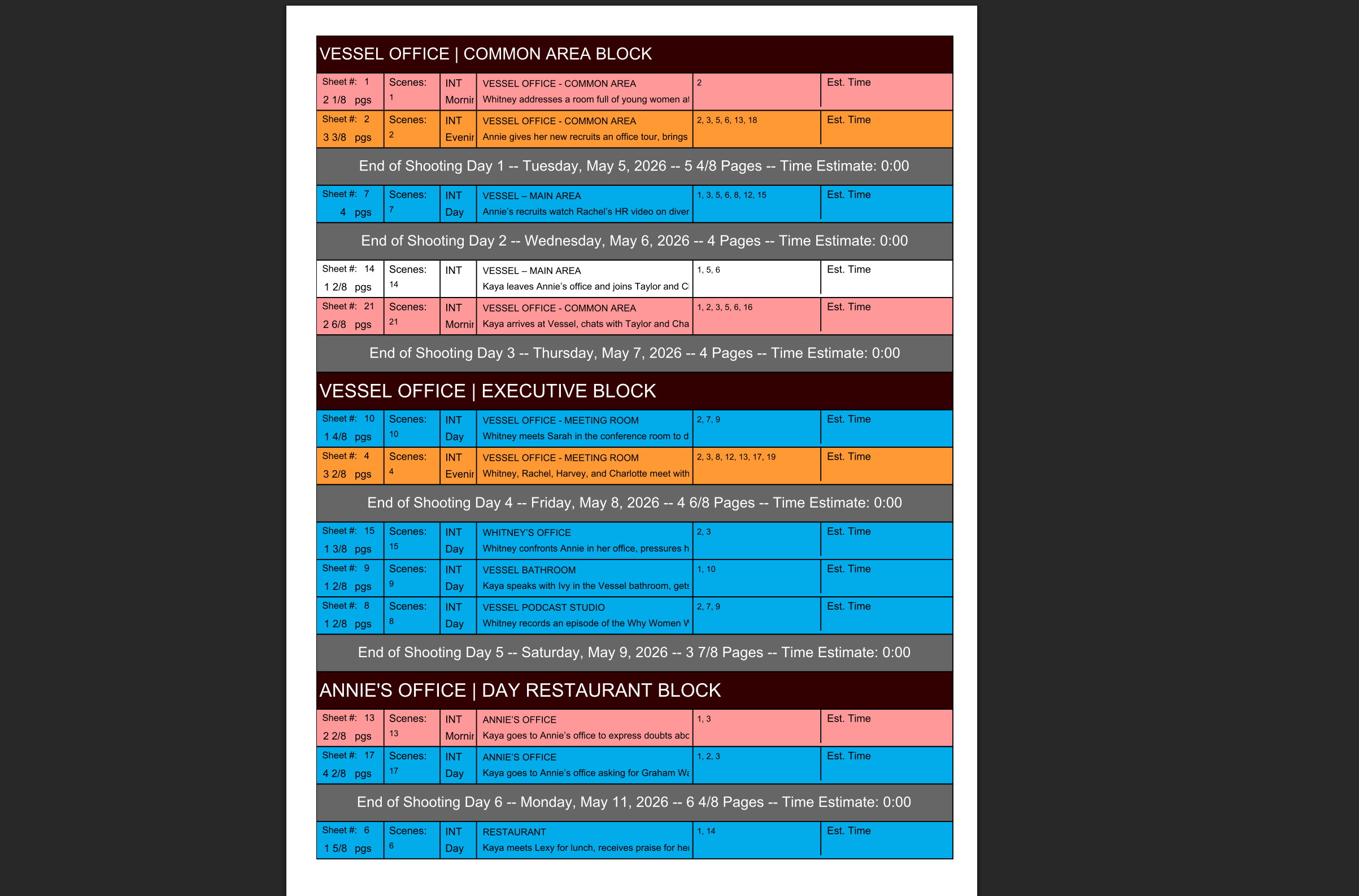
The DGA's current Basic Agreement describes UPM responsibilities that include preparing a script breakdown, preliminary shooting schedule and budget, along with locations, housing, transport and day-to-day production decisions. That is a useful reminder that scheduling and budgeting are not isolated tasks in professional production management. See the DGA UPM provisions.
3. Production assumptions
The line producer helps define the assumptions that sit underneath the numbers: production location, union or non-union framework, crew structure, workweek, prep and wrap periods, equipment approach, travel, local hires, studio versus practical locations, insurance exposure and contingency.
If those assumptions remain vague, the budget may look polished while still being unreliable.
4. Department and vendor planning
The line producer works with department heads or preliminary assumptions to decide what each department needs. That can include crew counts, equipment packages, build periods, vehicles, production office, post workflow and location requirements.
How a Line Producer Builds and Controls the Film Budget
Budgeting is central to the line producer job description, but a professional line producer does more than type rates into Movie Magic or Excel.
The budget has to reconcile with the production plan. Crew weeks should reflect prep, shoot and wrap. Rentals should reflect pickup and return periods. Cast costs should reconcile to scheduled work, rehearsals, fittings, travel and applicable fringes. Locations should reflect the actual number of days and the operational needs around them.
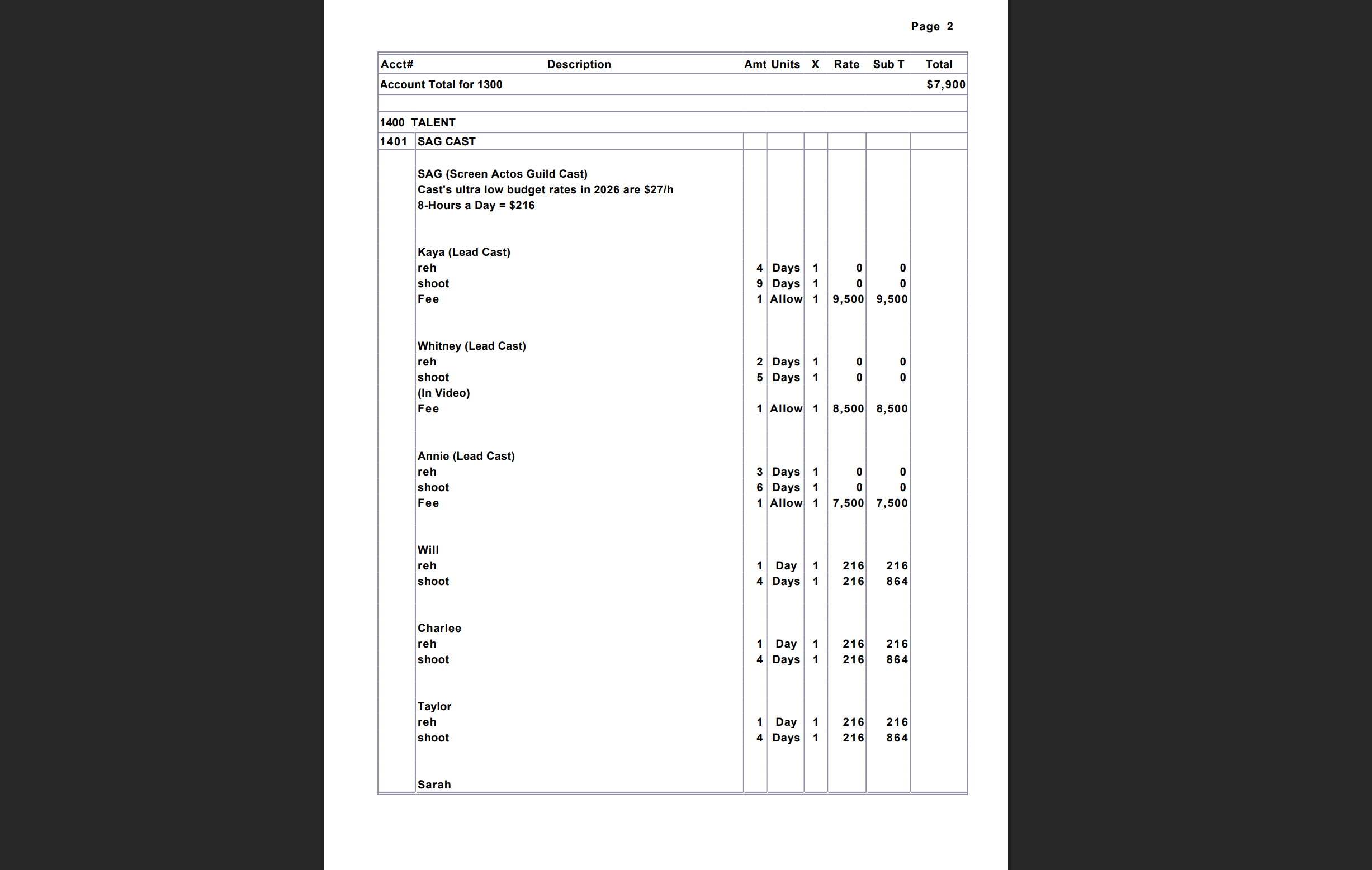
If you want the full account-level workflow, read our guide on how to make a detailed film budget. FilmDrafts also provides a professional film budget service built from the screenplay, breakdown and schedule.
What Happens During Production?
Once cameras roll, the job shifts from estimating to protecting the approved plan while responding to reality.
A line producer may be tracking schedule progress, overtime risk, crew changes, equipment extensions, location issues, vendor commitments, cast logistics and the impact of creative changes. When a director needs another day, a department needs more equipment, or weather forces a move, the line producer has to understand both the production consequence and the financial consequence.
ScreenSkills notes that line producers work both on set and in the production office during filming. The exact balance varies. Some line producers are highly visible on set, while others spend significant time in the office, with the UPM, production manager, assistant directors and coordinators handling more of the immediate floor logistics.
Is a Line Producer on Set?
Often, yes, but not necessarily every minute of every shooting day. A line producer's responsibility is broader than standing beside the monitor.
The line producer needs enough visibility into the shoot to understand whether the schedule and resources are holding, while also handling decisions that may happen away from set, including budget approvals, vendor issues, staffing, upcoming locations, insurance questions, transport and next-day requirements.
On a large union production, responsibilities may be distributed across a line producer, UPM and production management team. On a small independent film, the same person may cover multiple functions.
Line Producer vs Producer: What Is the Difference?
The terms overlap because both roles are producers, but the emphasis is different.
| Area | Producer | Line producer |
|---|---|---|
| Project ownership | Often drives the project creatively, commercially and financially | Usually executes the practical production plan under the producer |
| Financing | May raise capital, secure partners, cast and distribution | Provides the production numbers, schedule and assumptions financiers need to evaluate |
| Budget | Approves the overall financial strategy and major decisions | Builds, manages or directly supervises the detailed production budget |
| Schedule | Approves major creative and production decisions | Develops or supervises the practical shooting schedule and resource plan |
| Daily production | Can be involved at any level depending on the project | Focuses heavily on execution, logistics, resources and cost control |
ScreenSkills describes the producer as the overall decision-maker who drives the film from creative opportunity and financing through production, while certain production responsibilities can be delegated to a line producer. See the ScreenSkills producer profile.
Line Producer vs Production Manager vs Unit Production Manager
This is one of the most confusing areas because titles change by country, budget level, union structure and production culture.
In simple terms, the line producer normally carries higher-level responsibility for the production plan and budget, while a production manager may handle more of the daily administrative and logistical execution. But on smaller projects, those responsibilities can overlap heavily.
In the United States, Unit Production Manager can also be a specific DGA-covered position. The DGA defines the UPM as coordinating and overseeing pre-production, off-set logistics, daily production decisions, locations, budget control, schedules and personnel under the producer. For that reason, do not assume that “line producer” and “UPM” are legally or contractually interchangeable on every production.
How a Line Producer Helps Before You Pitch Investors
A line producer is not a substitute for a producer, financier or investment adviser. But the line-producing process can make the project much easier to evaluate before financing conversations begin.
Investors and finance partners may ask basic questions that creative packages often cannot answer on their own:
- What is the realistic production budget?
- How many shooting days are assumed?
- Where will the film shoot?
- Which costs are union, non-union or location-specific?
- What does the crew structure look like?
- Which scenes create the largest cost or schedule risks?
- What happens if the budget target has to come down?
- Are tax-incentive assumptions connected to qualified spend?
- What portion of the plan is still only an estimate?
A credible breakdown, schedule and budget do not guarantee financing. They give the producer a clearer factual basis for explaining the production plan.
This is where FilmDrafts often works with independent filmmakers. We can help turn the screenplay into script breakdown and scheduling, a detailed budget, and where needed, investor-facing production materials and financial models.
Can a Line Producer Work Remotely?
Parts of line producing can be done very effectively remotely, especially during development and pre-production. Other parts require local, physical production leadership.
Remote work can include
Script breakdown, preliminary scheduling, detailed budgeting, crew and department assumptions, rate research, vendor research, cost scenarios, tax-incentive planning inputs, revisions, production feasibility reviews and investor-facing production assumptions can all be handled remotely when the necessary project information is available.
Remote work should not be confused with running the physical set
Local location checks, real-time set management, physical crew supervision, safety implementation, local authority coordination, vendor execution and many day-of-shoot decisions usually require people on the ground.
For an independent filmmaker, a remote line producer can therefore be most valuable before production is fully staffed. The remote work helps establish scope, money and time. A local production management team can then execute the physical shoot using a more developed plan.
Remote Line Producer for Hire: Where FilmDrafts Fits

Line-producing support led by Bilal Ahmad
Bilal Ahmad is a Producer, Line Producer, Actor and Co-Founder of FilmDrafts. He oversees script breakdowns, scheduling, budgeting, line producing and client-side production coordination across FilmDrafts engagements. View Bilal's FilmDrafts profile.
FilmDrafts can support independent filmmakers who need the planning side of line producing before a shoot is physically staffed. That can include breaking down the script, developing the shooting schedule, building the budget, identifying major cost drivers, comparing production scenarios and preparing the project for producer, investor or partner conversations.
We do not present remote planning as a replacement for an on-set UPM, production manager, assistant director, production accountant or local crew when those roles are required. The goal is to give the project a stronger production foundation before money is committed and before the team starts making expensive assumptions.
If you are looking for a line producer for hire to help scope an independent film remotely, discuss your project with FilmDrafts and share the screenplay, target budget range, expected location and current development stage.
When Should an Independent Film Hire a Line Producer?
The ideal timing is usually earlier than filmmakers expect.
You may benefit from line-producing support when the screenplay is stable enough to break down, when you are trying to establish a realistic budget range, when cast or location decisions could materially change the plan, before approaching investors with hard production numbers, or before committing to a shoot date.
If you wait until the budget is already promised, the cast dates are locked and locations are being booked, the line producer may spend the first part of the job explaining which assumptions can no longer coexist.
A Real Example: Script to Schedule to Budget
In a FilmDrafts drama-pilot engagement, a roughly 50-page screenplay was translated into a scene breakdown, an 11-day preliminary schedule and a Movie Magic budget of approximately $360,000. The value was not simply the final number. The documents were connected, so the producer could see how script requirements and schedule decisions were driving the budget.
You can review the anonymized workflow in our drama pilot film budget and schedule case study. Larger projects use the same underlying discipline, even when the crew structure, union obligations and financial complexity increase.
Related FilmDrafts Guides
Frequently Asked Questions
What is a line producer in film?
A line producer is a senior production professional responsible for turning the creative plan into a practical production plan. The role commonly includes budgeting, scheduling, hiring or crew planning, logistics, vendor decisions, cost control and coordination across departments.
What does a line producer do?
A line producer helps break down the script, build or supervise the schedule and budget, structure crew and resources, control production costs, solve logistical problems and keep the project aligned with the approved time and money.
What is the difference between a producer and a line producer?
The producer usually carries broader creative, commercial and financial responsibility for the project. The line producer focuses more heavily on executing the practical production plan, especially the budget, schedule, resources and production operations.
What is the difference between a line producer and a production manager?
The line producer normally has higher-level responsibility for the production plan and budget, while the production manager often handles more daily administration and logistics. On smaller productions, the responsibilities can overlap.
What is the difference between a line producer and a UPM?
The duties can overlap, but UPM can be a specific DGA-covered role in the United States with defined responsibilities. Productions should use the correct title and employment structure for the applicable guild agreement and project.
Is a line producer on set?
Often yes, although the amount of time on set depends on the production structure. A line producer may move between the set and production office while supervising schedule, budget, logistics and upcoming production needs.
Can you hire a remote line producer?
Yes for planning-heavy work such as breakdowns, schedules, budgets, cost scenarios, vendor research and production feasibility. Physical set management, local safety implementation and day-of-shoot logistics normally require an on-the-ground production team.
What is the difference between a line producer and an executive producer?
An executive producer may focus on financing, packaging, senior relationships or high-level oversight, depending on the project. A line producer is more directly responsible for the practical production plan, including budget, schedule, resources and operational execution.
What is a line producer salary or project rate?
There is no single universal line producer salary or project rate. Compensation varies by country, union or guild structure, project scale, budget, duration, responsibilities and whether the person is hired for development, prep, production, or the full project. A project-specific quote is more reliable than a generic salary number.
When should I hire a line producer for an independent film?
Ideally before major production commitments are locked. Bringing in line-producing support during development or early pre-production allows the budget and schedule to influence decisions before those decisions become expensive to change.
Need a Remote Line Producer to Scope Your Film?
FilmDrafts can help turn your screenplay into a breakdown, schedule, detailed budget and production plan before you pitch investors or commit to production.
Discuss Your Project →