A 50-page screenplay may look manageable until every scene, performer, location and production requirement has to become a number someone can actually evaluate. For one independent producer, the challenge was not finishing the script. It was turning that script into a realistic plan for how the pilot could be made.
Elena, an independent producer, was developing a festival-oriented drama pilot under the fictionalized title First Light. She approached FilmDrafts through Fiverr looking for a preliminary film budget that could give the project a credible financial starting point.
What initially sounded like a straightforward budgeting request required three connected stages: breaking down the screenplay, arranging its production requirements into a preliminary schedule and then translating those decisions into a structured Movie Magic budget.
Project Snapshot
The Question Behind the Budget
When Elena first reached out, she described the project as a festival-ready drama pilot and asked which FilmDrafts package would be suitable for a preliminary budget.
The screenplay was 50 pages long. Elena initially believed she needed only the finished budget and asked what that service would include.
FilmDrafts explained that a meaningful production budget could not be created by applying broad estimates to the screenplay as a whole. The script first needed to be examined scene by scene. Its cast, background performers, props, wardrobe, set dressing, locations, equipment and special requirements would all influence the eventual cost.
A preliminary shooting schedule was also necessary. The number of production days and the way scenes were grouped would directly affect cast commitments, crew labour, equipment rentals, transportation, locations and several other accounts.
The result was a professional film budget grounded in the production requirements identified through the screenplay breakdown and preliminary schedule.
Confidentiality Before Production Planning
Before sharing the screenplay, Elena requested a non-disclosure agreement.
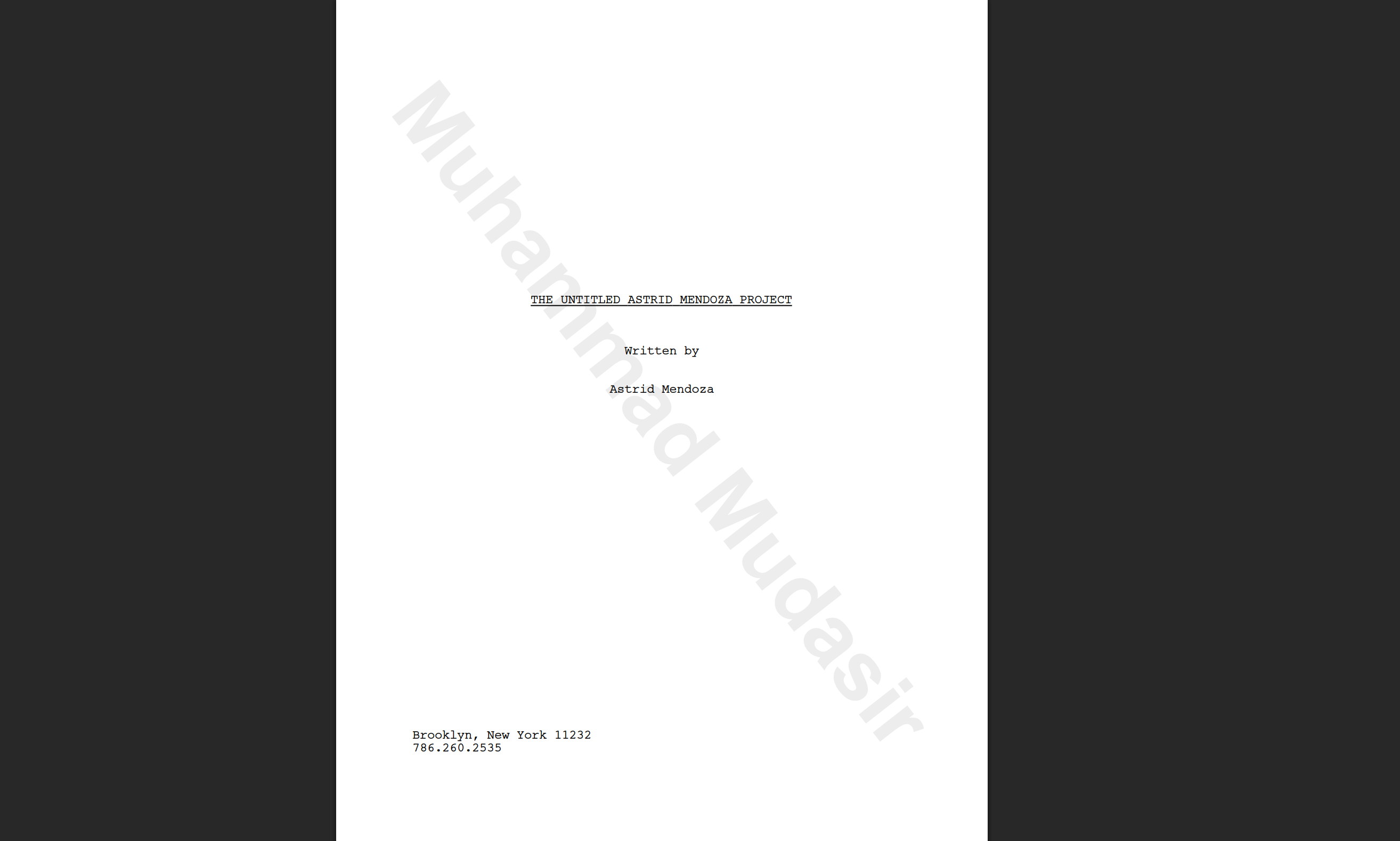
FilmDrafts signed the supplied NDA before the script was transferred. This allowed the producer to share the project materials while keeping the screenplay, creative concept and identifying details confidential.
Once the agreement was in place, FilmDrafts received the complete screenplay and began preparing the production analysis.
Breaking Down the 50-Page Pilot
The first working stage was a complete script breakdown in Movie Magic Scheduling.
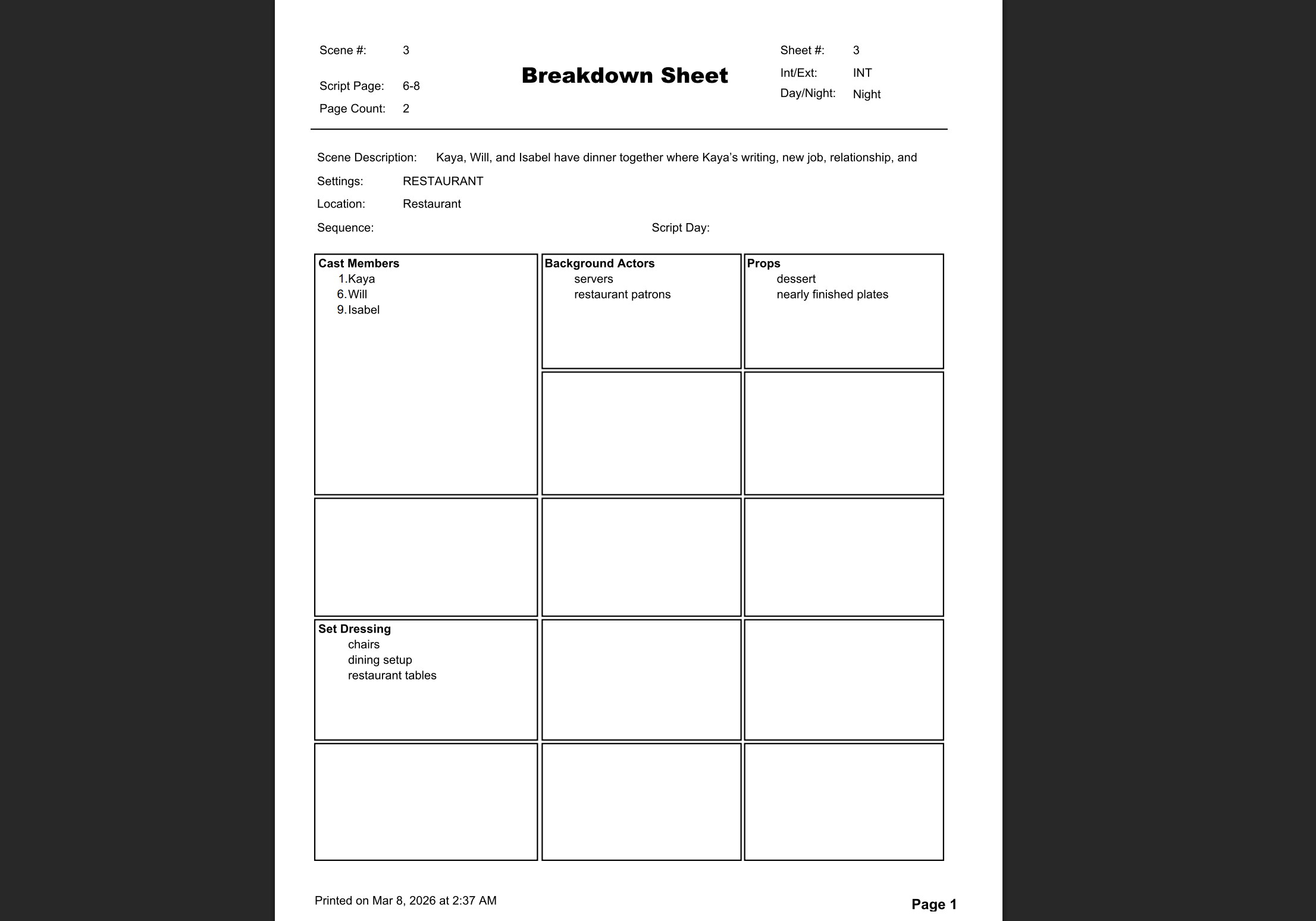
Each scene was examined for practical production elements, including:
- principal cast
- background performers
- locations and settings
- props
- set dressing
- wardrobe
- hair and makeup
- vehicles
- special equipment
- visual or practical effects
- day or night requirements
- interior or exterior settings
This process created the production foundation needed for both scheduling and budgeting. Setting up a detailed script breakdown and production scheduling framework ensured no critical details were missed.
From Script Pages to an 11-Day Schedule
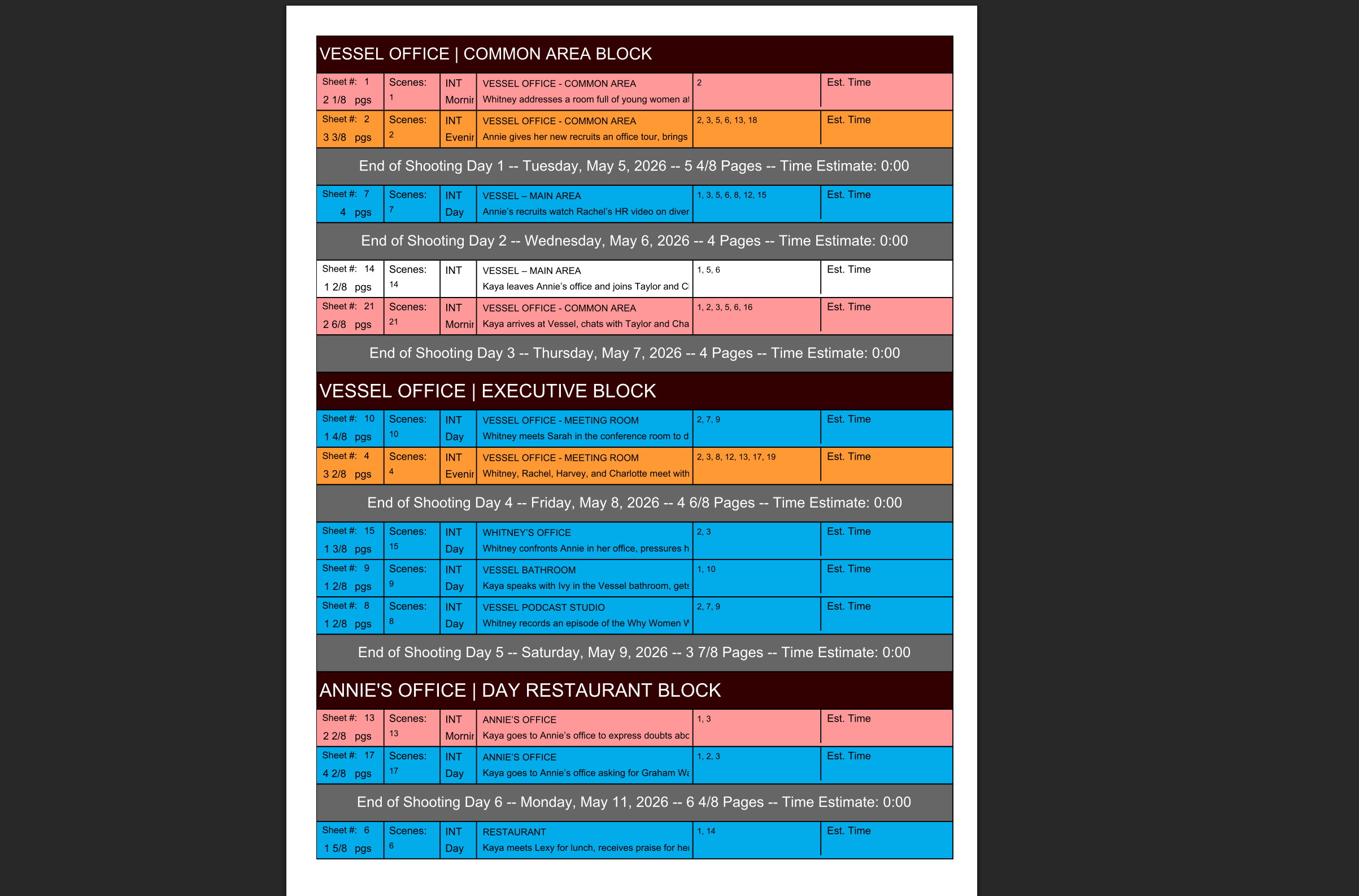
After the screenplay had been broken down, its scenes were arranged into a preliminary production schedule.
The resulting plan estimated 11 production days.
This was not simply a calendar exercise. Grouping scenes by cast, location, day or night requirements and production complexity helped create the assumptions that would later drive the budget.
A scene that appears short on the page may still require background performers, extensive set dressing or specialist equipment. Another group of scenes may become more efficient when scheduled together at the same location.
The schedule therefore acted as the bridge between the written screenplay and the financial model.
Building the Preliminary Movie Magic Budget
With the breakdown and schedule established, FilmDrafts prepared the preliminary budget in Movie Magic Budgeting.
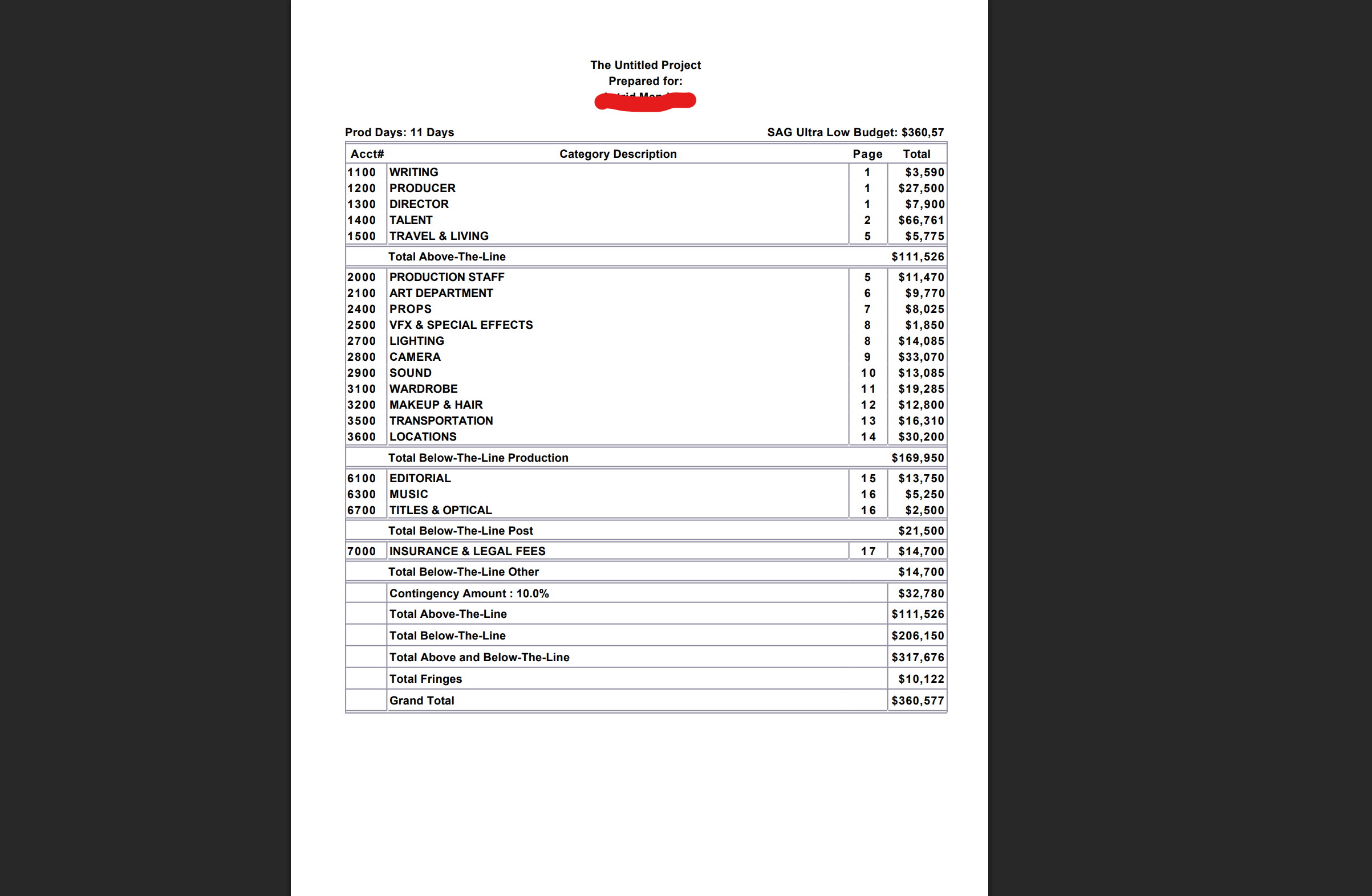
The model covered the major Above-the-Line and Below-the-Line departments required for the pilot, including:
- writing and producing
- directing
- cast
- travel and living
- production staff
- art department
- props
- visual and special effects
- lighting
- camera
- sound
- wardrobe
- hair and makeup
- transportation
- locations
- editorial
- music
- titles and optical work
- insurance and legal expenses
- fringes
- contingency
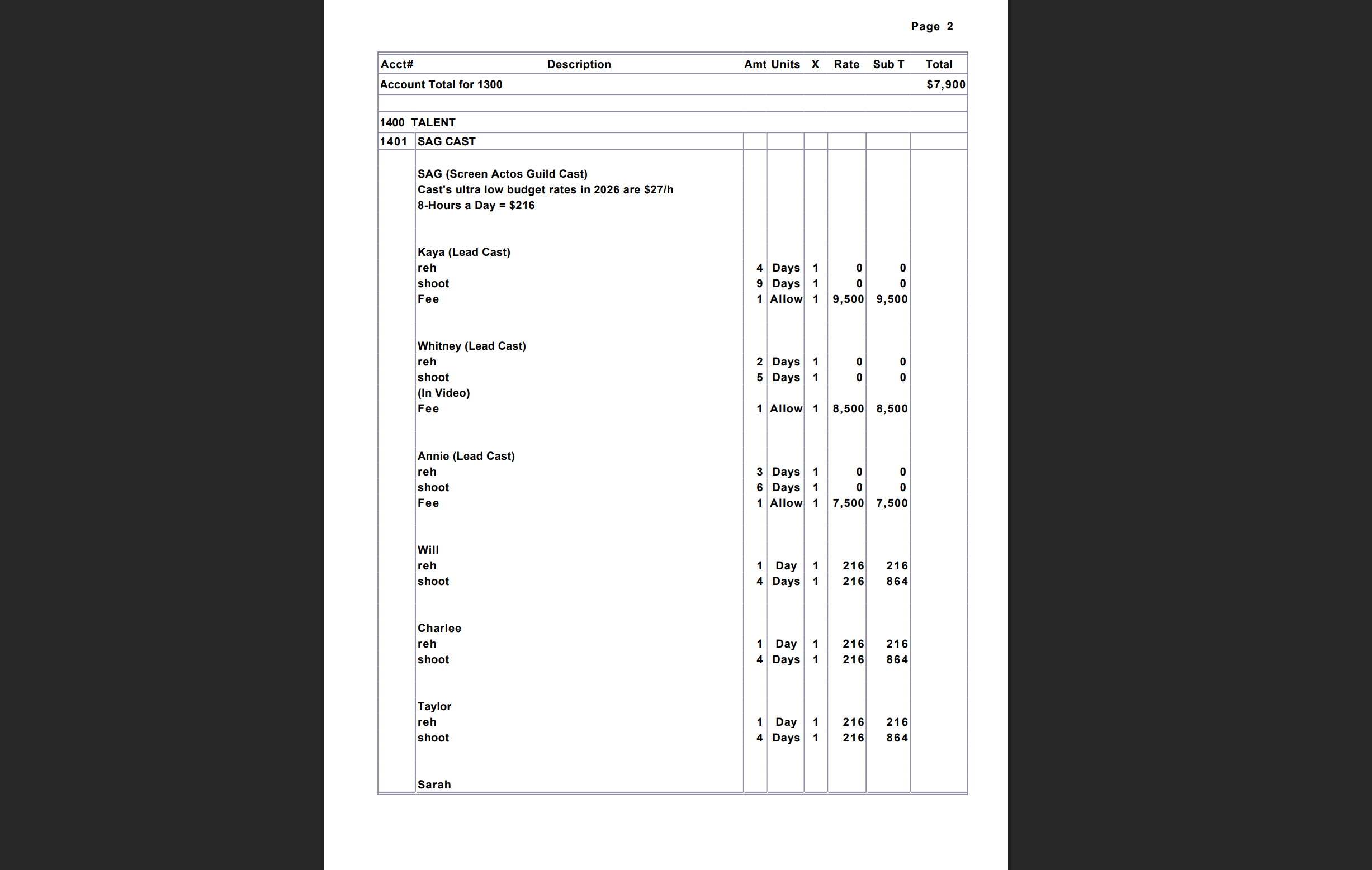
The preliminary grand total came to approximately $360,000, based on the working assumptions available at that stage.
The purpose of the document was not to pretend that every final production decision had already been made. It was to give the producer a coherent financial overview based on a real screenplay breakdown and a practical preliminary schedule.
What FilmDrafts Delivered
The final delivery included the budgeting and scheduling documents required to understand how the pilot might be produced at a preliminary planning level.
Deliverables included:
- a scene-by-scene screenplay breakdown
- an 11-day preliminary shooting schedule
- a detailed Movie Magic budget
- a consolidated budget top sheet
- departmental Above-the-Line and Below-the-Line estimates
- post-production, insurance, fringe and contingency assumptions
The completed files were delivered through Fiverr approximately one week after the screenplay was received.
The Outcome
The producer received a preliminary film budget supported by a screenplay breakdown and shooting schedule. Together, the documents made the estimated cost easier to review and showed which production assumptions needed to be confirmed before the pilot moved forward.
The 50-page pilot had been translated into an 11-day preliminary production plan and an approximately $360,000 budget structure.
The work did not claim that financing had been secured or that production had been approved. Its value was more practical: the producer now had a professional financial snapshot grounded in the actual requirements of the screenplay.
This is an important distinction for independent producers. A useful film budget is not simply a target number. It should explain how the project’s creative and logistical choices lead to that number.
Client Feedback
“Es muy bueno y trabaja muy bien. Muy profesional!!!”
English translation: “He is very good and works very well. Very professional!”
Lessons for Independent Producers
-
A preliminary budget still needs a production foundation
Even an early-stage budget becomes more reliable when it is based on a real script breakdown and a practical schedule. -
Screenplay length does not determine cost by itself
Two scripts with the same page count may have very different cast, location, equipment, background-performer and production requirements. -
Scheduling decisions affect nearly every budget department
The number of production days influences labour, rentals, transportation, locations and cast commitments. -
Preliminary does not mean arbitrary
A preliminary film budget should clearly identify its assumptions while remaining flexible enough to evolve as production decisions become final. -
Confidentiality can be built into the workflow
Signing an NDA before receiving the screenplay allowed the creative material to be evaluated without exposing private project information.
Planning a Pilot or Independent Feature?
FilmDrafts prepares screenplay breakdowns, production schedules and professional film budgets for producers who need a clearer path from script to production planning. Explore our script breakdown and scheduling services, view confidential FilmDrafts samples, or discuss your project with FilmDrafts.
Discuss Your Script →Confidentiality Notice
This case study is based on a real FilmDrafts client engagement. The client name, project title, location and certain identifying details have been fictionalized or generalized to protect client confidentiality. The project scope, production challenges, workflow, services delivered and client feedback reflect the actual engagement. Any screenshots shown have been cropped, anonymized or redacted.