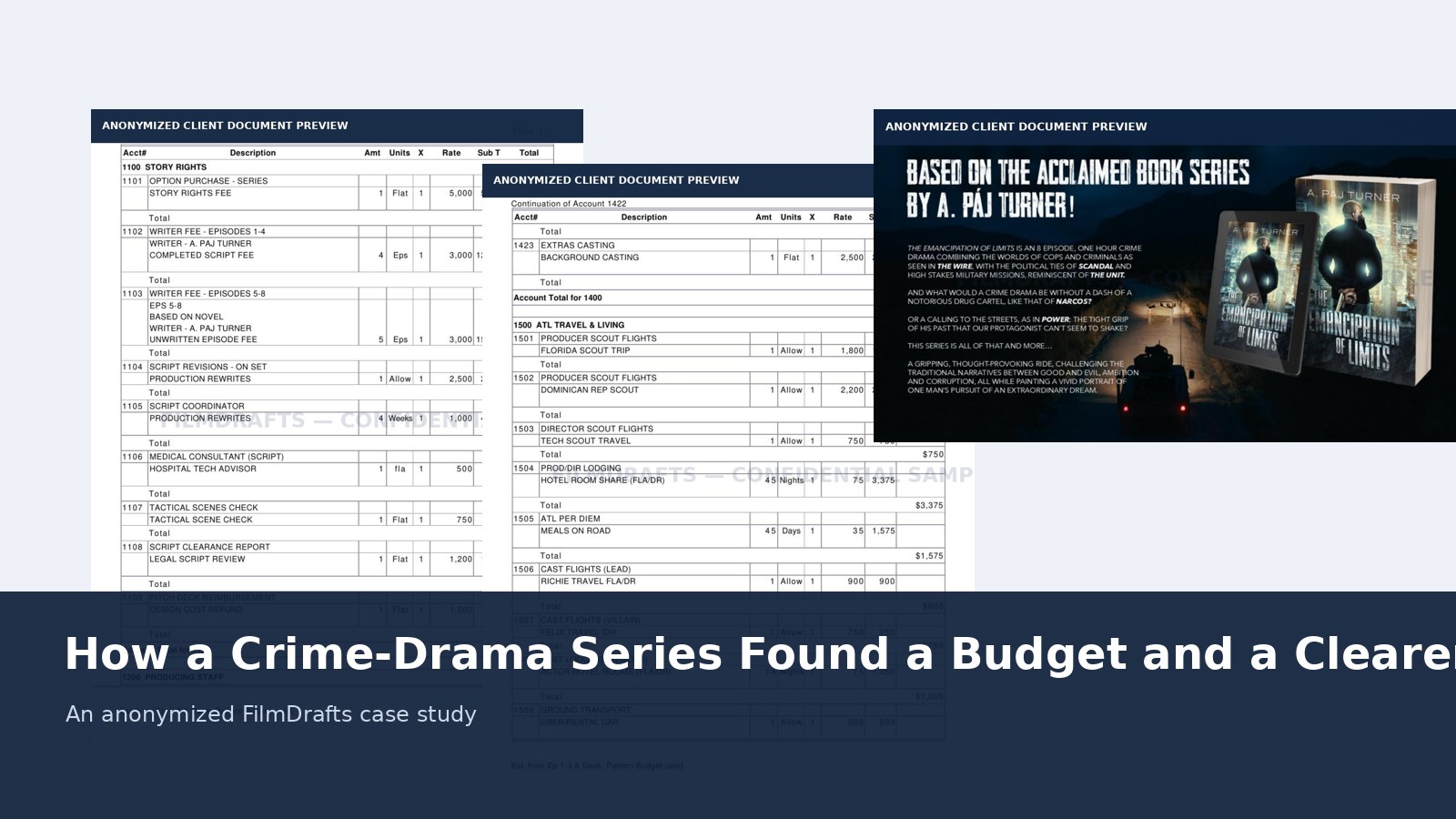
An eight-episode crime drama needed both a detailed TV series budget and a pitch deck that communicated its creative identity. FilmDrafts organized the cost plan around a 105-day production schedule and shaped the presentation around the series' tone, characters and scale.
The Deck and the Budget Were Telling Different Parts of the Same Story
A series pitch can communicate characters and tone while leaving a producer with unanswered questions about scale. A budget can show cost without explaining why the series deserves attention. This project needed both documents to point toward the same production reality.
Defining the Cost of the Series
The investor-draft budget organized story rights, producing, direction, cast, travel and the full range of production departments across a 105-day plan. The structure helped the producer move from a broad series concept to a more concrete understanding of the resources required.
Creating a Pitch Deck with a Distinct Visual Identity
The deck introduced the premise, characters, world and tonal references through a consistent visual language. The design did not attempt to reproduce the full budget. Instead, it gave the reader a reason to care before directing them toward the production and investment details.
Keeping Creative Ambition Connected to Production Scale
The most useful conversations occurred where the documents met. Character count affected cast assumptions. Locations affected both visual storytelling and production cost. Episode format affected schedule length. By aligning these details, the pitch became less abstract and the budget became easier to explain.
What Was and Was Not Included
This case study covers the validated TV series budget and pitch deck. It does not include a completed recoupment waterfall. The published scope reflects the deliverables available for review.
The Outcome
The producer received an investor-draft TV series budget and a visual pitch deck that communicated the project from two directions: operational scale and creative identity. Together, the documents created a stronger basis for further packaging and financing discussions.
Selected Document Preview
The viewer below contains selected, anonymized pages from this project. Scroll vertically to examine the structure of the work. Full editable files, formulas and confidential pages are not published.
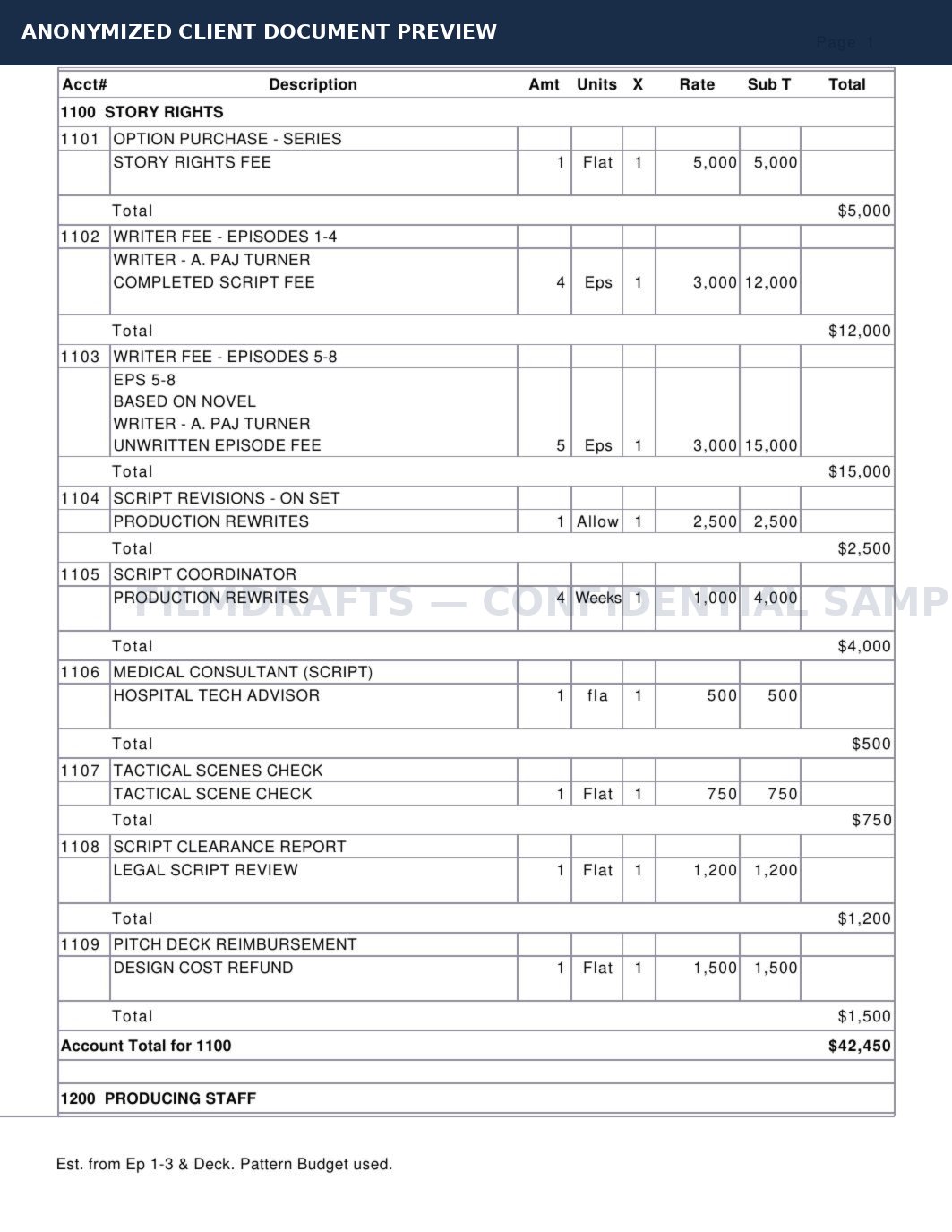
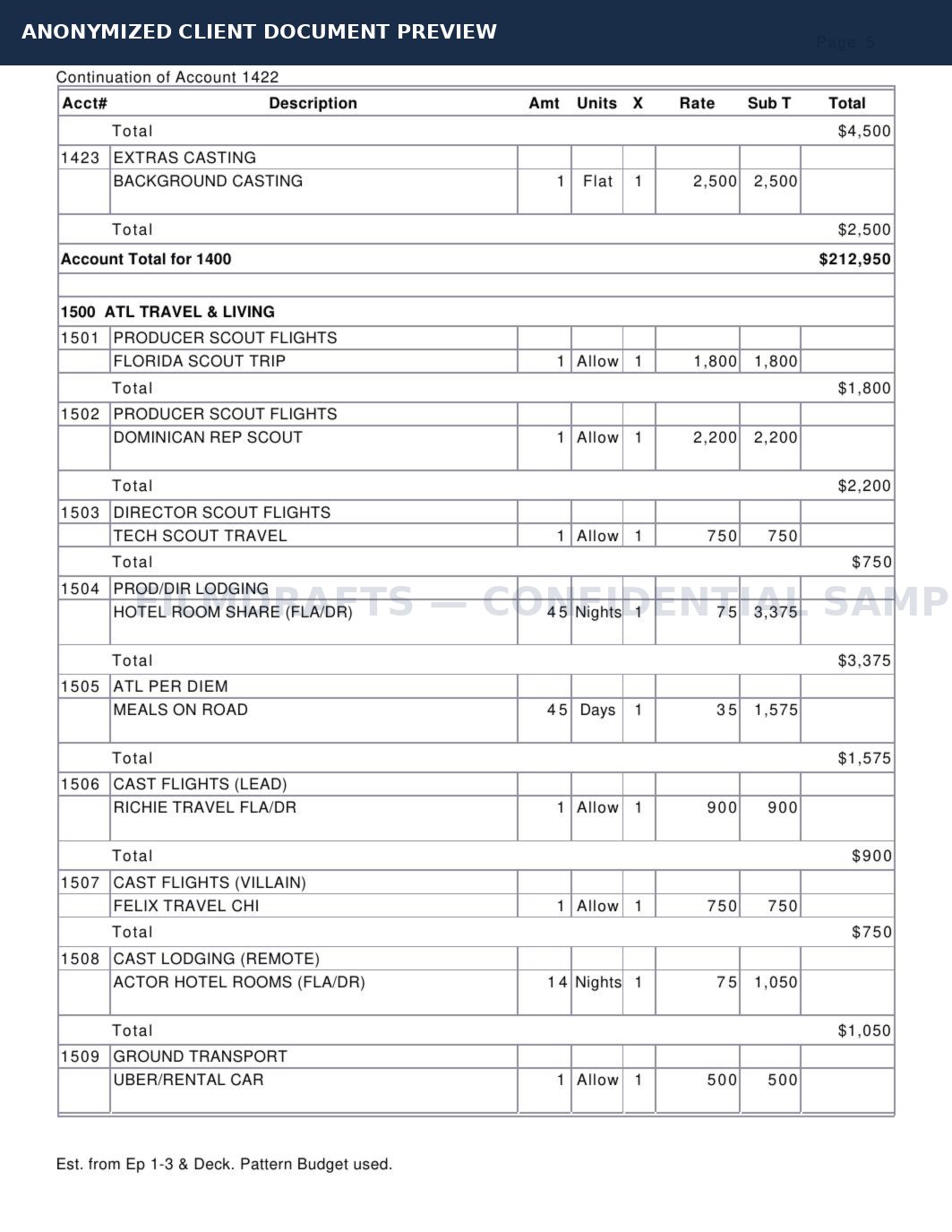
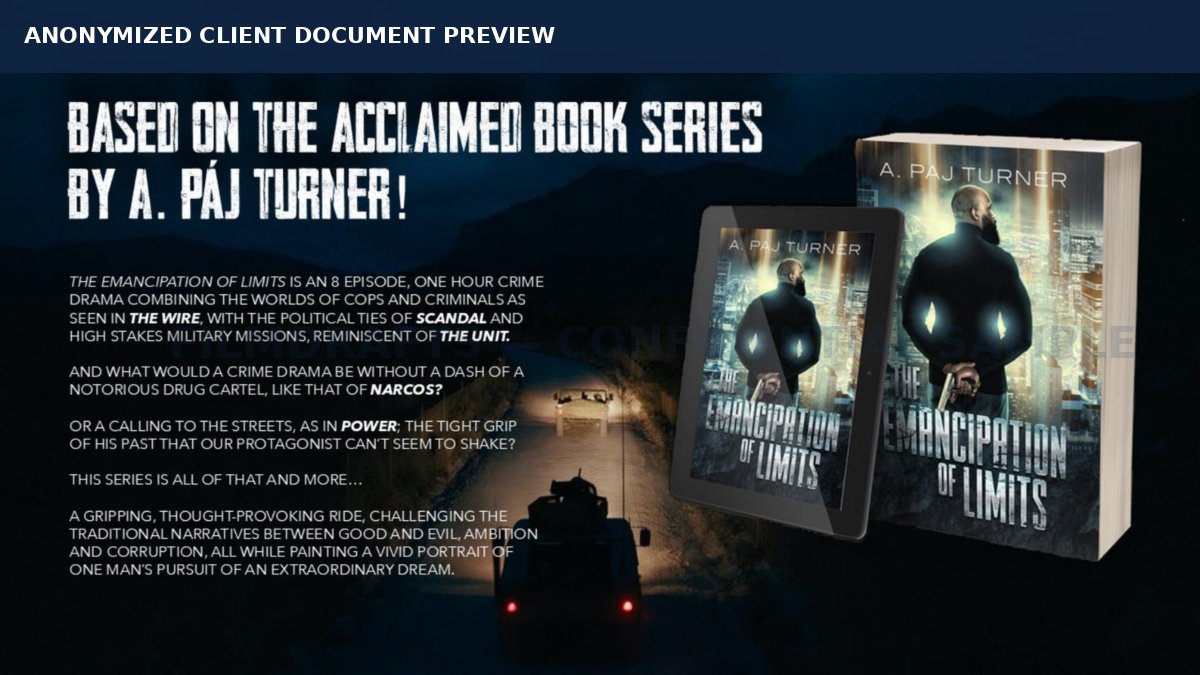
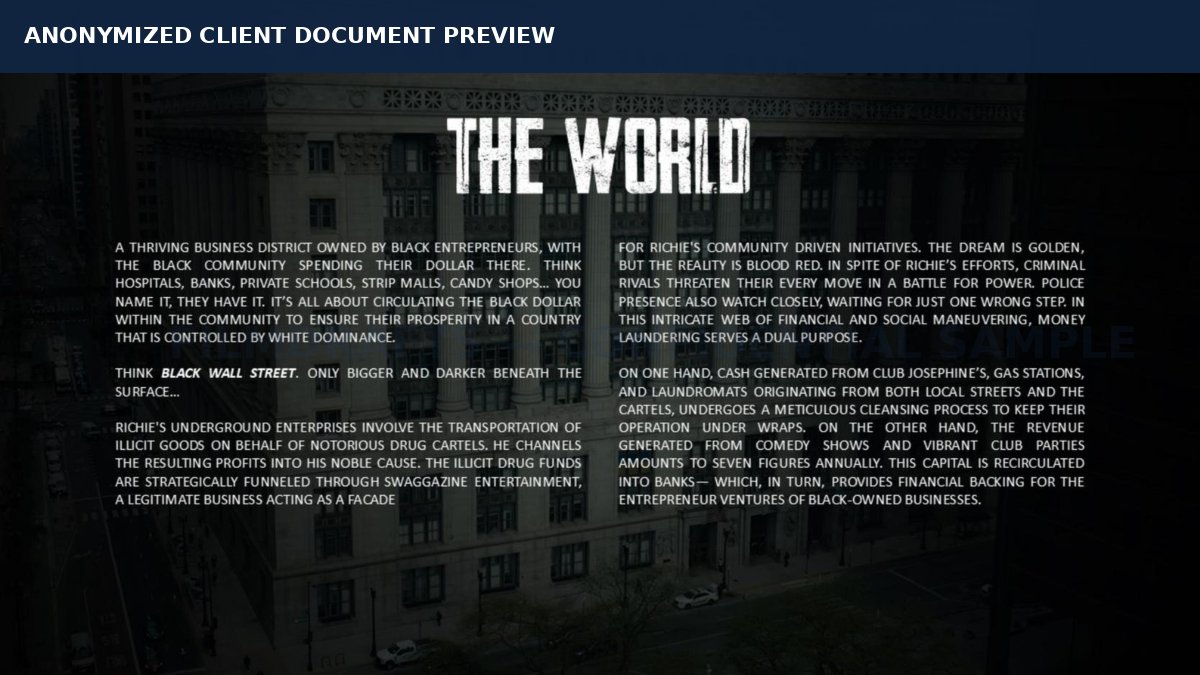
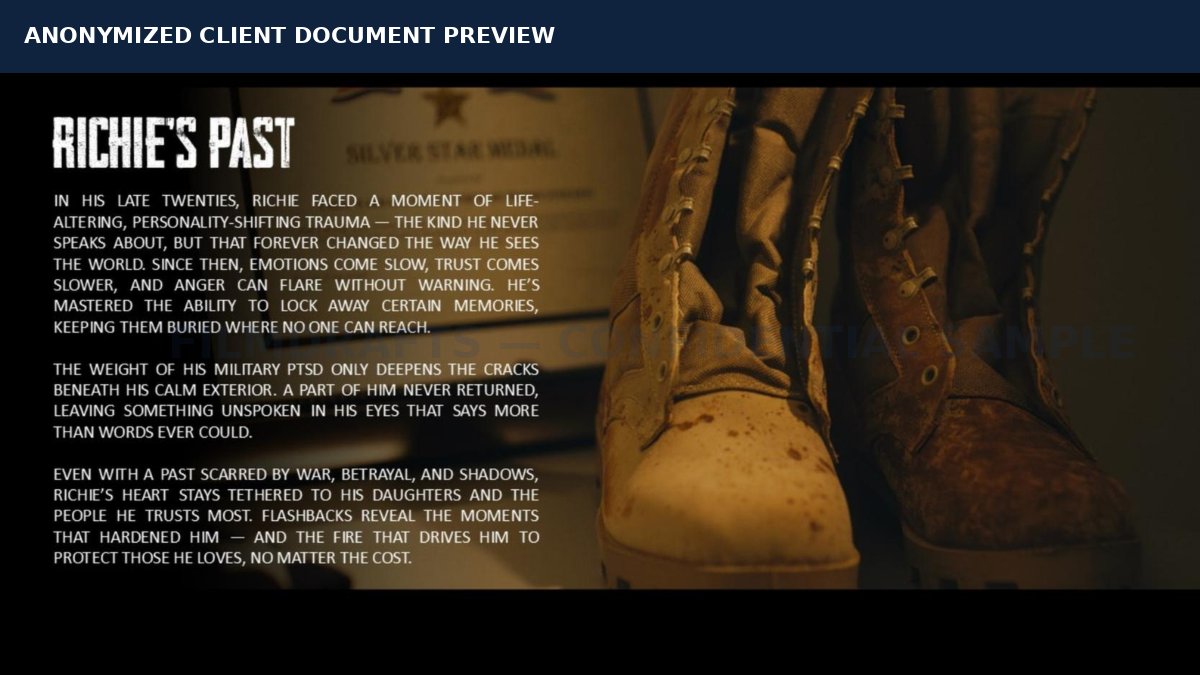
These images are reduced, watermarked previews. Project names, client identities and sensitive details have been generalized or obscured.
What Producers Can Learn from This Engagement
A TV series pitch deck should help readers understand the story quickly while its budget explains the resources required. Keep cast, locations, episode format and production scale consistent between the two documents.
Developing a Series Budget or Pitch Deck?
FilmDrafts can prepare a TV series budget, production schedule and investor-facing pitch materials that use consistent assumptions across the package.
Discuss Your Project →Confidentiality Notice
This case study is based on real FilmDrafts work. Client names, project titles and identifying details have been fictionalized or generalized. Screenshots are cropped, reduced, blurred, watermarked or redacted. Full documents and editable source files are not publicly available.