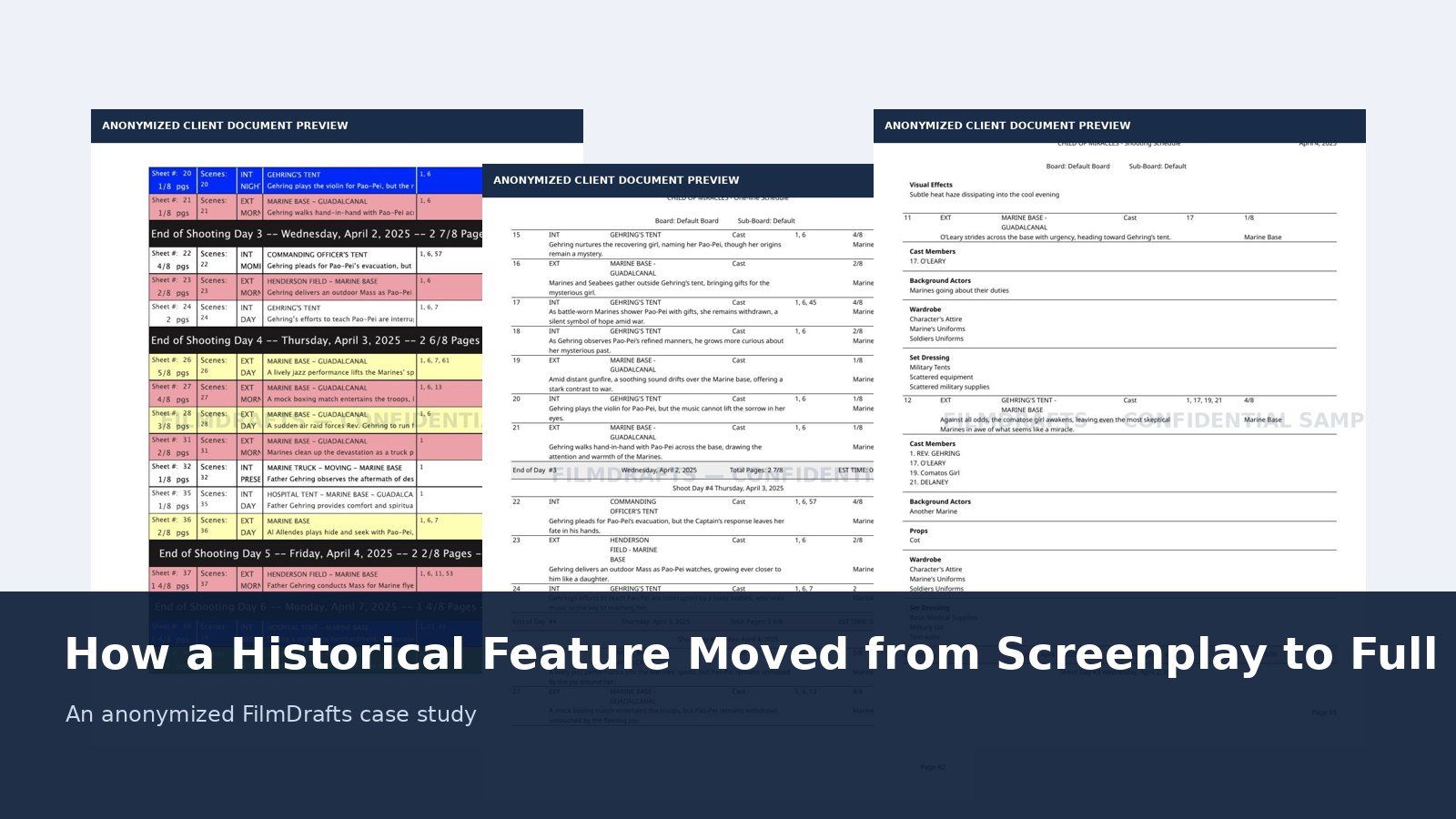
A historical feature required production planning that could account for the demands of its period setting. FilmDrafts connected the screenplay breakdown, schedule, budget and investor materials so the project's visual ambition could be reviewed alongside its practical requirements.
The Screenplay Carried More Than a Story
Historical productions become expensive when period requirements are discovered too late. Locations, uniforms, props, background performers, military action, vehicles and continuity all have to be identified before a practical schedule or budget can be trusted. The producer therefore needed a full pre-production package, not a single report.
A Breakdown Detailed Enough to Support Every Later Document
The screenplay was converted into hundreds of scene-level breakdown pages. Each page captured the production elements needed for that scene. This work created the source data for cast lists, location lists, stripboards and the shooting schedule. It also reduced the risk that a visually important requirement would disappear between the script and the budget.
Scheduling a Period Film Around Reality
The stripboard and one-line schedule allowed the production to group scenes by location, cast and practical efficiency. The detailed schedule then expanded those decisions into a day-by-day plan. The relationship was sequential: the script breakdown identified what was needed, and the schedule decided when those elements would be needed.
Building the Business and Marketing Story
The production plan was supported by a business plan and a separate marketing and distribution strategy. These documents explained the audience, positioning, production route and commercial assumptions in language intended for partners and investors rather than department heads.
Creating Pitch Materials Without Losing the Production Detail
The pitch presentations translated a large body of planning into a focused visual narrative. The goal was not to place every report on a slide. It was to show the story, tone, market opportunity and production readiness while allowing detailed documents to remain available behind the presentation.
The Outcome
The feature moved from screenplay to a coordinated package containing breakdowns, schedules, cast and location reports, business planning and pitch materials. Each deliverable served a different reader, but all were built from the same project logic. This is the practical value of a full pre-production package: one decision does not have to be recreated in every document.
Selected Document Preview
The viewer below contains selected, anonymized pages from this project. Scroll vertically to examine the structure of the work. Full editable files, formulas and confidential pages are not published.
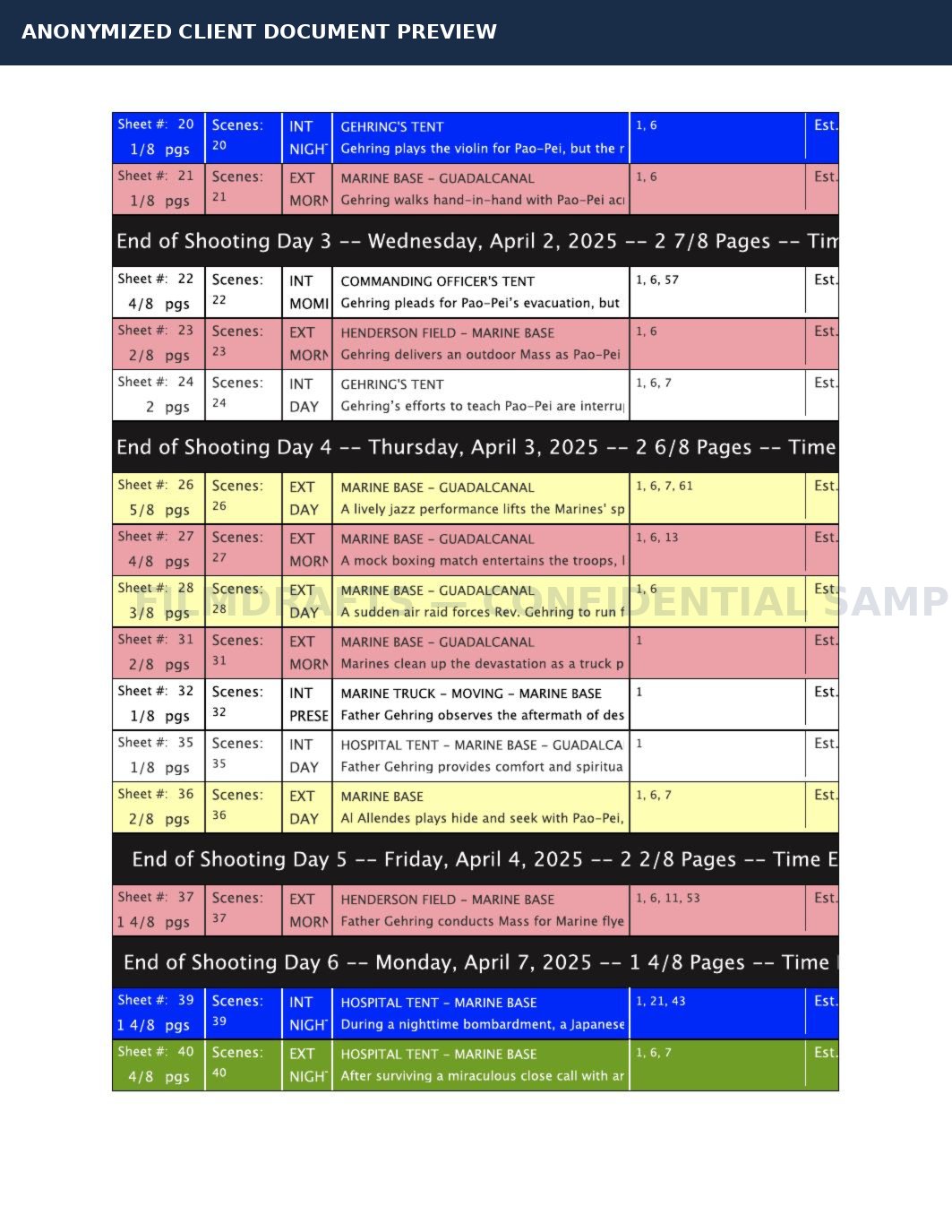
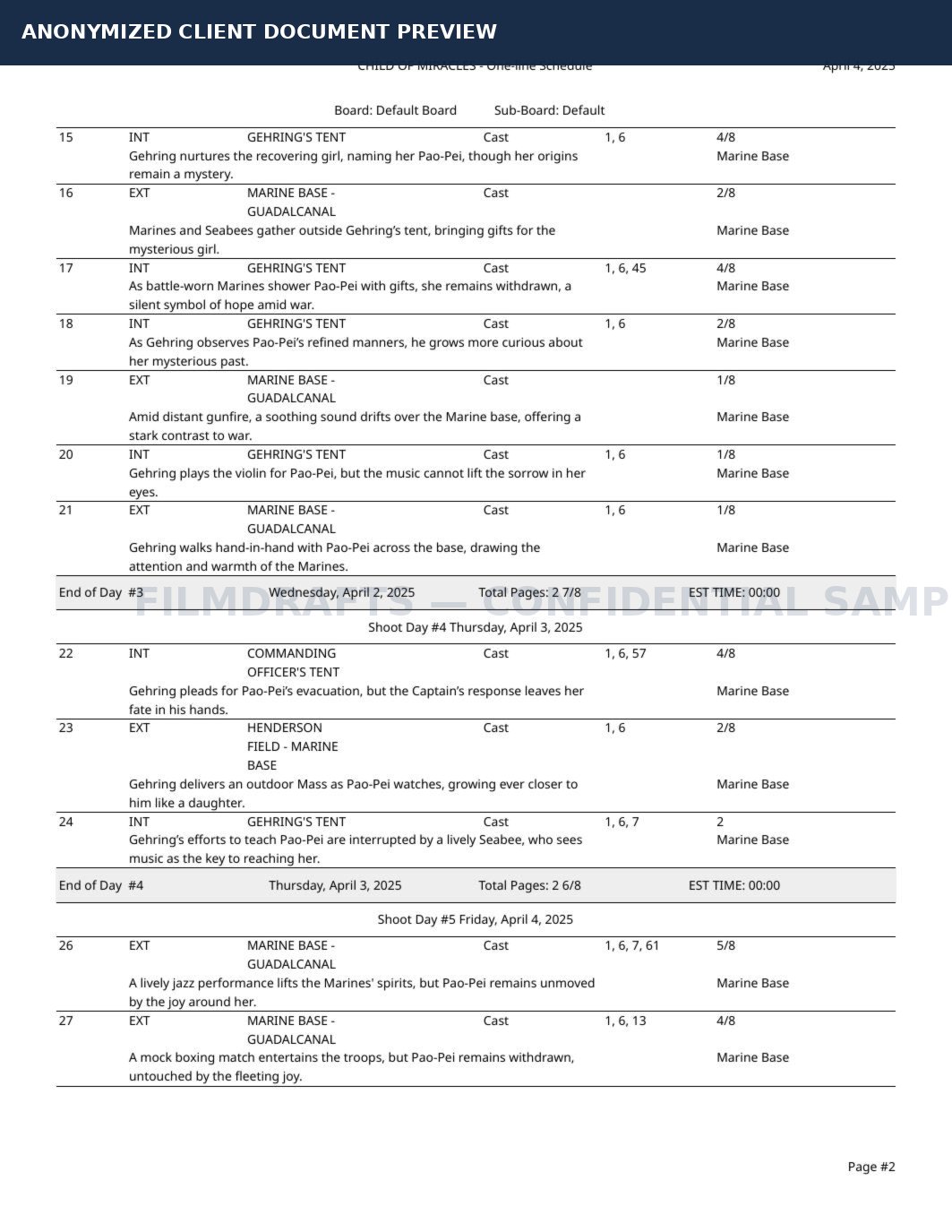
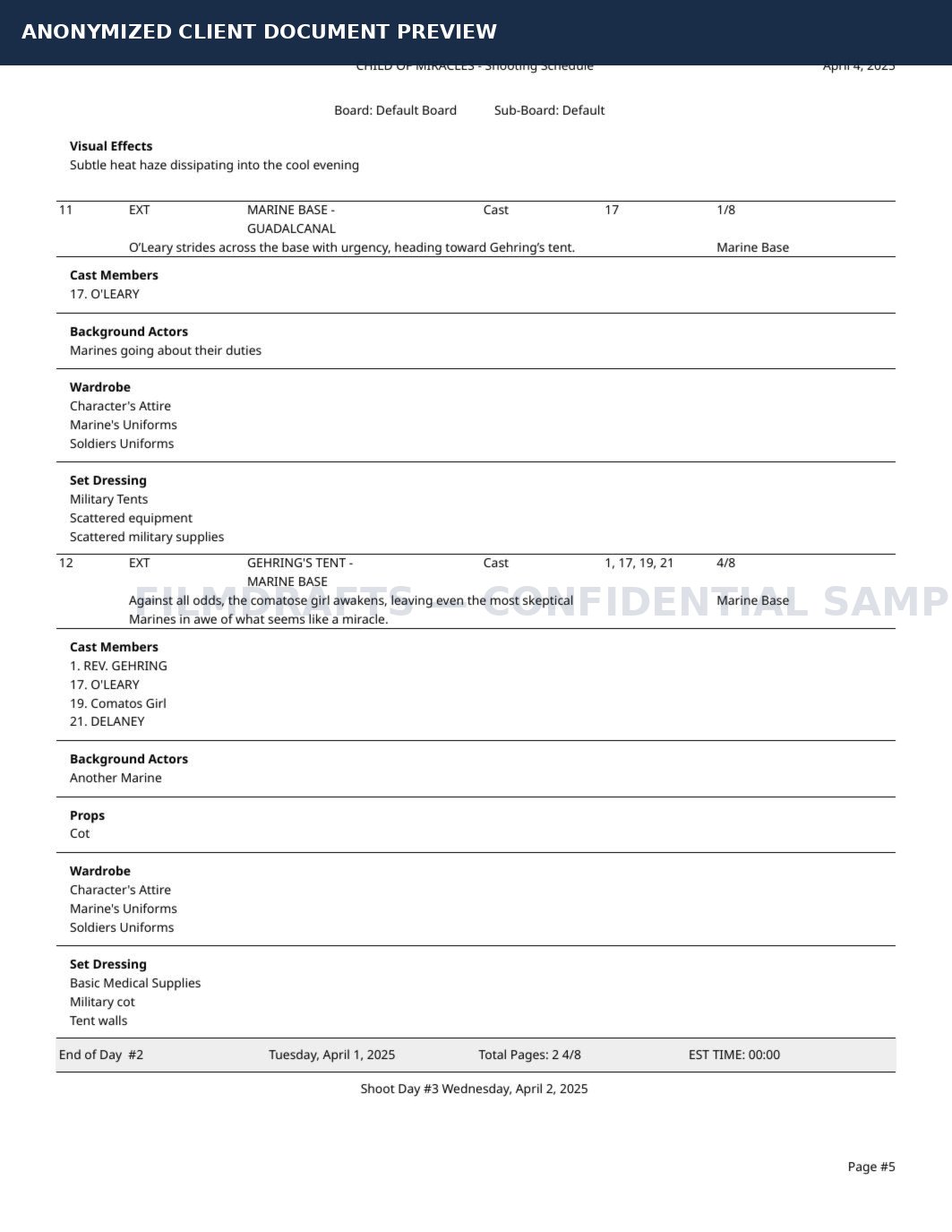
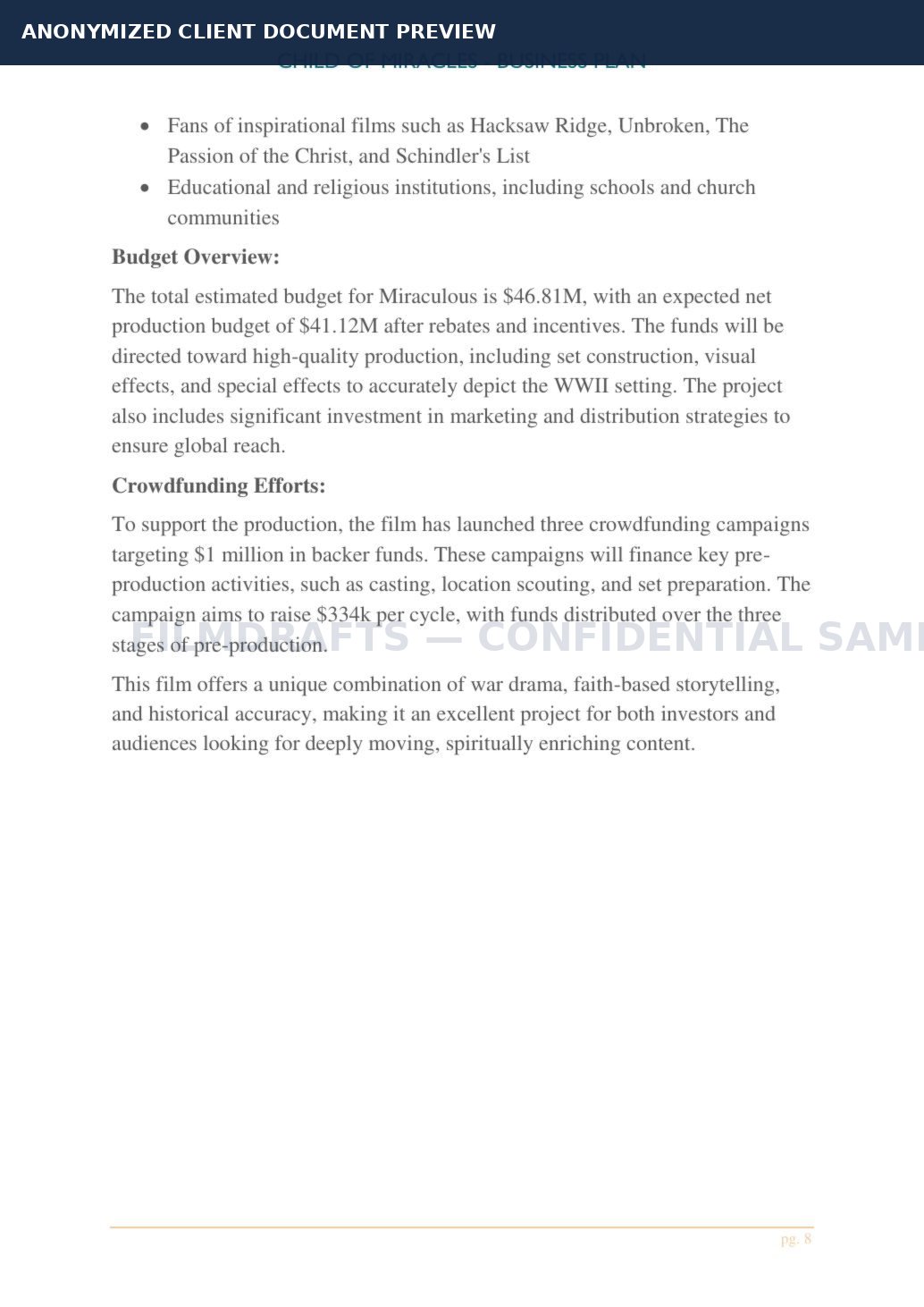
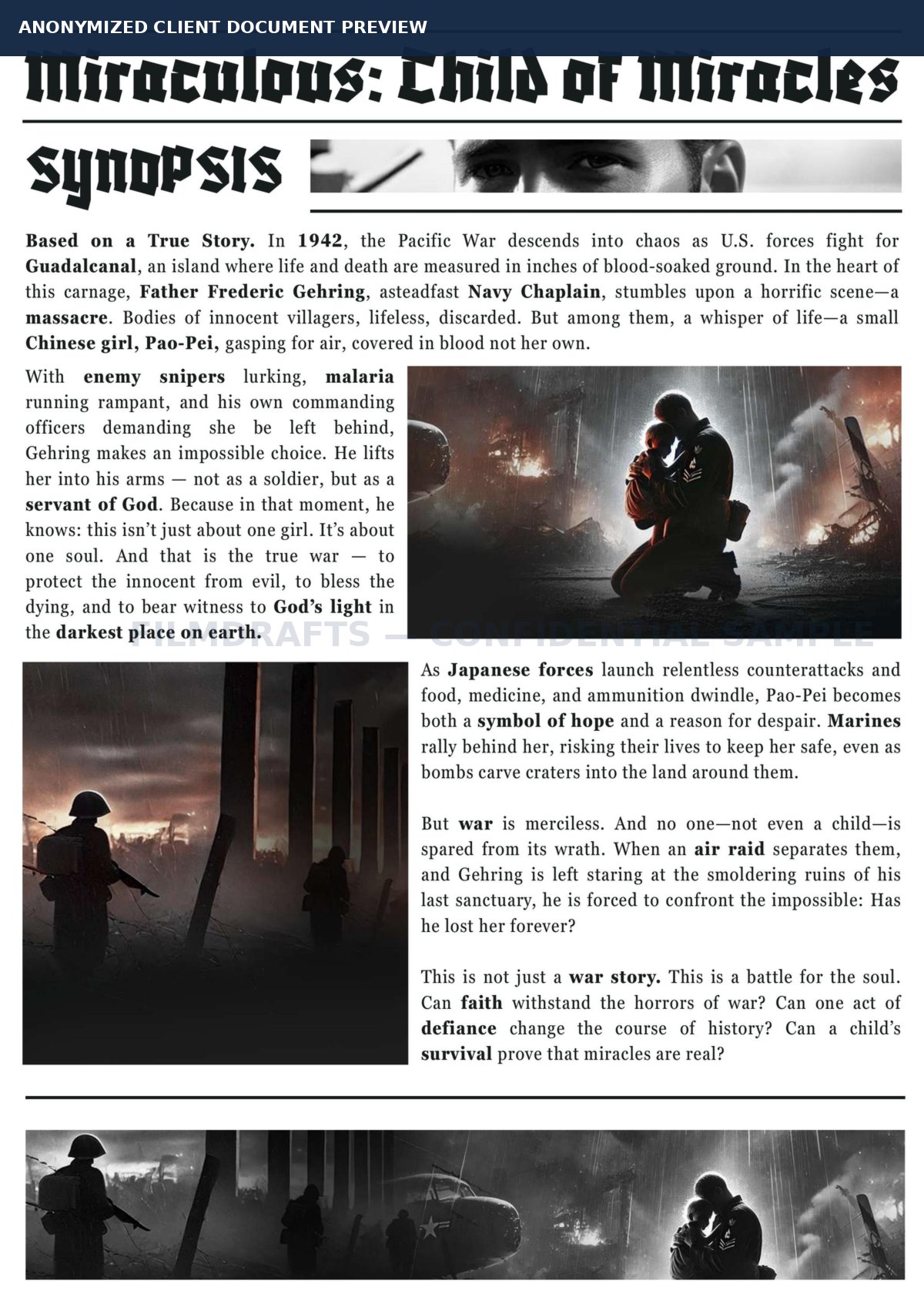
These images are reduced, watermarked previews. Project names, client identities and sensitive details have been generalized or obscured.
What Producers Can Learn from This Engagement
Period details need to be identified early enough to affect preparation, sourcing and shooting time. Build the pitch from the same production assumptions as the schedule and budget so the visual promise has a practical basis.
Need More Than a Single Budget or Deck?
FilmDrafts can build a connected full pre-production and investor package, beginning with breakdown and scheduling and continuing through budgeting, business planning and presentation materials.
Discuss Your Project →Confidentiality Notice
This case study is based on real FilmDrafts work. Client names, project titles and identifying details have been fictionalized or generalized. Screenshots are cropped, reduced, blurred, watermarked or redacted. Full documents and editable source files are not publicly available.